Kitchen Wastage Sheet
Record what gets thrown away and why, which is usually the fastest way to find where a kitchen's margin is going.
KC-05 1 page
Everything here is free. Making it takes time and money. Everything here is free.
 Buy us a coffee
Restaurants and bars · RB-09
Breakage log for a restaurant or bar — every broken glass, plate and cup with where and how it went, and a month-end count for the reorder.
One page. Choose your paper size — both versions are laid out identically, so neither one gets shrunk to fit.
Print it and write on it
Fill it in type and save
The fillable versions have real form fields — open them in any PDF reader, type into them and save. Printing help.
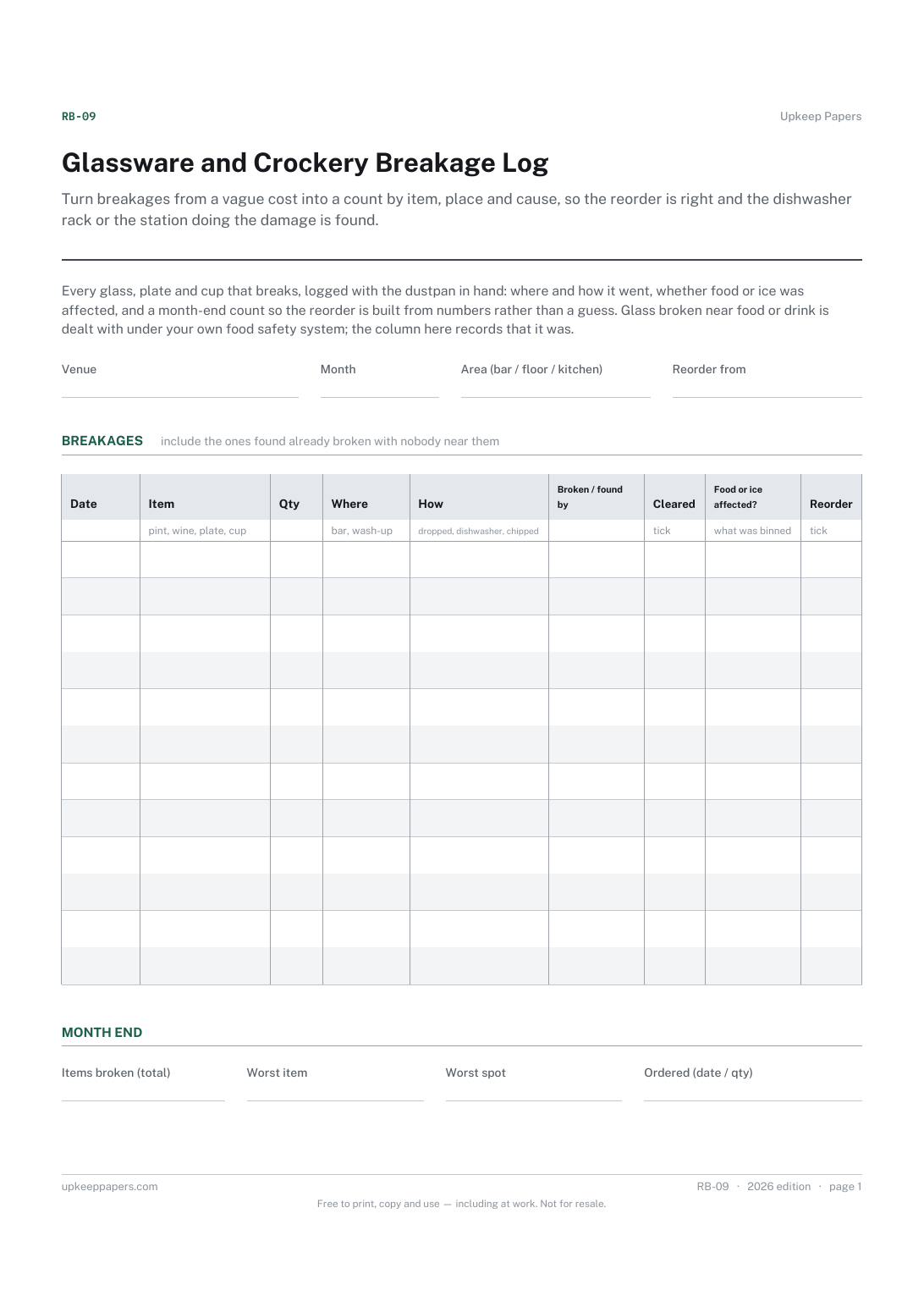
Turn breakages from a vague cost into a count by item, place and cause, so the reorder is right and the dishwasher rack or the station doing the damage is found.
Bar and restaurant managers, kitchen porters, head waiters and anyone who orders the glassware and crockery.
One page, top to bottom:
Printed under the title: Every glass, plate and cup that breaks, logged with the dustpan in hand: where and how it went, whether food or ice was affected, and a month-end count so the reorder is built from numbers rather than a guess. Glass broken near food or drink is dealt with under your own food safety system; the column here records that it was.
Write-on lines: Venue · Month · Area (bar / floor / kitchen) · Reorder from
Table, 12 rows: Date · Item · Qty · Where · How · Broken / found by · Cleared · Food or ice affected? · Reorder
Write-on lines: Items broken (total) · Worst item · Worst spot · Ordered (date / qty)
Yes. A glass found chipped in the rack or a plate cracked in the dishwasher is still stock gone, and a run of them from one place is the pattern this sheet exists to show.
That is handled under your own food safety system, which says what is thrown away and how the area is cleared. The column here records that it was done and what went in the bin.
Record what gets thrown away and why, which is usually the fastest way to find where a kitchen's margin is going.
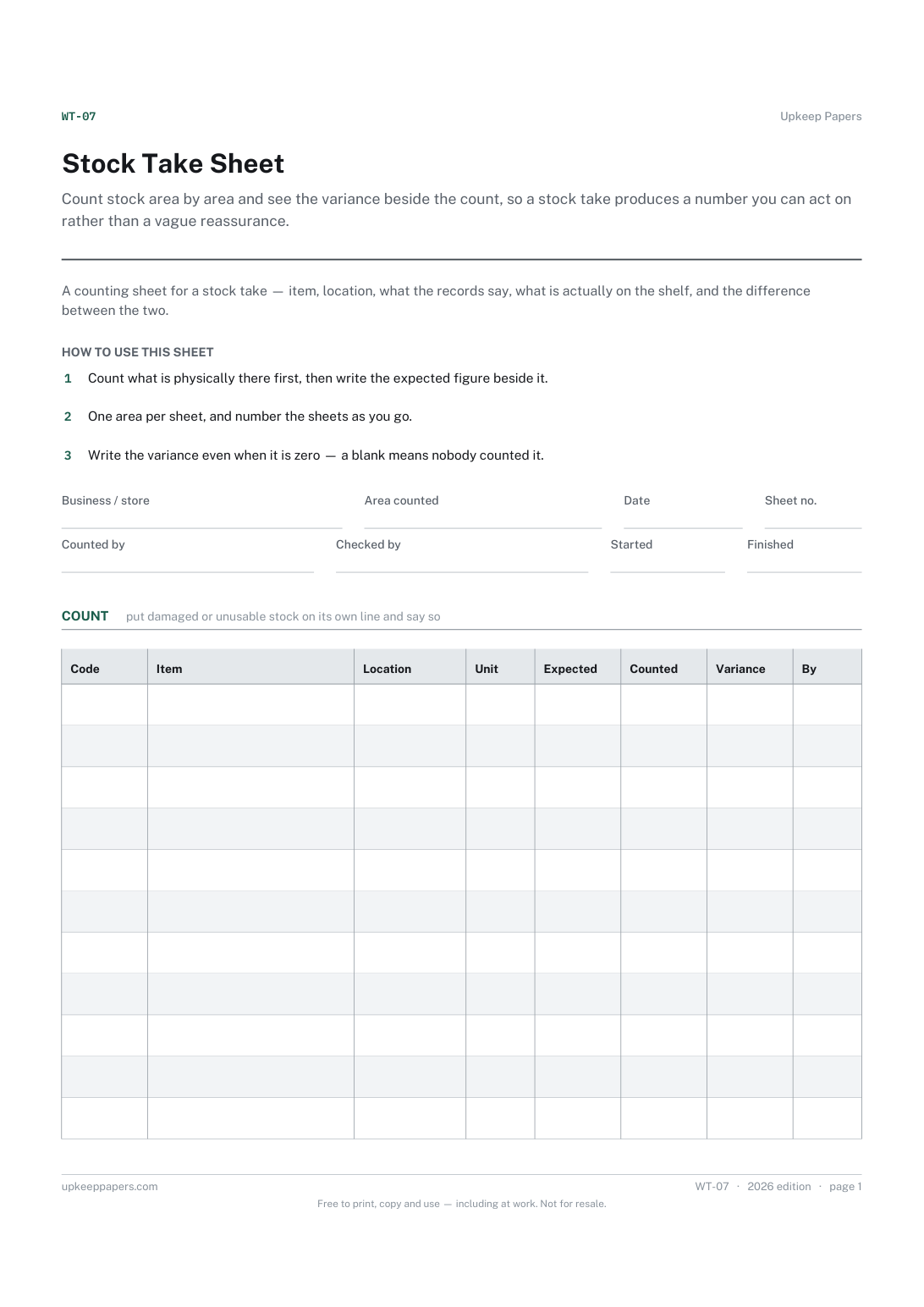
Count stock area by area and see the variance beside the count, so a stock take produces a number you can act on rather than a vague reassurance.
Capture an incident properly on the day, in the affected person's own words, with the witness details and equipment notes that become impossible to gather later.
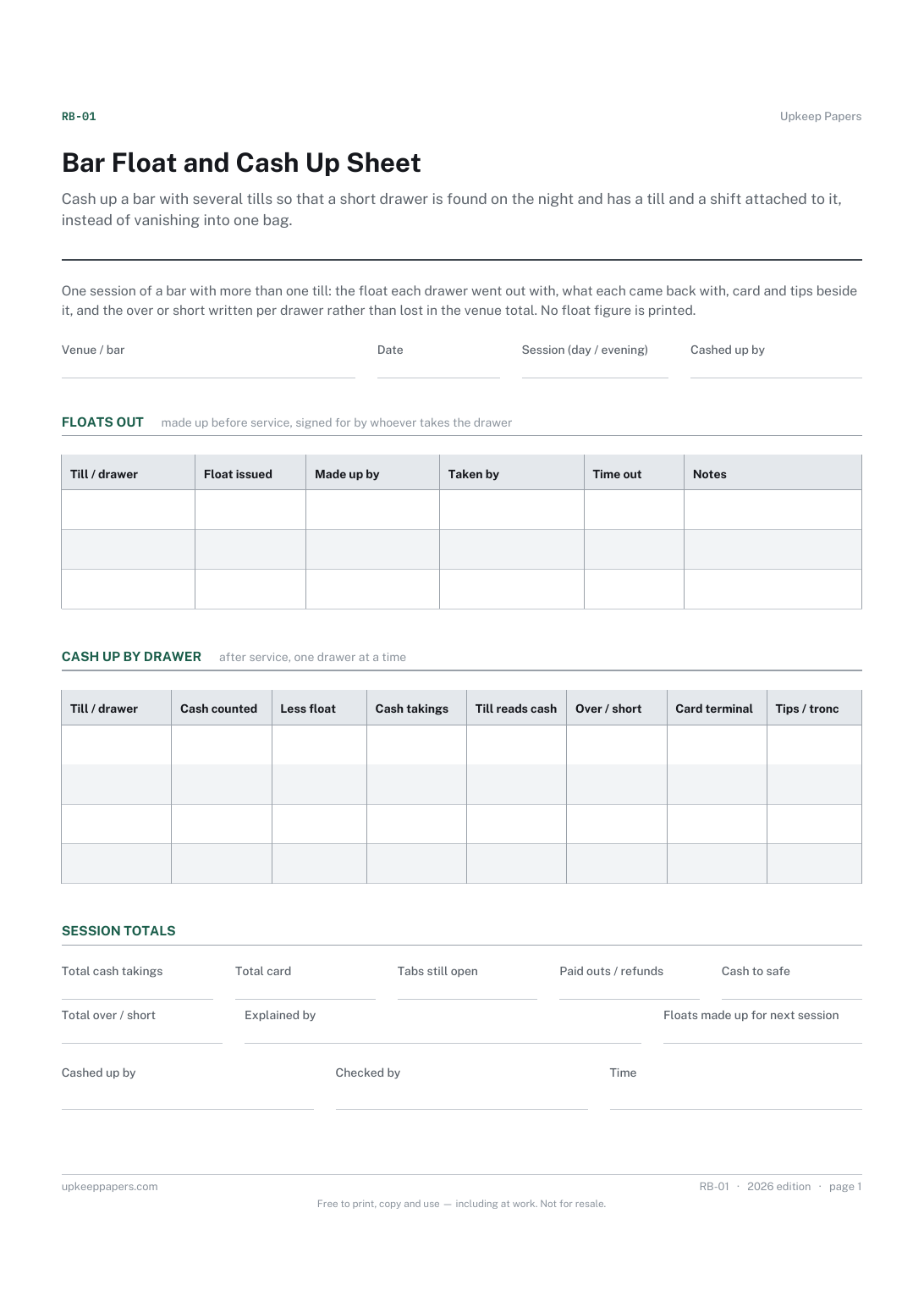
Cash up a bar with several tills so that a short drawer is found on the night and has a till and a shift attached to it, instead of vanishing into one bag.

Every sheet, binder, game and puzzle on Upkeep Papers is free to download, with no email and no account. Making them is not free: each one takes days of research, design and checking, and the site costs money to run. If something here saved you time, you can buy us a coffee. It is entirely optional: nothing is locked, and nothing changes if you don’t.
Buy us a coffee Opens PayPal in a new tab. Any amount, and nothing changes if you would rather not.