Insurance Claim Evidence Log
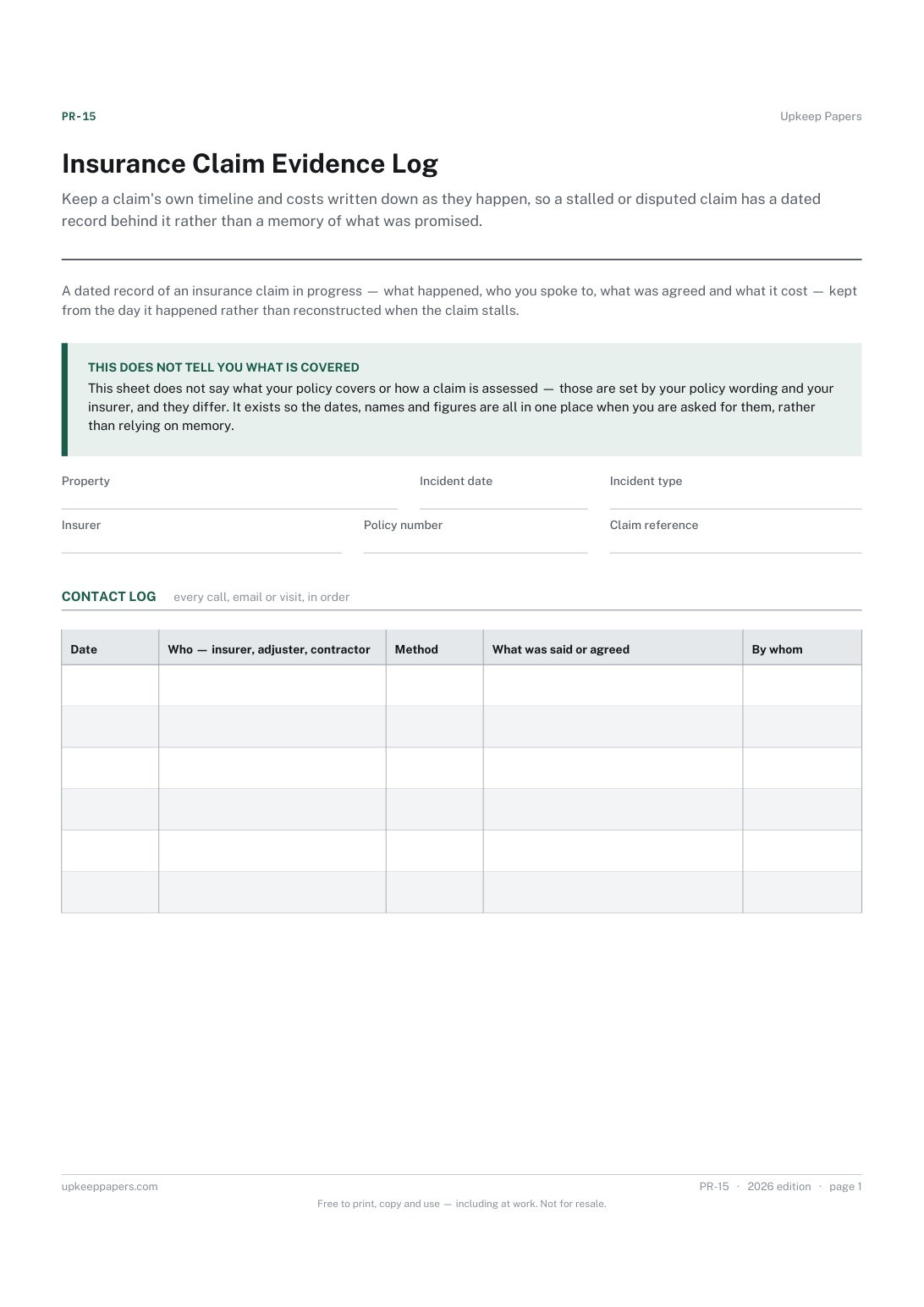
Keep a claim's own timeline and costs written down as they happen, so a stalled or disputed claim has a dated record behind it rather than a memory of what was promised.
PR-15 2 pages
Everything here is free. Making it takes time and money. Everything here is free.
 Buy us a coffee
Property records · PR-18
A free printable crack monitoring log: each crack numbered and described, then dated width and length readings at the same marked point, with photos.
2 pages. Choose your paper size — both versions are laid out identically, so neither one gets shrunk to fit.
Print it and write on it
Fill it in type and save
The fillable versions have real form fields — open them in any PDF reader, type into them and save. Printing help.
Show a surveyor or insurer whether a crack is growing or only moving with the seasons. The readings are taken the same way every time, so they can be compared.
Homeowners, landlords and tenants watching a crack in a wall or foundation, before or while a surveyor is involved.
2 pages, in this order:
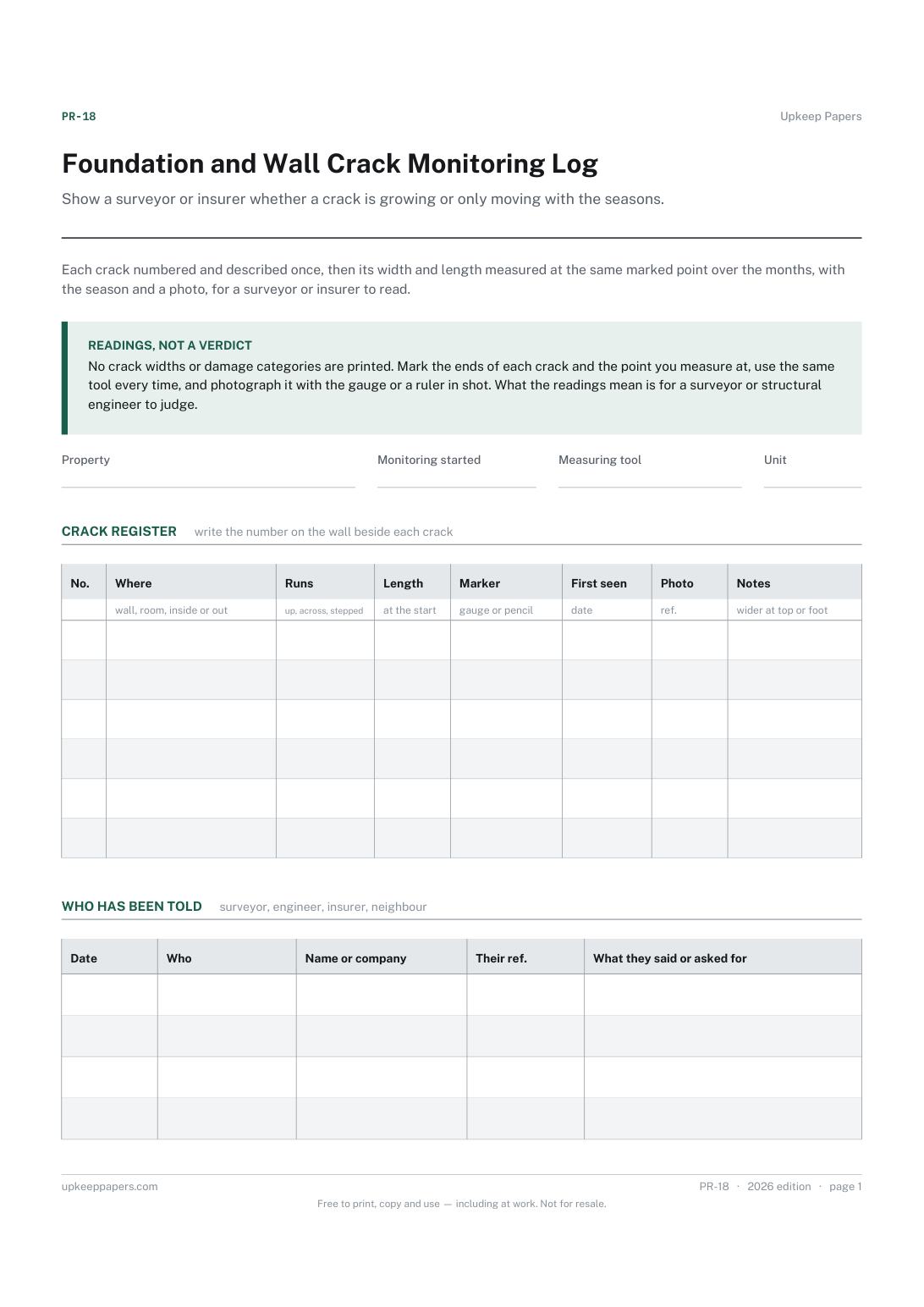
Printed under the title: Each crack numbered and described once, then its width and length measured at the same marked point over the months, with the season and a photo, for a surveyor or insurer to read.
Readings, not a verdict. No crack widths or damage categories are printed. Mark the ends of each crack and the point you measure at, use the same tool every time, and photograph it with the gauge or a ruler in shot. What the readings mean is for a surveyor or structural engineer to judge.
Write-on lines: Property · Monitoring started · Measuring tool · Unit
Table, 6 rows: No. · Where · Runs · Length · Marker · First seen · Photo · Notes
Table, 4 rows: Date · Who · Name or company · Their ref. · What they said or asked for
Table, 22 rows: Date · Crack · Width · Length · Season · Sticking · Photo · Notes · Initials
Because it is not a judgement a printed sheet should make: the width is one of several things a surveyor or structural engineer weighs, alongside the crack's shape, place and history. The sheet gives them a clean run of readings to judge from.
Because many cracks open and close a little as the ground and the building wet and dry through the year. Readings with the season beside them make that movement easier to tell apart from a crack that is steadily getting wider.
Keep a claim's own timeline and costs written down as they happen, so a stalled or disputed claim has a dated record behind it rather than a memory of what was promised.
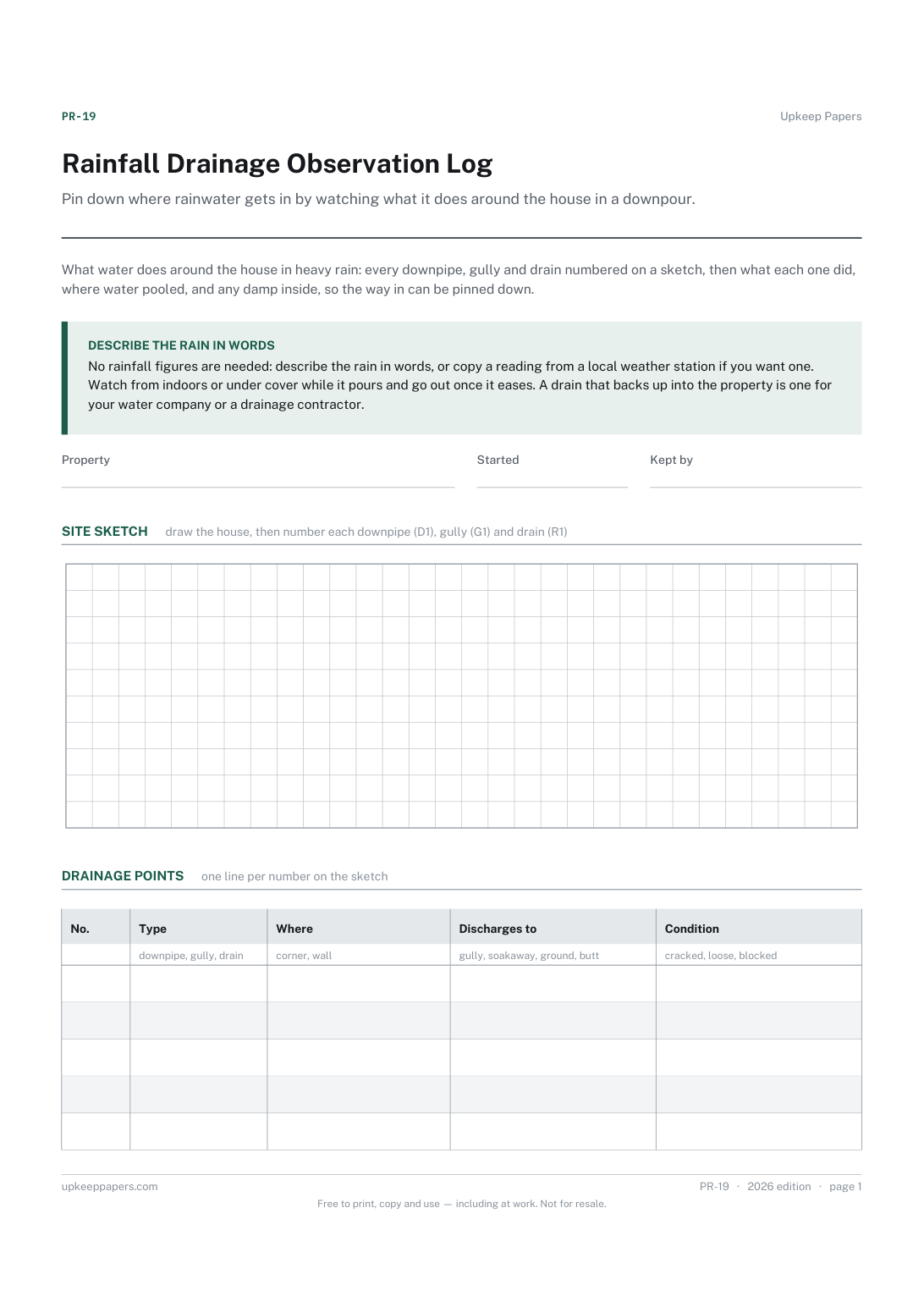
Pin down where rainwater gets in by watching what it does around the house in a downpour. Outside and inside go on the same line, so the link shows.
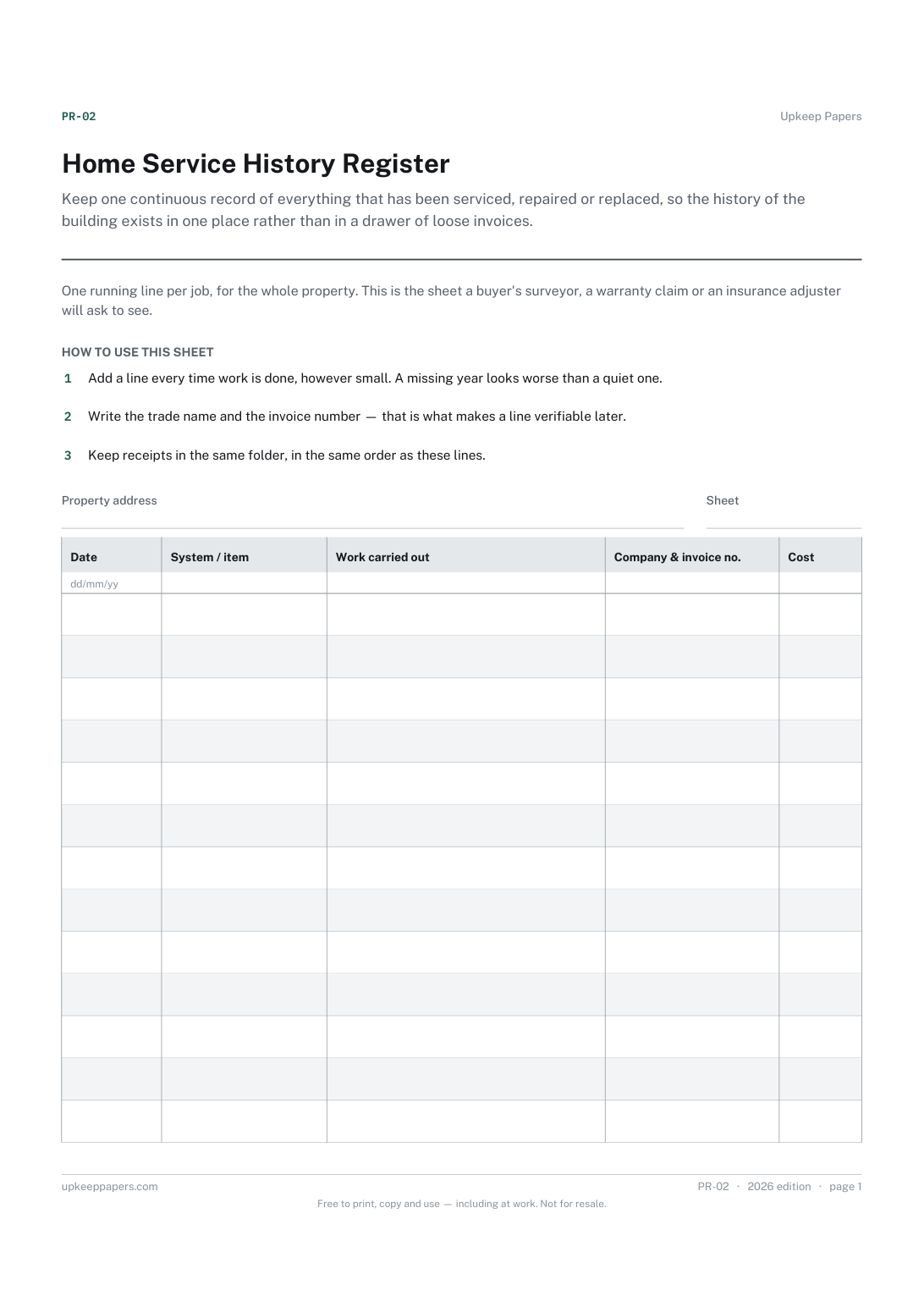
Keep one continuous record of everything that has been serviced, repaired or replaced, so the history of the building exists in one place rather than in a drawer of loose invoices.
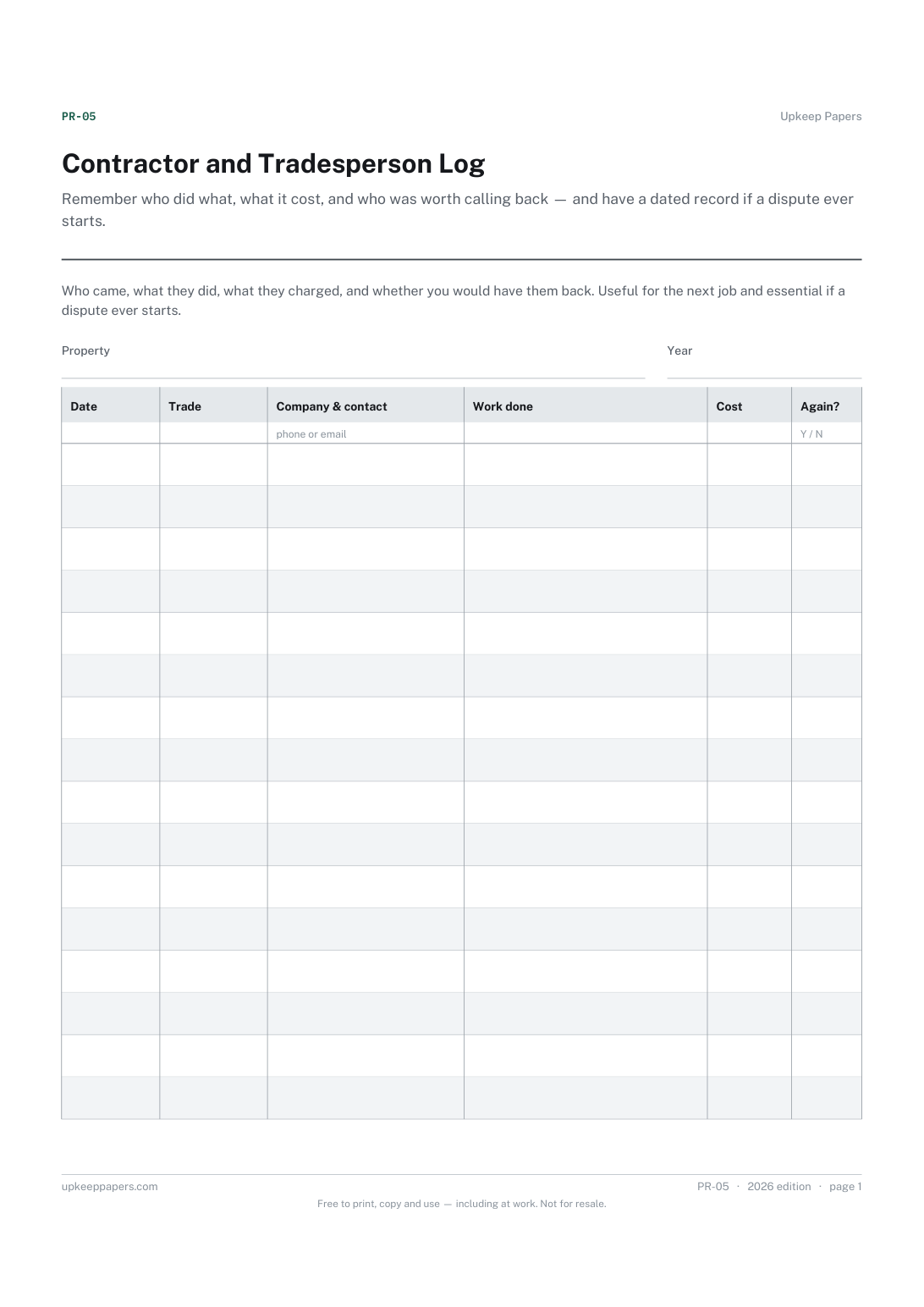
Remember who did what, what it cost, and who was worth calling back — and have a dated record if a dispute ever starts.

Every sheet, binder, game and puzzle on Upkeep Papers is free to download, with no email and no account. Making them is not free: each one takes days of research, design and checking, and the site costs money to run. If something here saved you time, you can buy us a coffee. It is entirely optional: nothing is locked, and nothing changes if you don’t.
Buy us a coffee Opens PayPal in a new tab. Any amount, and nothing changes if you would rather not.