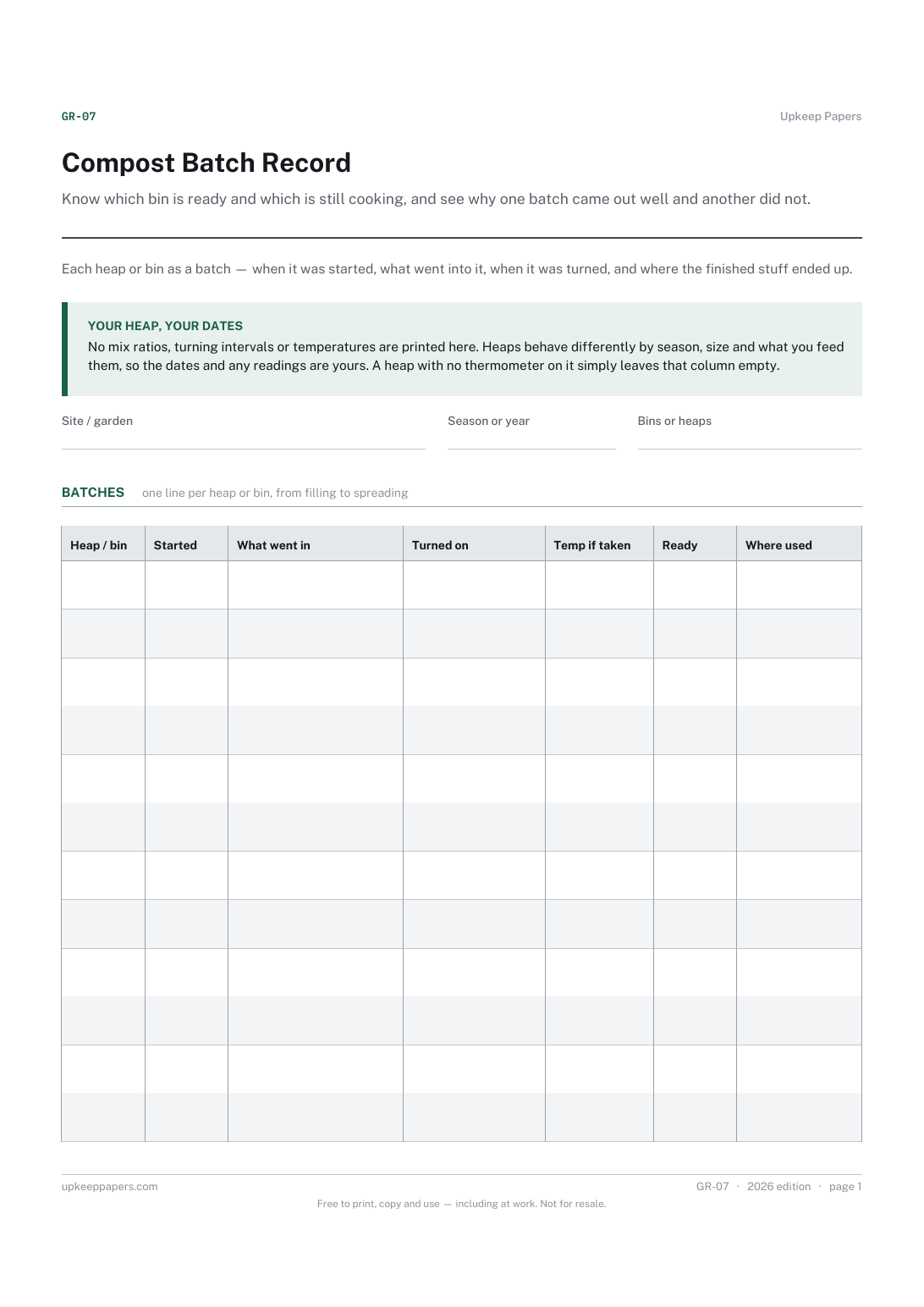
Compost Batch Record
Know which bin is ready and which is still cooking, and see why one batch came out well and another did not.
GR-07 1 page
Everything here is free. Making it takes time and money. Everything here is free.
 Buy us a coffee
Garden and growing · GG-29
A free printable wormery log: what went into the bin, moisture, smell, flies and worm checks, liquid drained, and every harvest of worm compost.
2 pages. Choose your paper size — both versions are laid out identically, so neither one gets shrunk to fit.
Print it and write on it
Fill it in type and save
The fillable versions have real form fields — open them in any PDF reader, type into them and save. Printing help.
Catch overfeeding before the bin turns wet and sour by noting what went in and how it looked. Harvests and fixes are kept alongside, so you learn what your worms will manage.
Home and school wormery keepers, allotment holders and anyone composting food waste with worms.
2 pages, in this order:
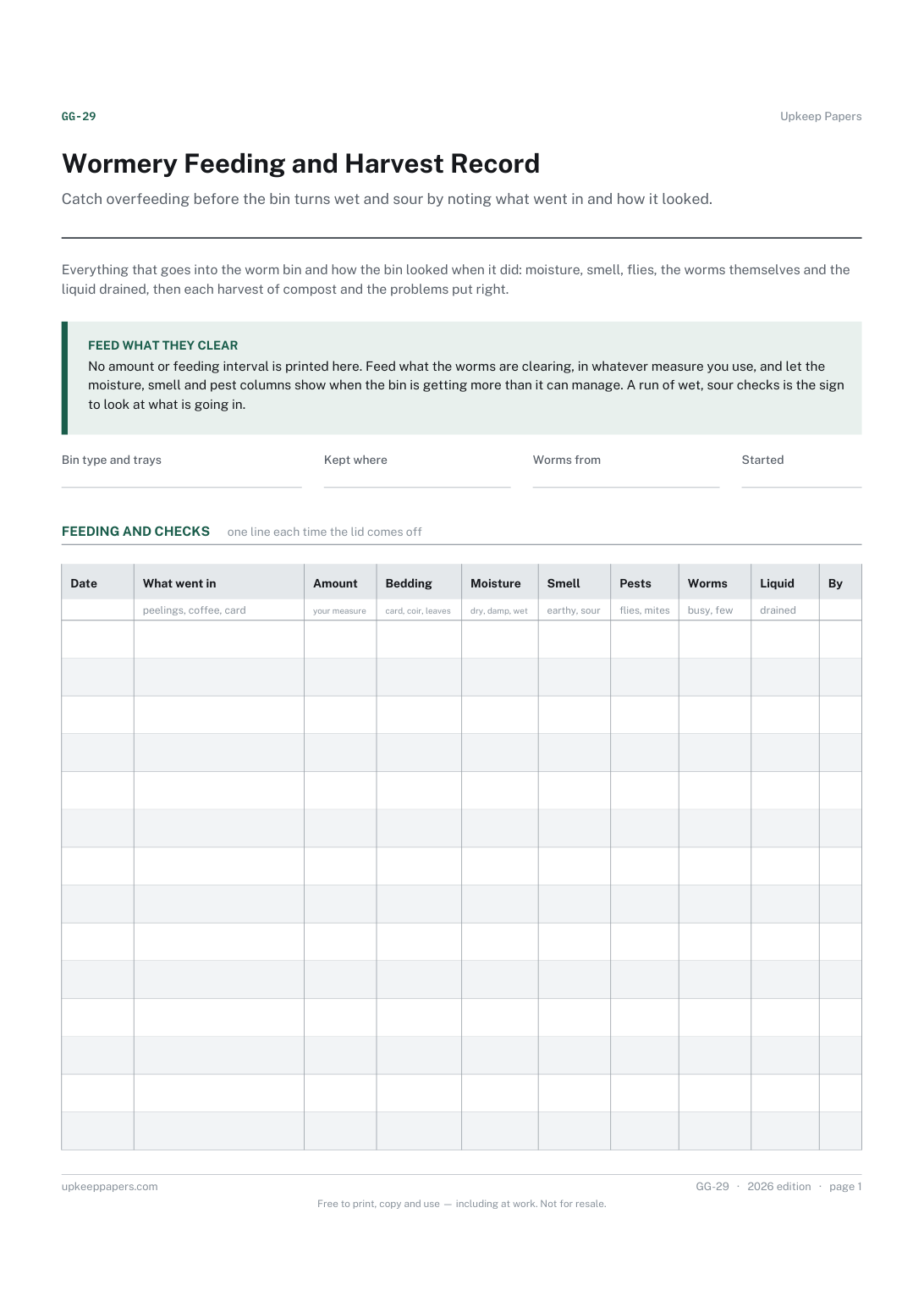
Printed under the title: Everything that goes into the worm bin and how the bin looked when it did: moisture, smell, flies, the worms themselves and the liquid drained, then each harvest of compost and the problems put right.
Feed what they clear. No amount or feeding interval is printed here. Feed what the worms are clearing, in whatever measure you use, and let the moisture, smell and pest columns show when the bin is getting more than it can manage. A run of wet, sour checks is the sign to look at what is going in.
Write-on lines: Bin type and trays · Kept where · Worms from · Started
Table, 20 rows: Date · What went in · Amount · Bedding · Moisture · Smell · Pests · Worms · Liquid · By
Table, 5 rows: Date · Method · Compost taken · Used on · Worms returned · Notes
Table, 6 rows: Date · Problem seen · What was done · Settled by
Because it depends on the size of the bin, how many worms are in it, the time of year and what you feed. The columns for moisture, smell and pests tell you when the bin is getting more than it can clear.
Most guidance describes damp but not dripping bedding, an earthy smell and busy worms. Write what you see in your own words; a run of wet, sour or fly-ridden checks is the cue to look at what is going in.
Know which bin is ready and which is still cooking, and see why one batch came out well and another did not.
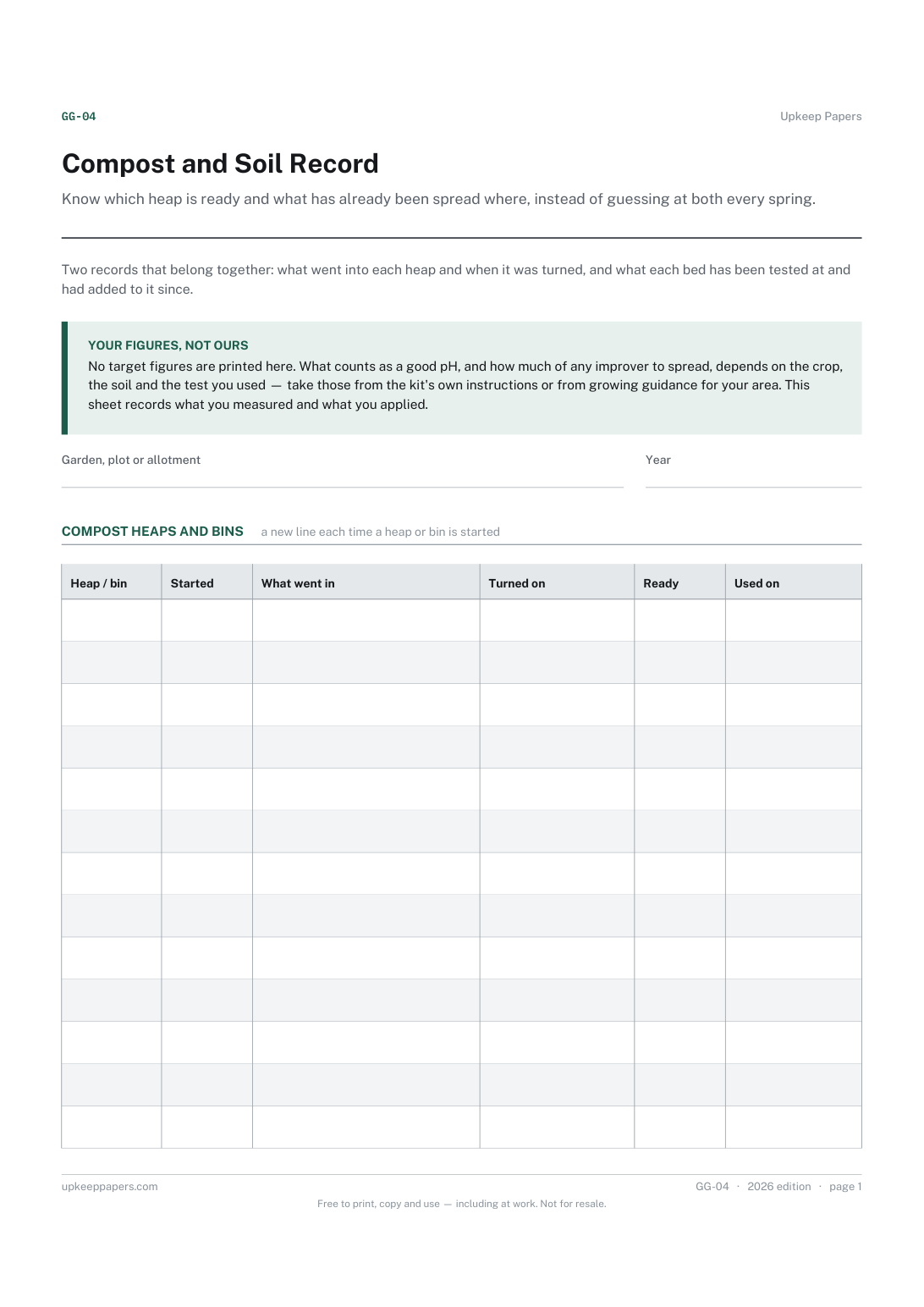
Know which heap is ready and what has already been spread where, instead of guessing at both every spring.
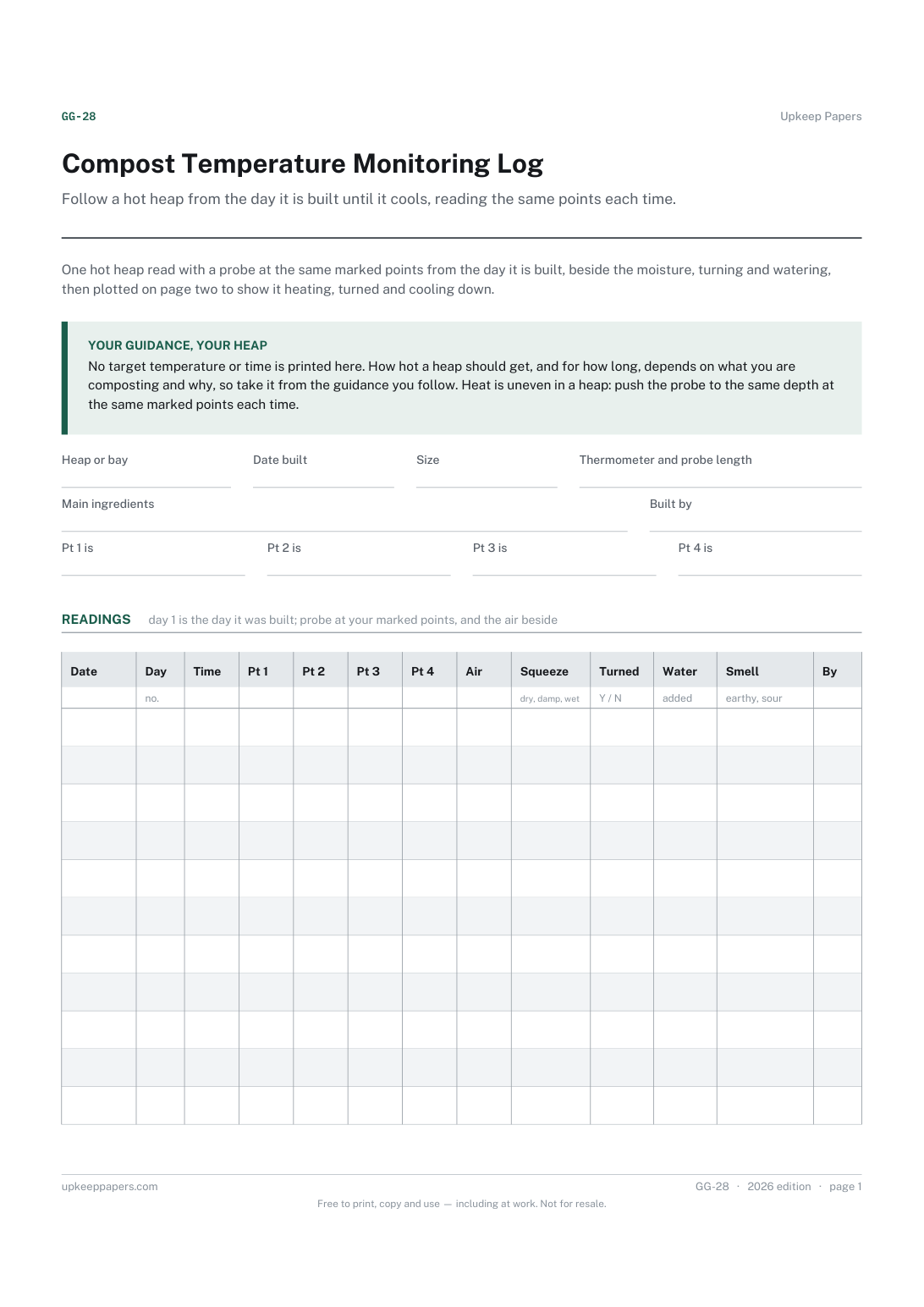
Follow a hot heap from the day it is built until it cools, reading the same points each time. Plotting the readings shows when it heated, how turning revived it and when it settled.
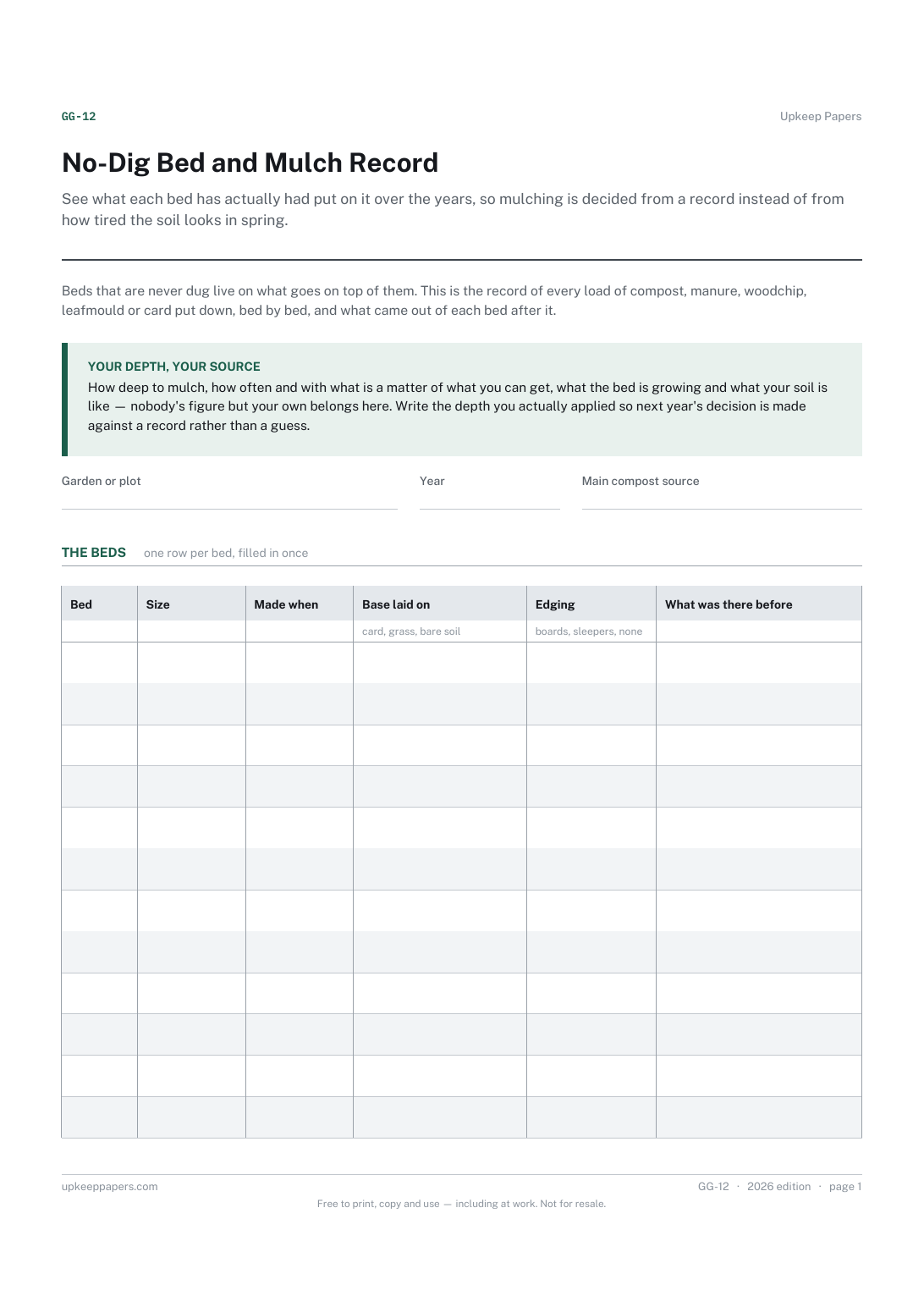
See what each bed has actually had put on it over the years, so mulching is decided from a record instead of from how tired the soil looks in spring.

Every sheet, binder, game and puzzle on Upkeep Papers is free to download, with no email and no account. Making them is not free: each one takes days of research, design and checking, and the site costs money to run. If something here saved you time, you can buy us a coffee. It is entirely optional: nothing is locked, and nothing changes if you don’t.
Buy us a coffee Opens PayPal in a new tab. Any amount, and nothing changes if you would rather not.