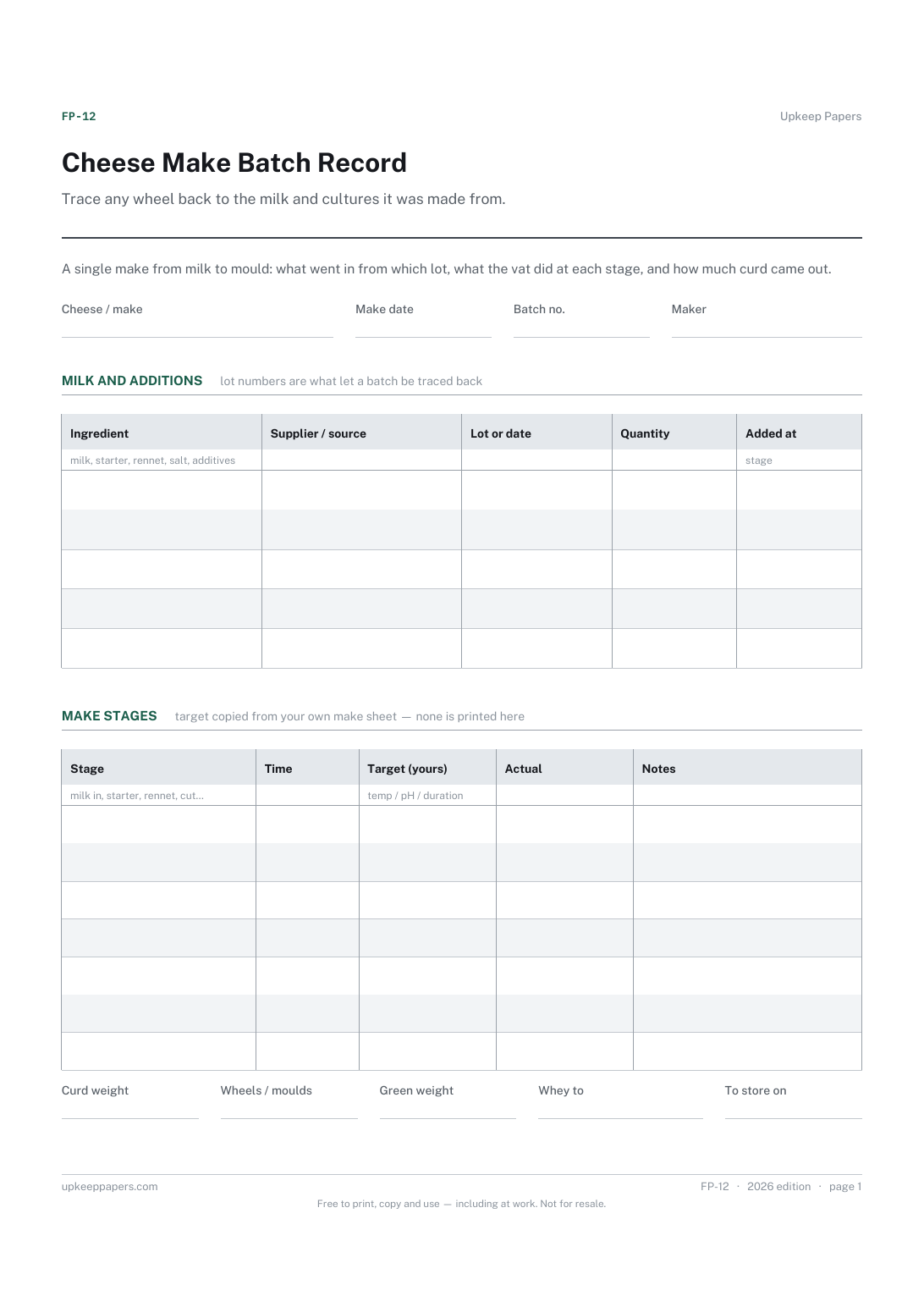
Cheese Make Batch Record
Trace any wheel back to the milk and cultures it was made from. When a make comes out differently, the stage that drifted is on the page.
FP-12 1 page
Everything here is free. Making it takes time and money. Everything here is free.
 Buy us a coffee
Food production and artisan makers · FP-11
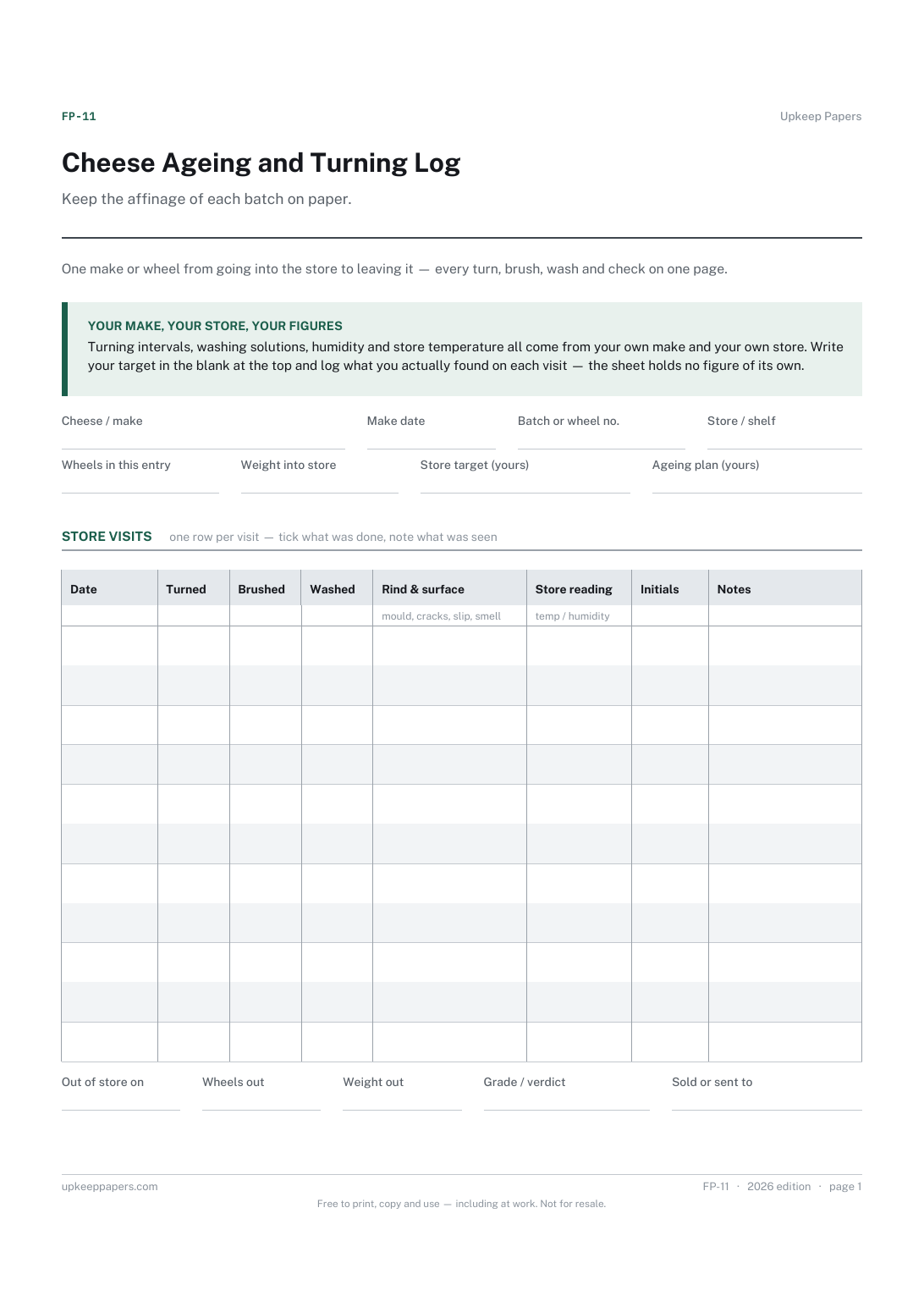
A cheese ageing log — one make or wheel from entering the store to leaving it, with a row per visit for turning, washing, rind condition and store reading.
One page. Choose your paper size — both versions are laid out identically, so neither one gets shrunk to fit.
Print it and write on it
Fill it in type and save
The fillable versions have real form fields — open them in any PDF reader, type into them and save. Printing help.
Keep the affinage of each batch on paper. A wheel that turned out well was handled a particular way, and this is how you repeat it.
Farmhouse and artisan cheesemakers ageing their own cheese, and anyone running a maturing room for someone else's.
One page, top to bottom:
Printed under the title: One make or wheel from going into the store to leaving it — every turn, brush, wash and check on one page.
Your make, your store, your figures. Turning intervals, washing solutions, humidity and store temperature all come from your own make and your own store. Write your target in the blank at the top and log what you actually found on each visit — the sheet holds no figure of its own.
Write-on lines: Cheese / make · Make date · Batch or wheel no. · Store / shelf · Wheels in this entry · Weight into store · Store target (yours) · Ageing plan (yours)
Table, 11 rows: Date · Turned · Brushed · Washed · Rind & surface · Store reading · Initials · Notes
Write-on lines: Out of store on · Wheels out · Weight out · Grade / verdict · Sold or sent to
Because that is your make. A washed-rind cheese and a clothbound one are turned and treated on entirely different plans, and the plan belongs to your process. The sheet gives you a blank for it and a row for every visit.
Whatever your store's thermometer and hygrometer showed on that visit. It is the record of the actual conditions the cheese sat in, which is what you will want when a batch comes out differently.
Trace any wheel back to the milk and cultures it was made from. When a make comes out differently, the stage that drifted is on the page.
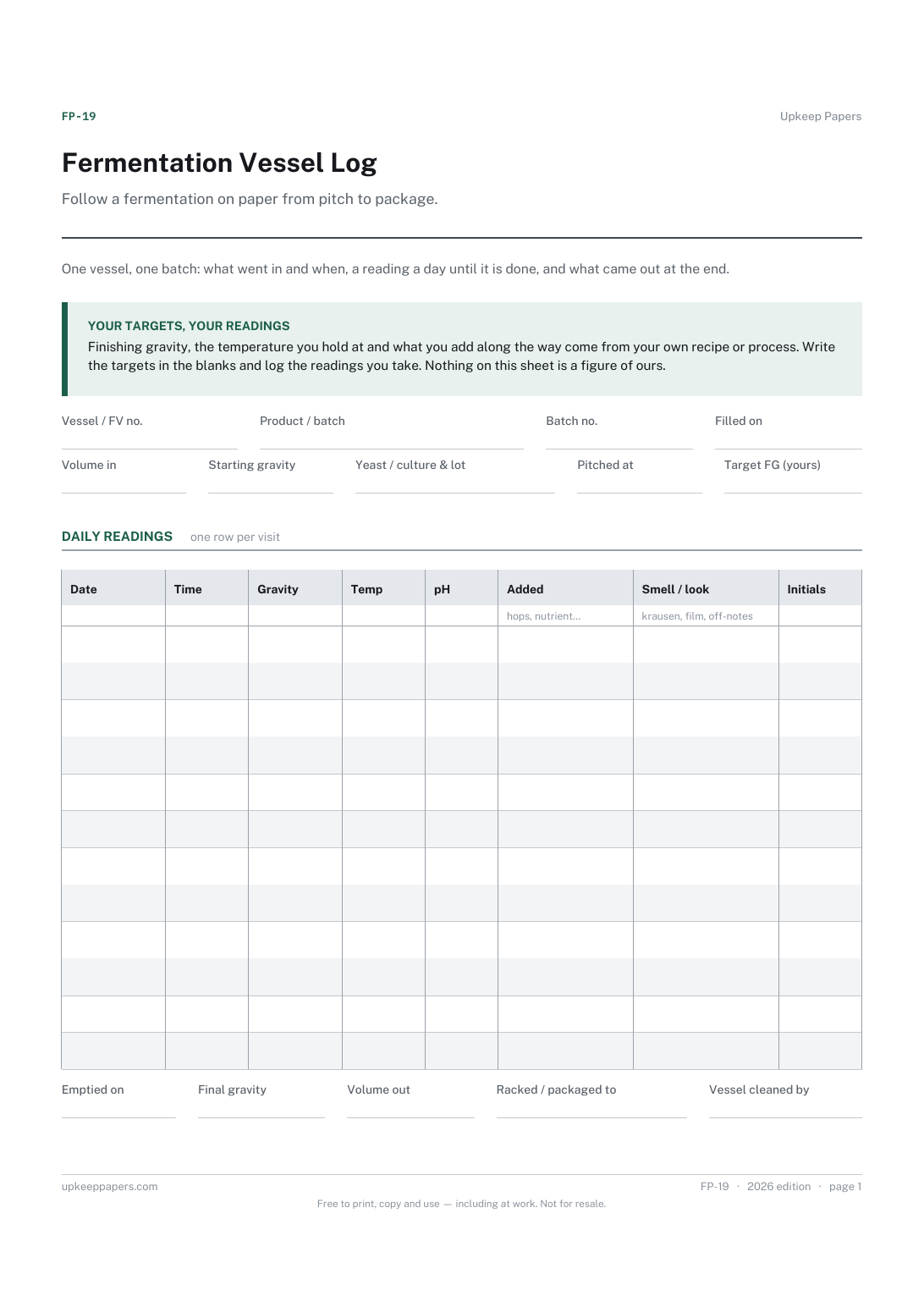
Follow a fermentation on paper from pitch to package. A stuck batch or an off-note then has a dated history to look back through.
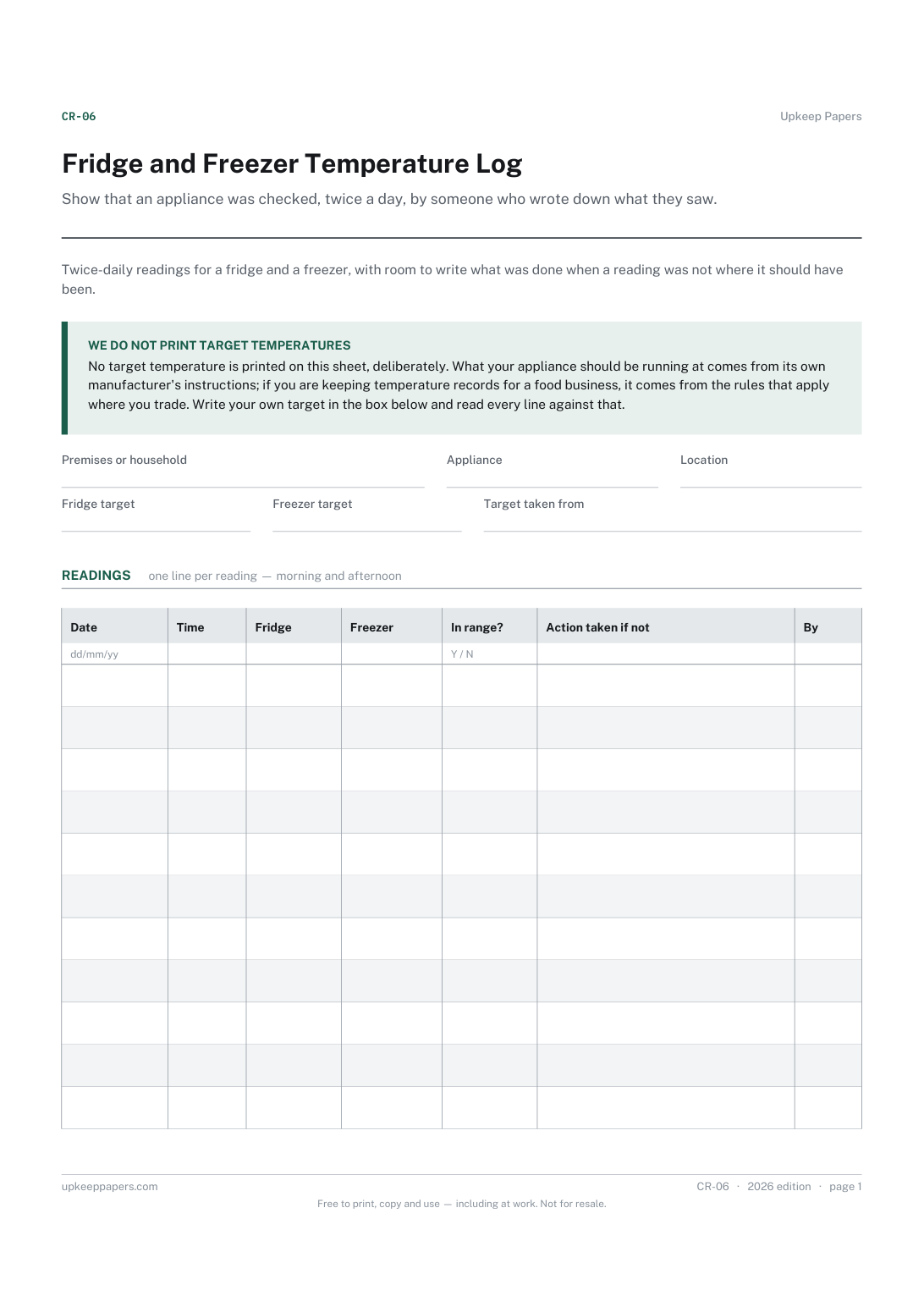
Show that an appliance was checked, twice a day, by someone who wrote down what they saw. A run of readings shows drift long before one reading shows a failure.
Record yields per animal daily, with the notes that turn an unexplained drop into an early warning.

Every sheet, binder, game and puzzle on Upkeep Papers is free to download, with no email and no account. Making them is not free: each one takes days of research, design and checking, and the site costs money to run. If something here saved you time, you can buy us a coffee. It is entirely optional: nothing is locked, and nothing changes if you don’t.
Buy us a coffee Opens PayPal in a new tab. Any amount, and nothing changes if you would rather not.