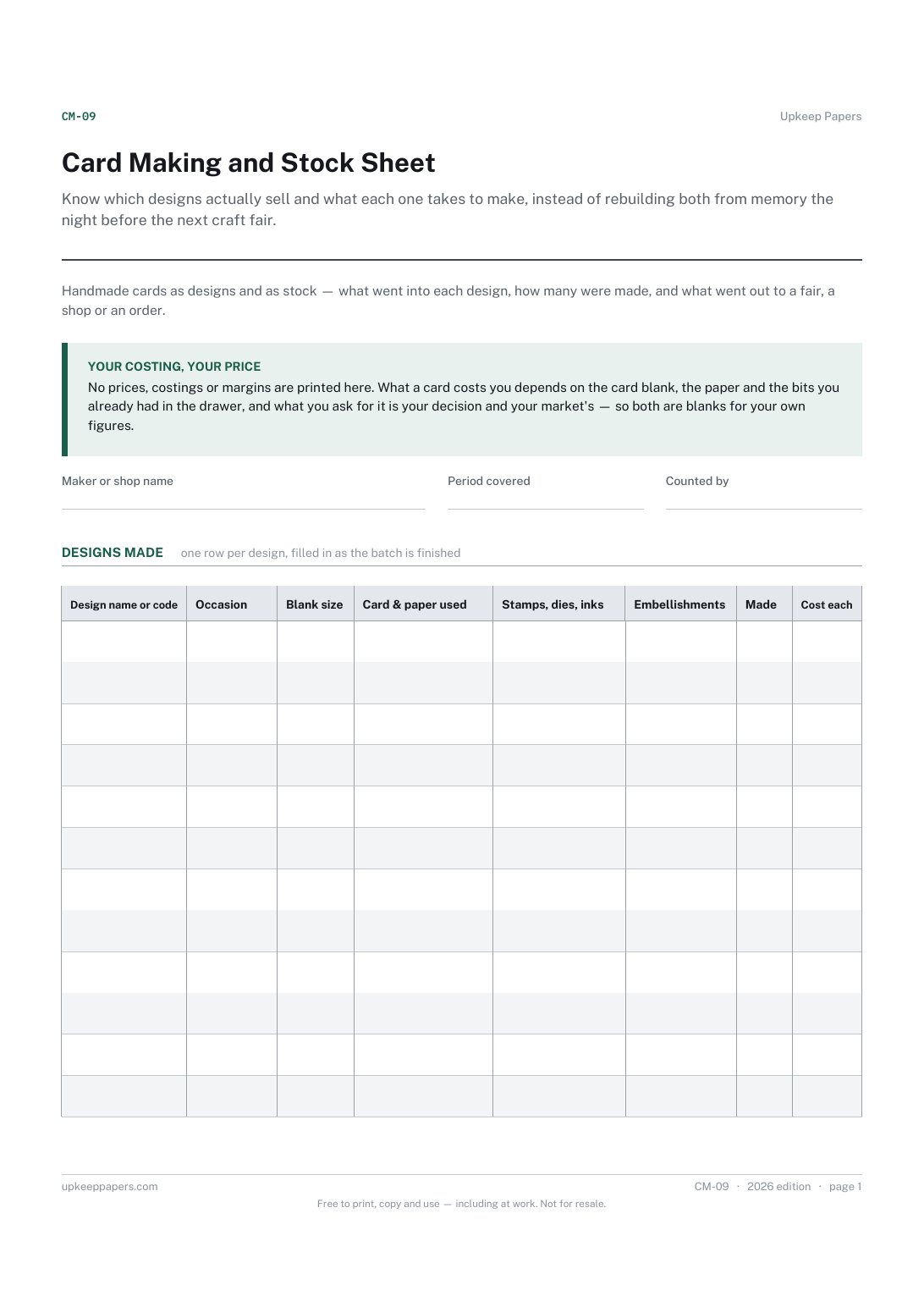
Card Making and Stock Sheet
Know which designs actually sell and what each one takes to make, instead of rebuilding both from memory the night before the next craft fair.
CM-09 2 pages
Everything here is free. Making it takes time and money. Everything here is free.
 Buy us a coffee
Craft and making · CM-15
A free printable scrapbook planning sheet — one row per page or spread with the theme, the photographs it needs, the papers and whether the journalling is done.
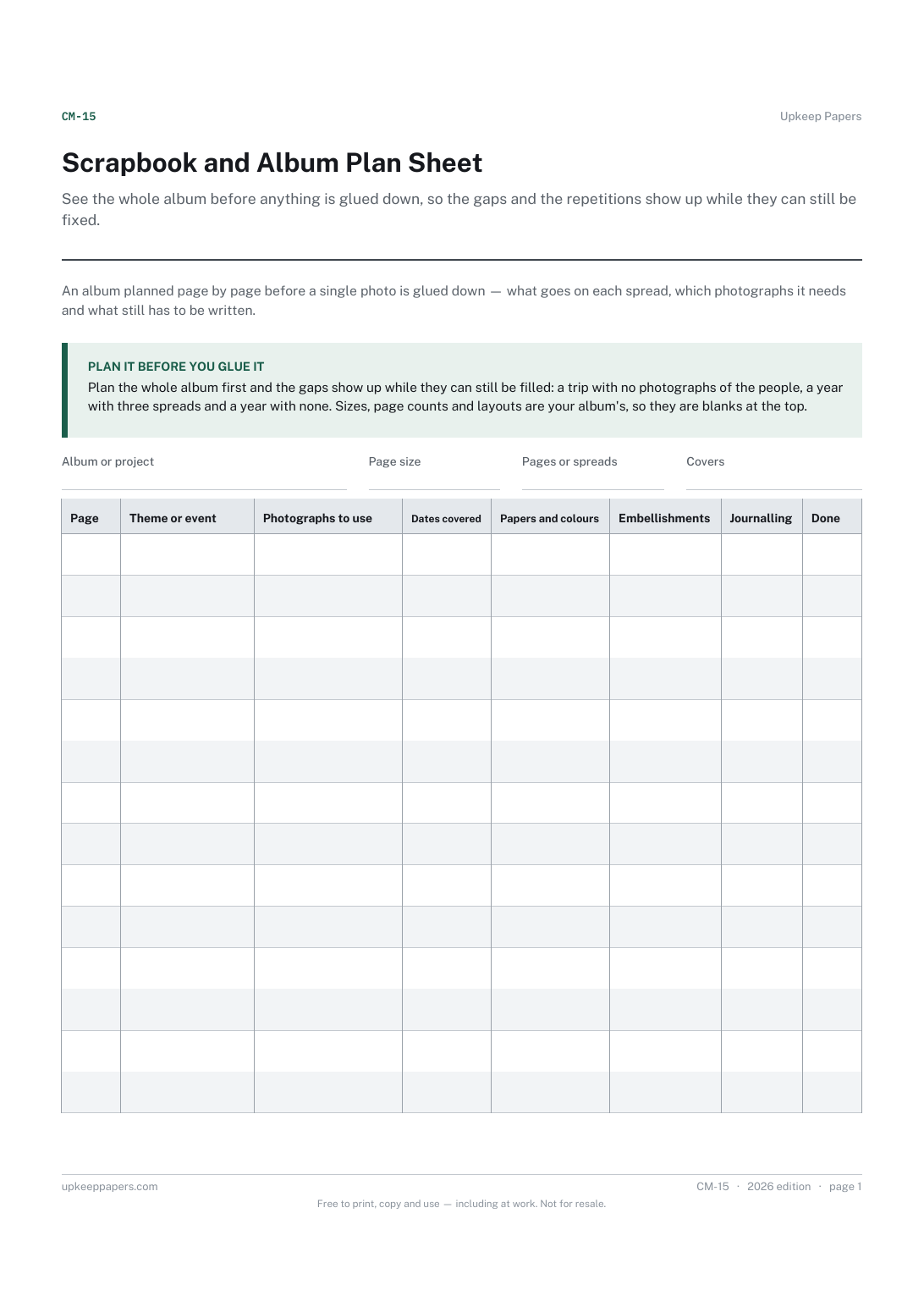
One page. Choose your paper size — both versions are laid out identically, so neither one gets shrunk to fit.
Print it and write on it
Fill it in type and save
The fillable versions have real form fields — open them in any PDF reader, type into them and save. Printing help.
See the whole album before anything is glued down, so the gaps and the repetitions show up while they can still be fixed.
Scrapbookers and memory-keepers working on an album, and anyone assembling a milestone book for a wedding, a trip or a year.
One page, top to bottom:
Printed under the title: An album planned page by page before a single photo is glued down — what goes on each spread, which photographs it needs and what still has to be written.
Plan it before you glue it. Plan the whole album first and the gaps show up while they can still be filled: a trip with no photographs of the people, a year with three spreads and a year with none. Sizes, page counts and layouts are your album's, so they are blanks at the top.
Write-on lines: Album or project · Page size · Pages or spreads · Covers
Table, 14 rows: Page · Theme or event · Photographs to use · Dates covered · Papers and colours · Embellishments · Journalling · Done
Because photographs get used twice and whole months get missed when an album is built a page at a time. Laying the plan out first shows you a trip with no pictures of the people in it while there is still room to fix it.
Because a page can look finished and still have an empty space where the story was meant to go. Keeping it separate means the album is not called done until the words are in.
Know which designs actually sell and what each one takes to make, instead of rebuilding both from memory the night before the next craft fair.
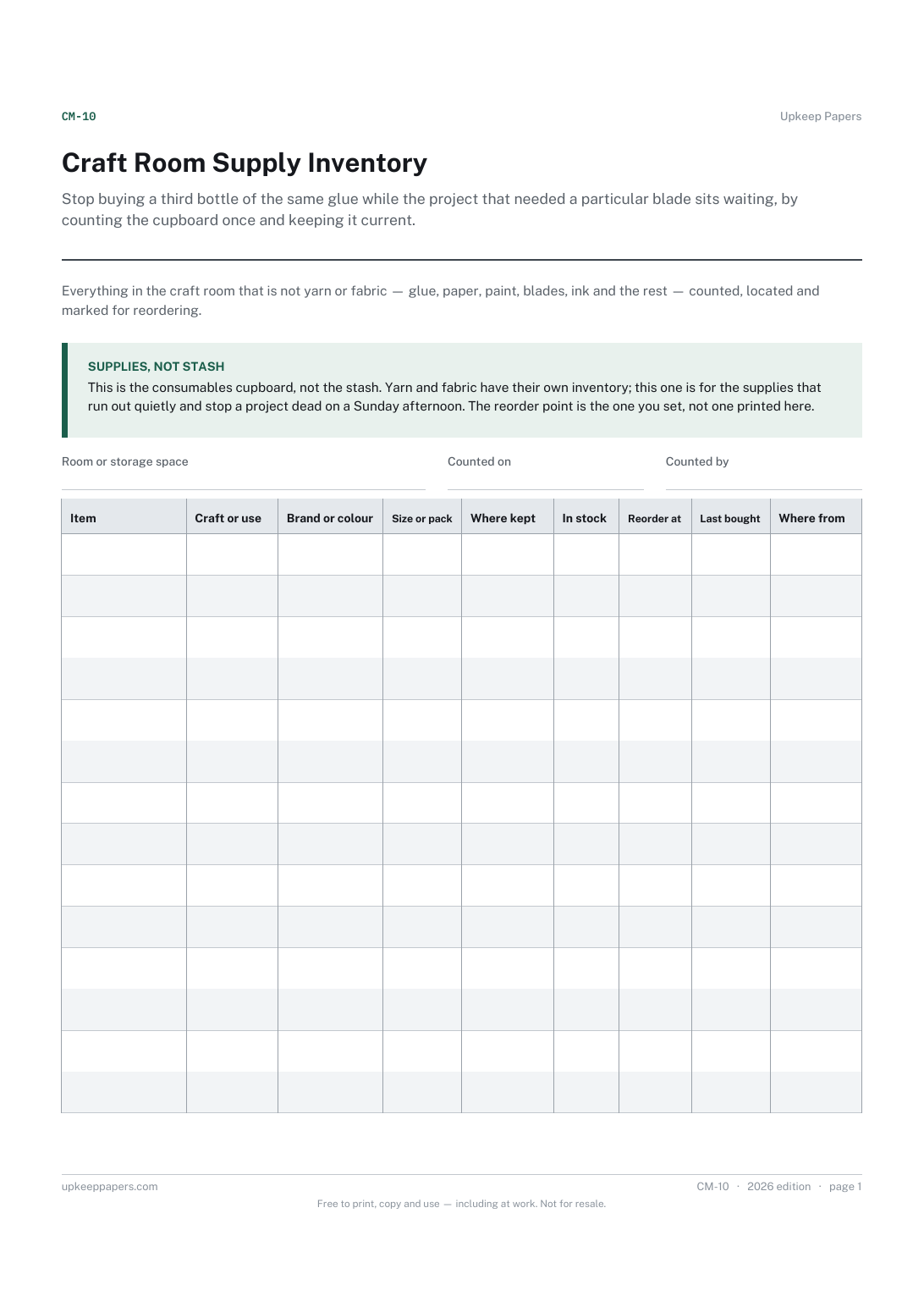
Stop buying a third bottle of the same glue while the project that needed a particular blade sits waiting, by counting the cupboard once and keeping it current.
Record the things a finished object cannot tell you later: which dye lot, which hook you really used, and how much was left over.
Keep a catalogue of finished work and where it went, which is the record galleries, insurers and tax authorities ask for and working artists rarely have.

Every sheet, binder, game and puzzle on Upkeep Papers is free to download, with no email and no account. Making them is not free: each one takes days of research, design and checking, and the site costs money to run. If something here saved you time, you can buy us a coffee. It is entirely optional: nothing is locked, and nothing changes if you don’t.
Buy us a coffee Opens PayPal in a new tab. Any amount, and nothing changes if you would rather not.