How we work
What We Refuse to Print, and Why It Costs Us Traffic
People search for safe pool levels, service intervals and what the law requires. We will not publish those pages. Here is the reasoning, and what it costs.
When we mapped out what people actually search for around record keeping, a pattern showed up quickly. A large share of the demand is not for a form at all. It is for a number.
What should my pool chlorine be. How often should a boiler be serviced. Normal well water test results. What are the legal requirements for.
Those are easy pages to write and they would bring traffic. We are not going to publish them, and since that decision shapes most of this site, it is worth explaining.
Three reasons
The right number is not general. Pool targets depend on your sanitiser system and your pool’s surface. Service intervals differ between two versions of the same model, and between the same appliance installed two different ways. Water quality guidance is set locally and varies by what is common in your area’s geology. There is very often no correct general answer, only a correct answer for you.
A wrong number used confidently is worse than no number. This is the real argument. Somebody who cannot find a figure goes and looks it up properly. Somebody who finds a plausible figure on a tidy-looking website stops looking. If ours is out of date, or was right for a different variant, we have not helped them — we have replaced their uncertainty with false confidence, at exactly the moment they were about to do the right thing.
Paper outlives regulations. A sheet printed today might be pinned inside a cupboard door for a decade. Anything we assert on it is frozen at the moment of printing. A blank field where your own figure goes is still correct in 2036; a printed interval may not be.
What this looks like in practice
The pool chemical log has columns for free chlorine, pH, alkalinity, hardness and stabiliser — and prints no target range for any of them. It says the targets come from your test kit and your supplier.
The well water test log records laboratory results over time and never says what a safe result is. That is set by your local authority or health department.
The vehicle maintenance schedule is a planner for converting your handbook’s intervals into actual mileages. It contains no intervals of its own, partly because they differ so much and partly because manufacturer schedules are the manufacturer’s work, not ours to reproduce.
The bet
The bet is that a sheet designed to hold the right answer is more useful than an article asserting one, and that being trustworthy about the limits of what we know is worth more over time than the traffic we are giving up.
It may be the wrong bet commercially. It is the one we are making.
From the library
Sheets mentioned here
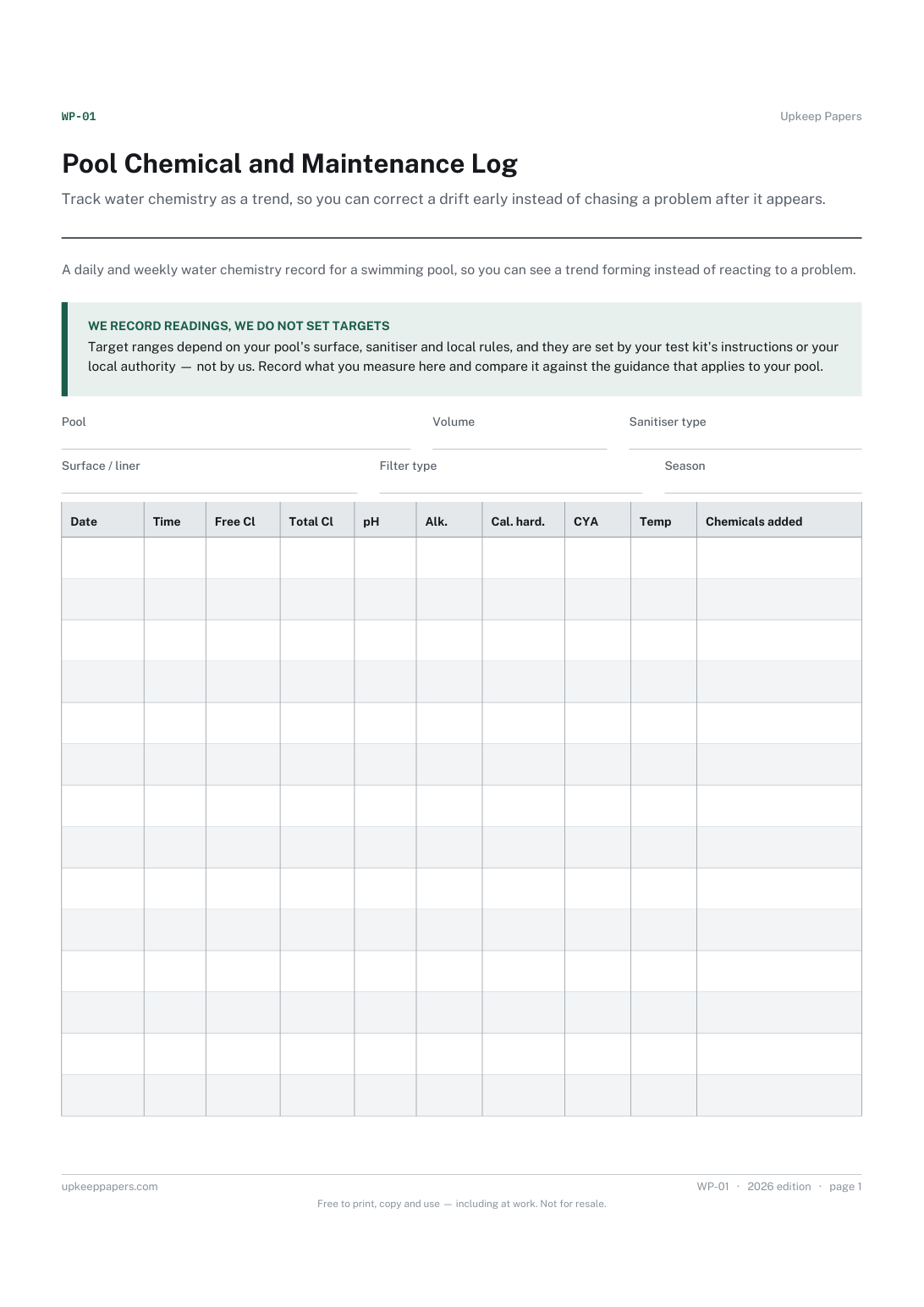
Pool Chemical and Maintenance Log
Track water chemistry as a trend, so you can correct a drift early instead of chasing a problem after it appears.
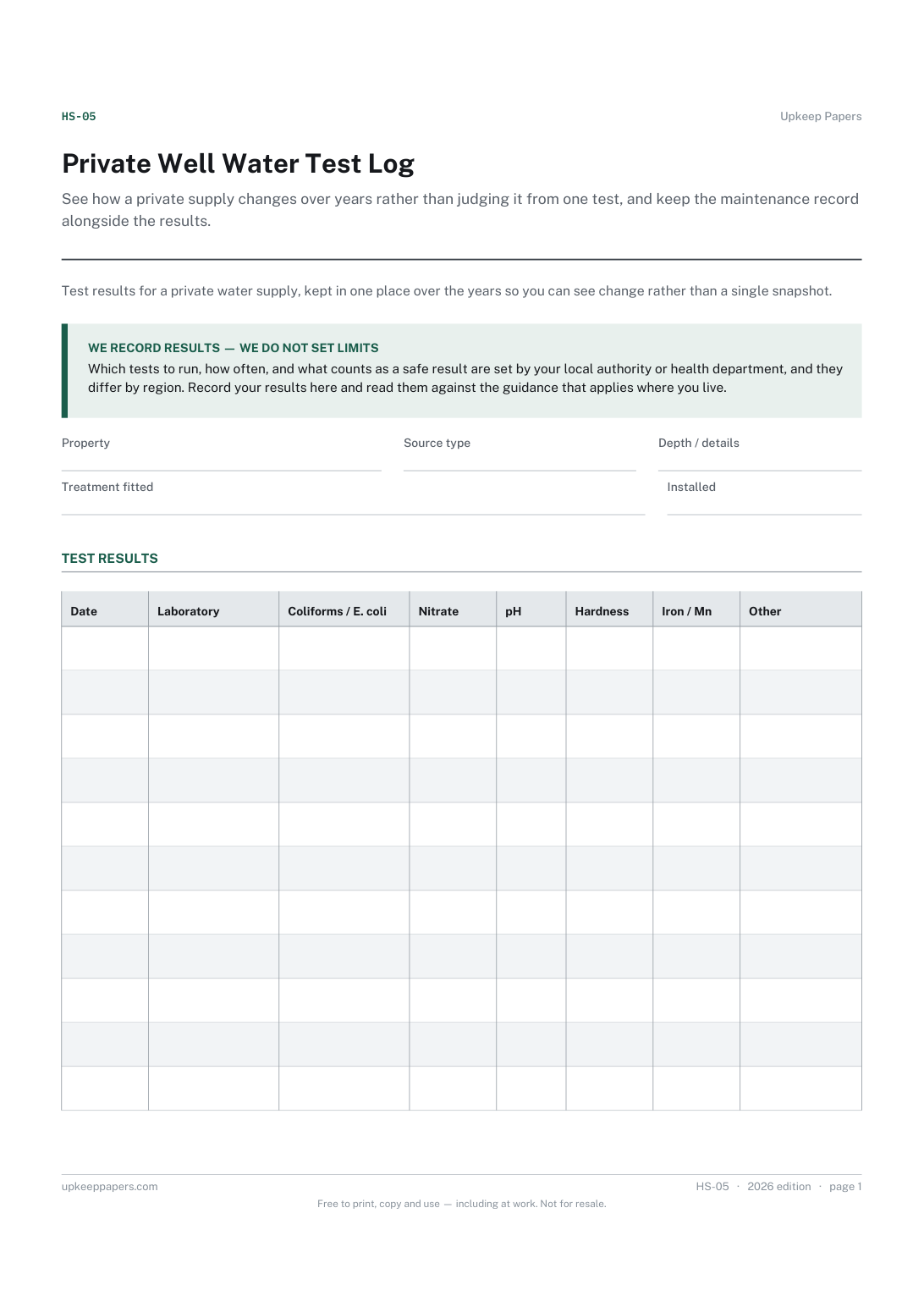
Private Well Water Test Log
See how a private supply changes over years rather than judging it from one test, and keep the maintenance record alongside the results.
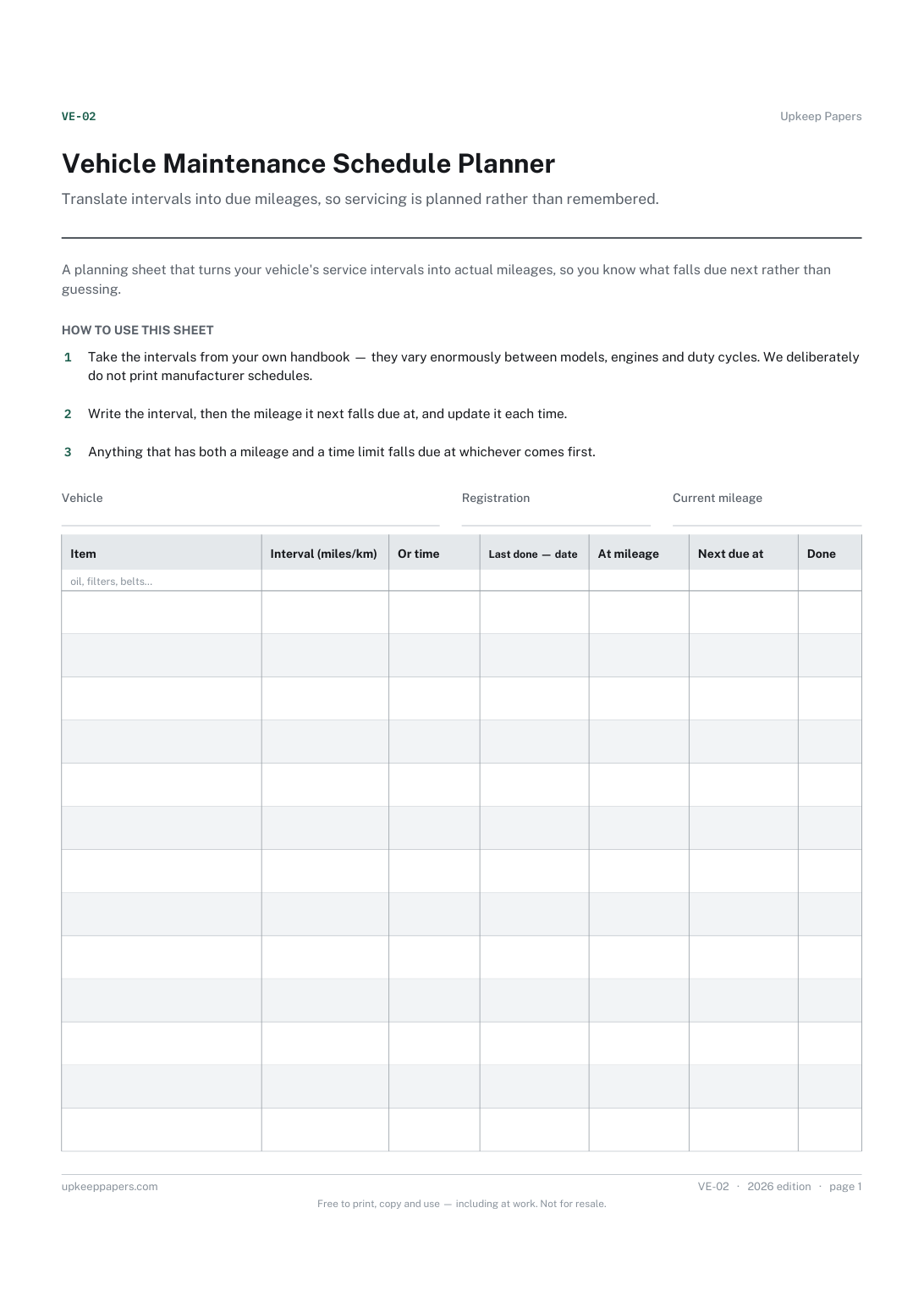
Vehicle Maintenance Schedule Planner
Translate intervals into due mileages, so servicing is planned rather than remembered.
More posts
A Gap in the Data Is Not Always a Gap on the Site
Two of this week's five measured keyword gaps already had a page. Here is the test that caught it, and the three that survived.
When the Roadmap Runs Out, Measure Instead of Guessing
The 200-sheet roadmap this site started with is finished. Here is what we built instead of guessing, and why four of five sheets came from one measured gap.
When a New Sheet Earns Its Own Page
Five sheets this week could easily have been three. Here is the test we use to tell a genuinely different record from the same one wearing a new title.