Cat Health Record
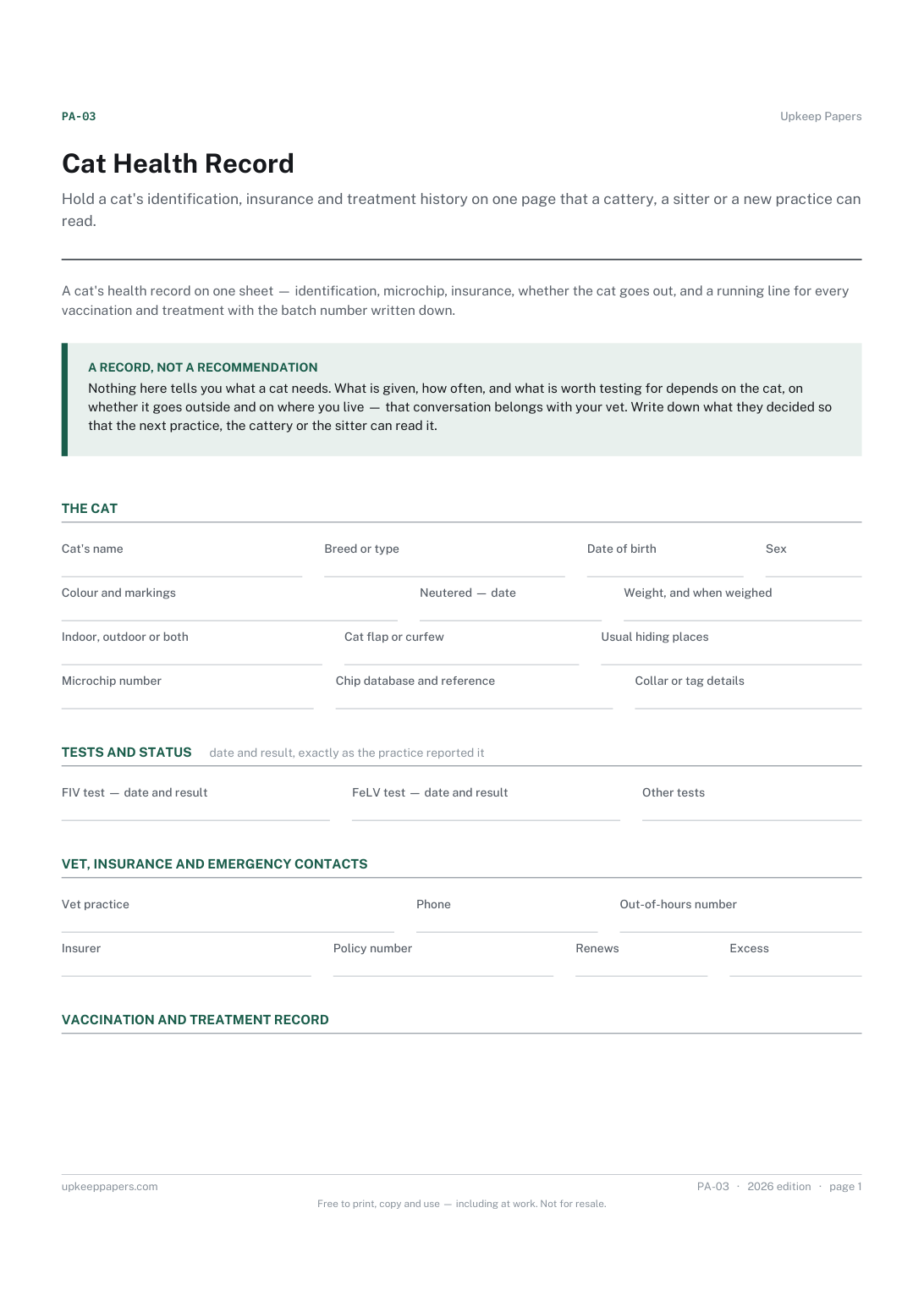
Hold a cat's identification, insurance and treatment history on one page that a cattery, a sitter or a new practice can read. It has room for the things that are specific to cats and get left off general pet forms.
PA-03 2 pages
Everything here is free. Making it takes time and money. Everything here is free.
 Buy us a coffee
Pets and animals · PA-11
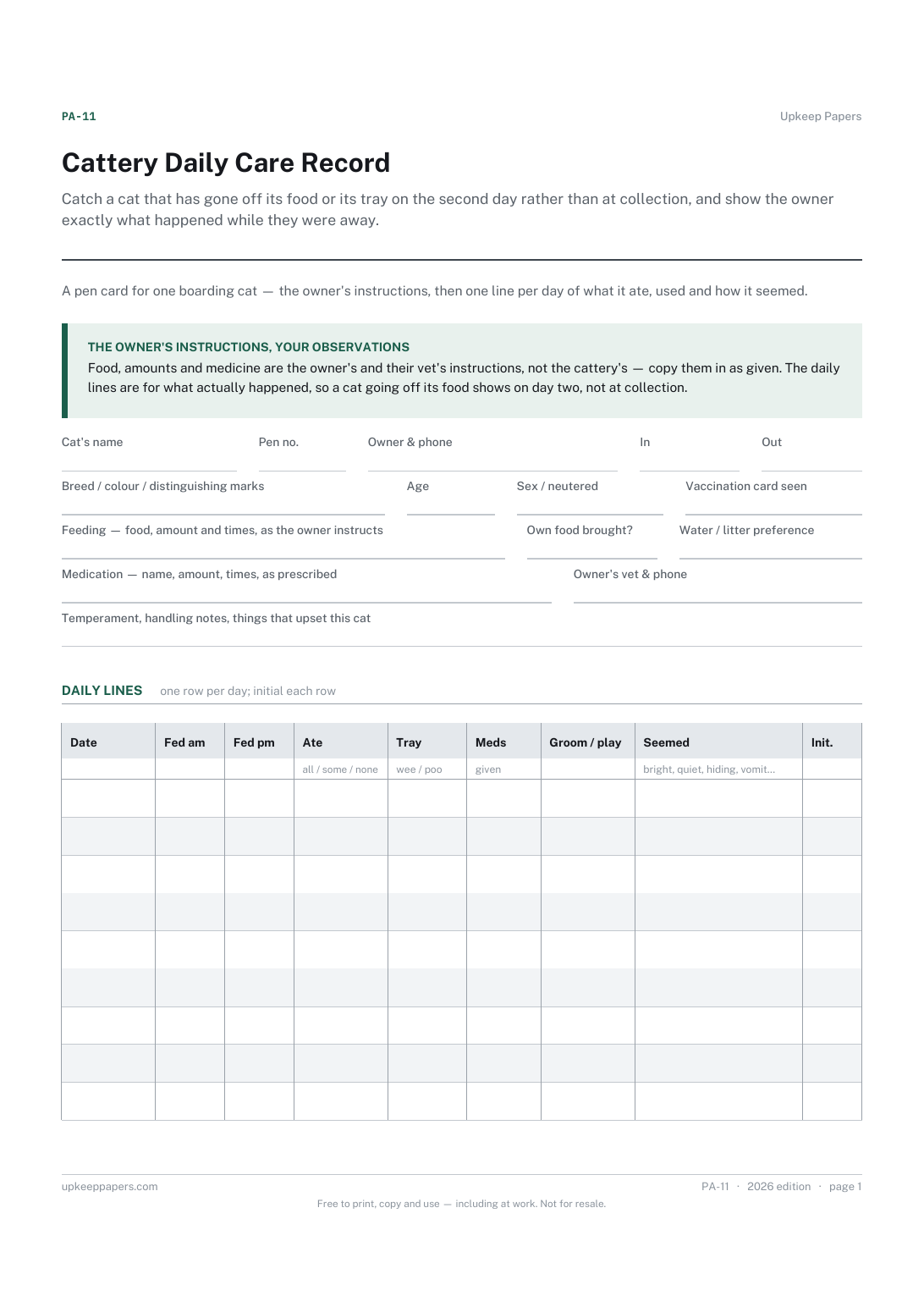
A cattery daily record — one cat's pen card with the owner's feeding and medication instructions at the top and a line per day of what it ate and how it seemed.
One page. Choose your paper size — both versions are laid out identically, so neither one gets shrunk to fit.
Print it and write on it
Fill it in type and save
The fillable versions have real form fields — open them in any PDF reader, type into them and save. Printing help.
Catch a cat that has gone off its food or its tray on the second day rather than at collection, and show the owner exactly what happened while they were away.
Boarding catteries, and rescues or vets who board cats for more than a night.
One page, top to bottom:
Printed under the title: A pen card for one boarding cat — the owner's instructions, then one line per day of what it ate, used and how it seemed.
The owner's instructions, your observations. Food, amounts and medicine are the owner's and their vet's instructions, not the cattery's — copy them in as given. The daily lines are for what actually happened, so a cat going off its food shows on day two, not at collection.
Write-on lines: Cat's name · Pen no. · Owner & phone · In · Out · Breed / colour / distinguishing marks · Age · Sex / neutered · Vaccination card seen · Feeding — food, amount and times, as the owner instructs · Own food brought? · Water / litter preference · Medication — name, amount, times, as prescribed · Owner's vet & phone · Temperament, handling notes, things that upset this cat
Table, 9 rows: Date · Fed am · Fed pm · Ate · Tray · Meds · Groom / play · Seemed · Init.
Because they are the owner's and the owner's vet's, and they differ for every cat. The blocks at the top are for their instructions as given; the daily lines are for what was actually done.
The sheet is there so you notice on the day rather than later. What to do about it is between you, the owner and the owner's vet, whose number is on the card for that reason.
Hold a cat's identification, insurance and treatment history on one page that a cattery, a sitter or a new practice can read. It has room for the things that are specific to cats and get left off general pet forms.
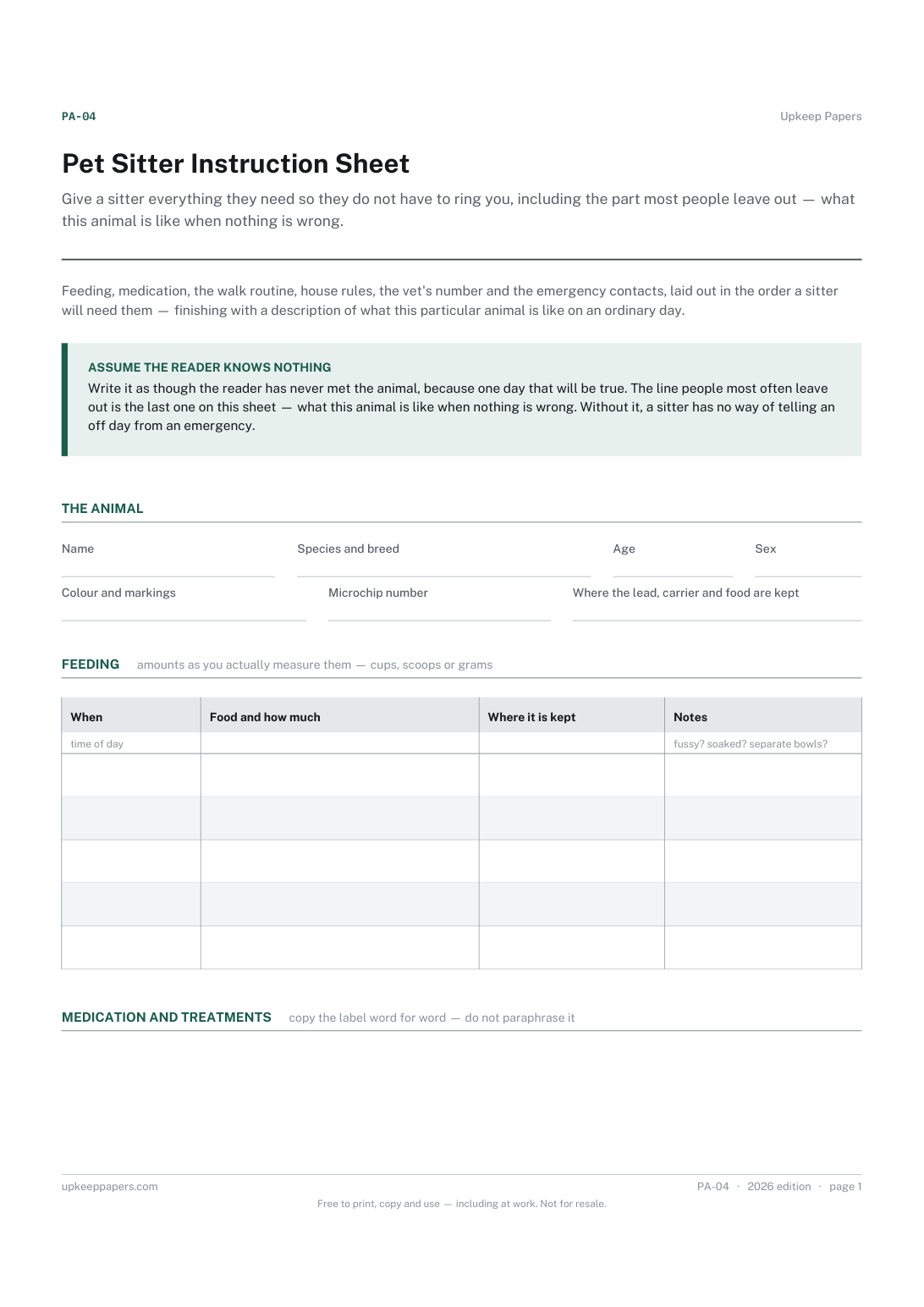
Give a sitter everything they need so they do not have to ring you, including the part most people leave out — what this animal is like when nothing is wrong.
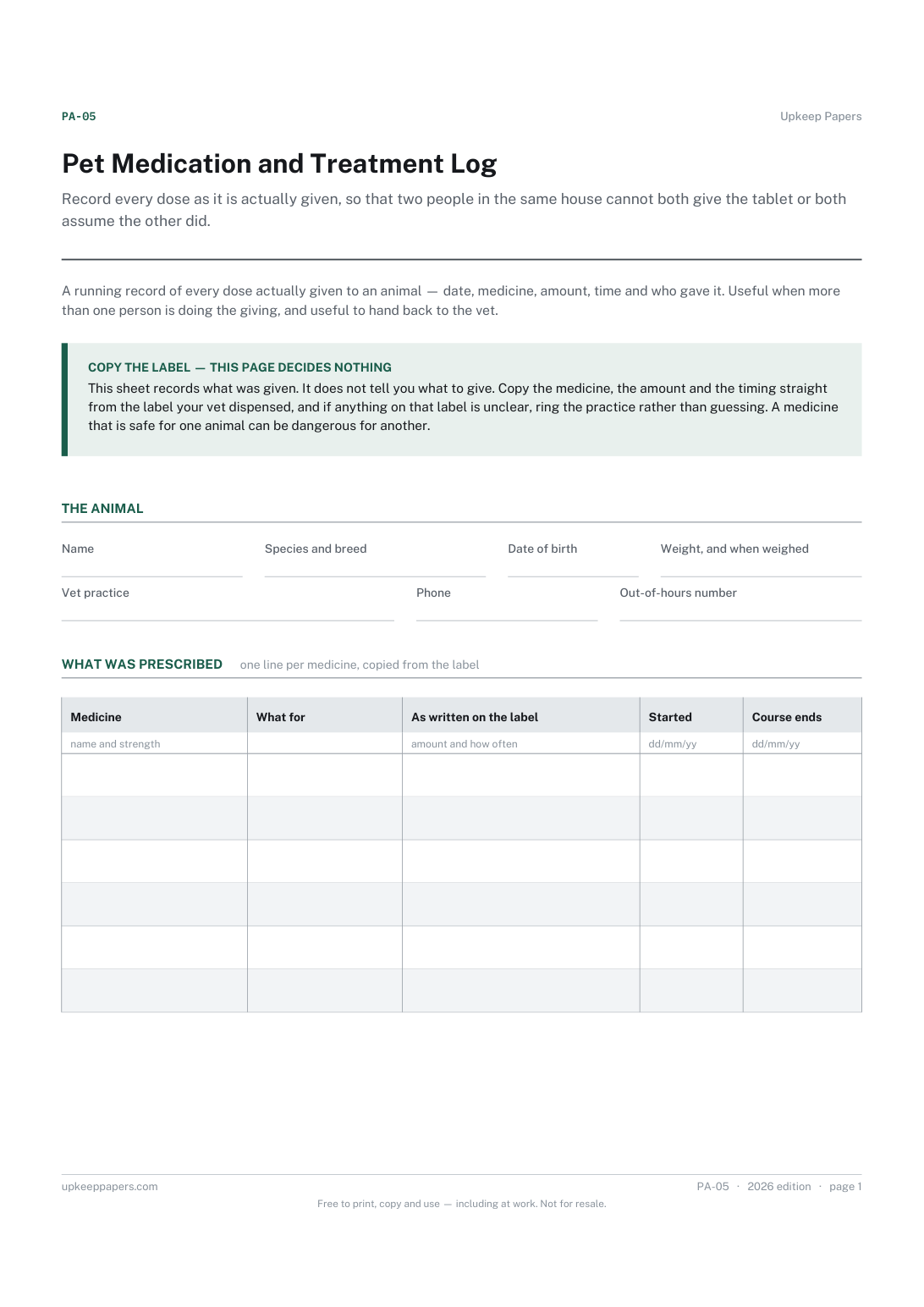
Record every dose as it is actually given, so that two people in the same house cannot both give the tablet or both assume the other did. It also gives your vet something factual to read at the follow-up.
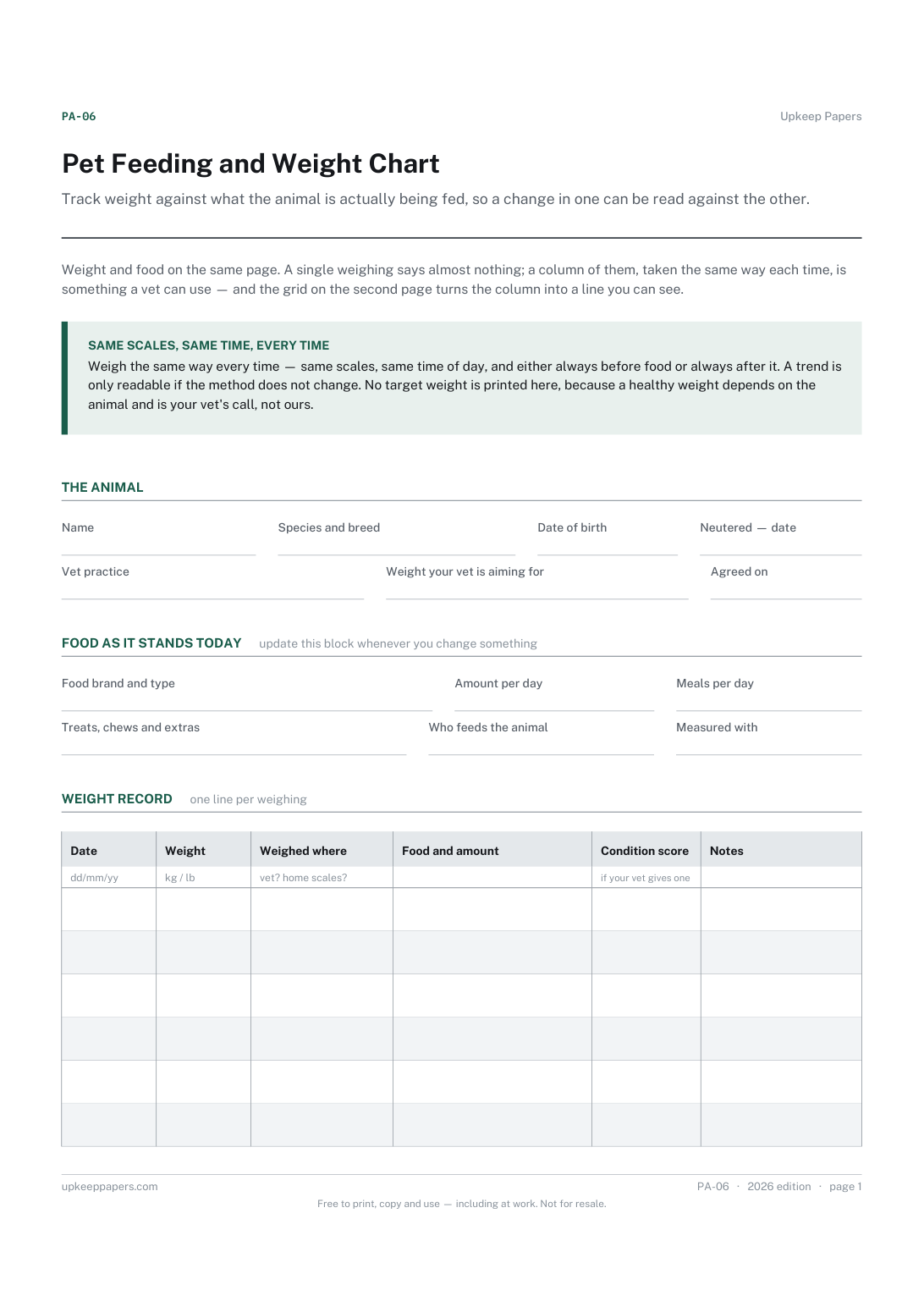
Track weight against what the animal is actually being fed, so a change in one can be read against the other. A single weighing tells you very little; a column of them taken the same way each time is something a vet can use.

Every sheet, binder, game and puzzle on Upkeep Papers is free to download, with no email and no account. Making them is not free: each one takes days of research, design and checking, and the site costs money to run. If something here saved you time, you can buy us a coffee. It is entirely optional: nothing is locked, and nothing changes if you don’t.
Buy us a coffee Opens PayPal in a new tab. Any amount, and nothing changes if you would rather not.