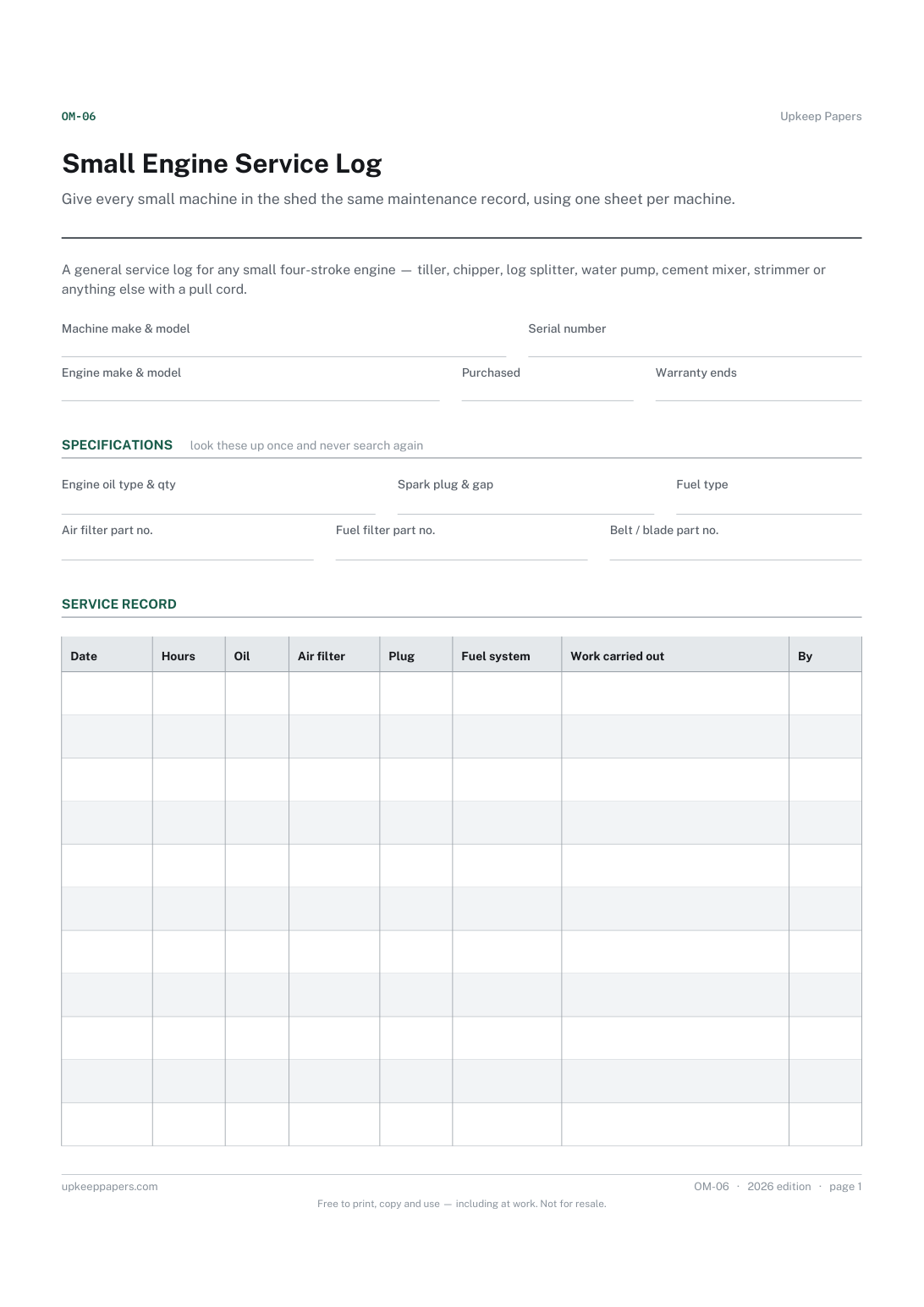
Small Engine Service Log
Give every small machine in the shed the same maintenance record, using one sheet per machine.
OM-06 1 page
Everything here is free. Making it takes time and money. Everything here is free.
 Buy us a coffee
Outdoor machines · OM-17
A free printable log splitter check sheet: fluid, hoses, wedge, beam and controls ticked before each use, with a record of fluid, filter, hose and wedge work.
2 pages. Choose your paper size — both versions are laid out identically, so neither one gets shrunk to fit.
Print it and write on it
Fill it in type and save
The fillable versions have real form fields — open them in any PDF reader, type into them and save. Printing help.
Catch a weeping fitting, a sticking lever or a chipped wedge before the splitter is started. The back keeps the fluid, filter, hose and wedge history by hours.
Households, smallholders, tree surgeons and hire customers using a petrol, electric or tractor-driven hydraulic log splitter.
2 pages, in this order:
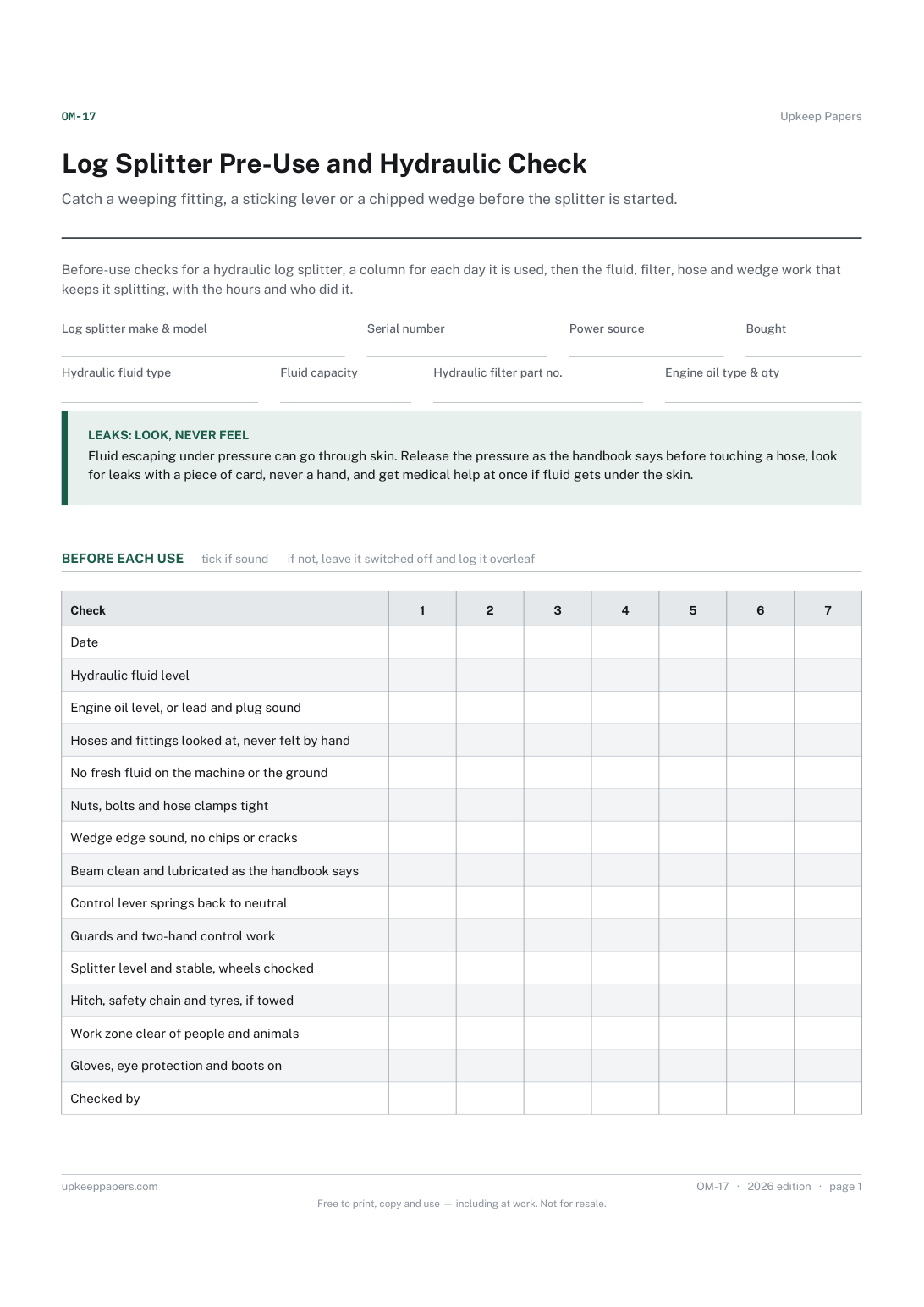
Printed under the title: Before-use checks for a hydraulic log splitter, a column for each day it is used, then the fluid, filter, hose and wedge work that keeps it splitting, with the hours and who did it.
Write-on lines: Log splitter make & model · Serial number · Power source · Bought · Hydraulic fluid type · Fluid capacity · Hydraulic filter part no. · Engine oil type & qty
Leaks: look, never feel. Fluid escaping under pressure can go through skin. Release the pressure as the handbook says before touching a hose, look for leaks with a piece of card, never a hand, and get medical help at once if fluid gets under the skin.
Also printed: Check · Date · Hydraulic fluid level · Engine oil level, or lead and plug sound · Hoses and fittings looked at, never felt by hand · No fresh fluid on the machine or the ground · Nuts, bolts and hose clamps tight · Wedge edge sound, no chips or cracks · Beam clean and lubricated as the handbook says · Control lever springs back to neutral · Guards and two-hand control work · Splitter level and stable, wheels chocked · Hitch, safety chain and tyres, if towed · Work zone clear of people and animals · Gloves, eye protection and boots on · Checked by
Table, 6 rows: Date · Fault found · Used? · Action taken · Fixed by · Date fixed
Table, 9 rows: Date · Hours · Fluid · Filter · Hose · Wedge · Other work · By
Ruled lines: Notes — slow ram, noisy pump, logs that stall it
Because fluid escaping from a pinhole under pressure can go through skin, and a hand run along a hose is how that happens. Look for wet patches, and use a piece of card held near a fitting, with the pressure released as the handbook says.
Not printed. Makers set it in hours or seasons and they differ, so the sheet records the hours at each change and leaves the interval to your own handbook.
Give every small machine in the shed the same maintenance record, using one sheet per machine.
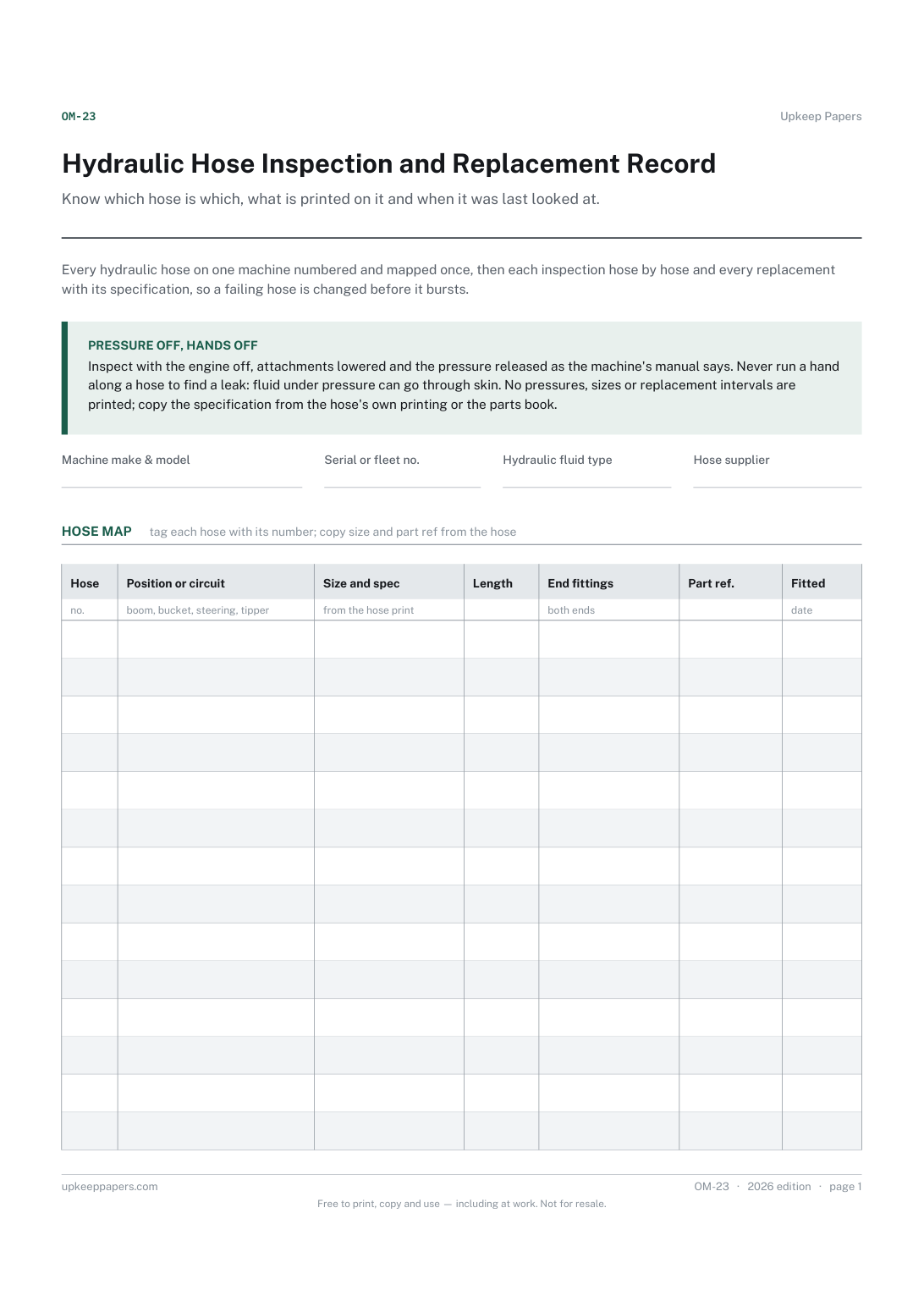
Know which hose is which, what is printed on it and when it was last looked at. A worn hose is then changed in the yard rather than bursting on the job.
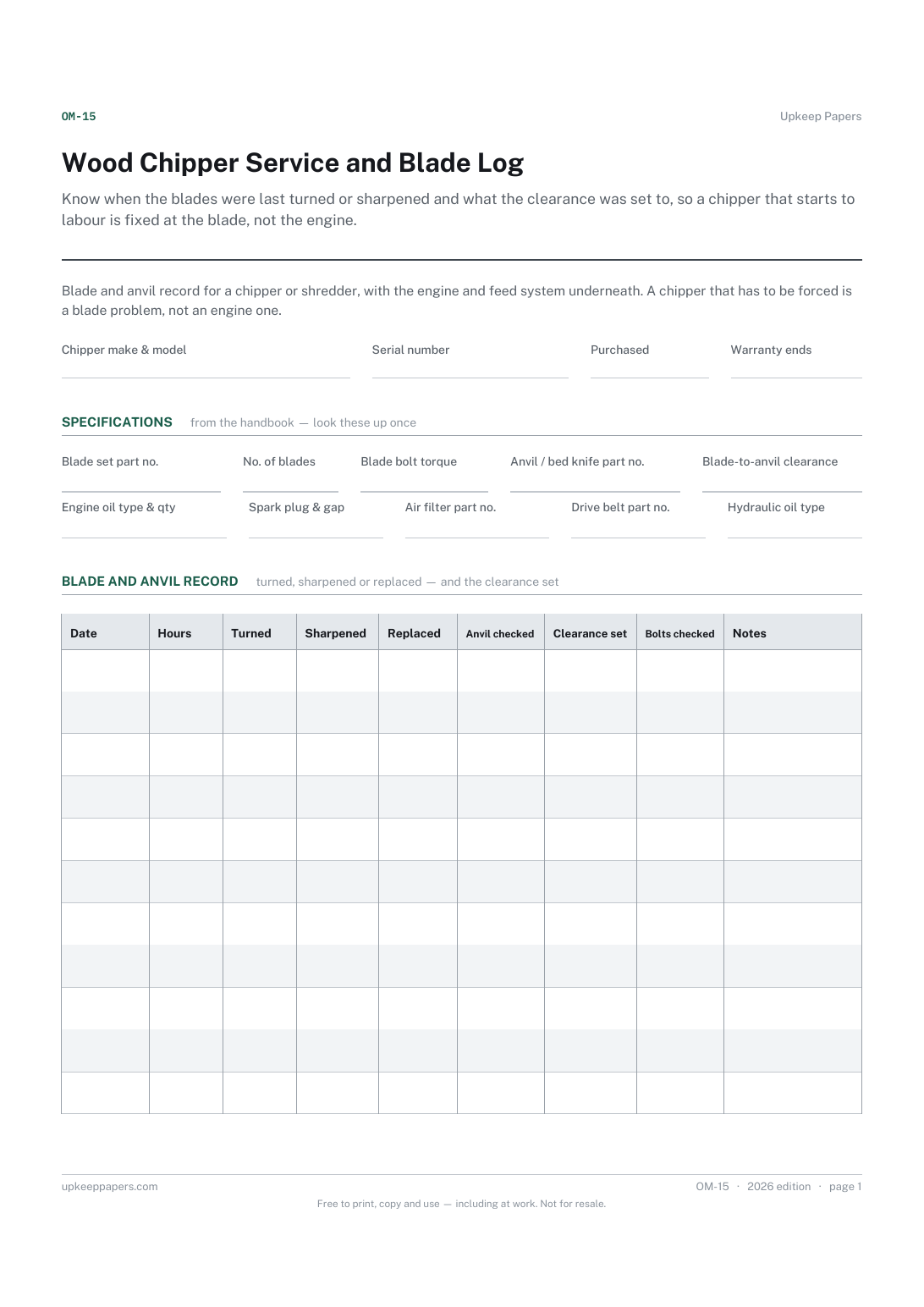
Know when the blades were last turned or sharpened and what the clearance was set to, so a chipper that starts to labour is fixed at the blade, not the engine.
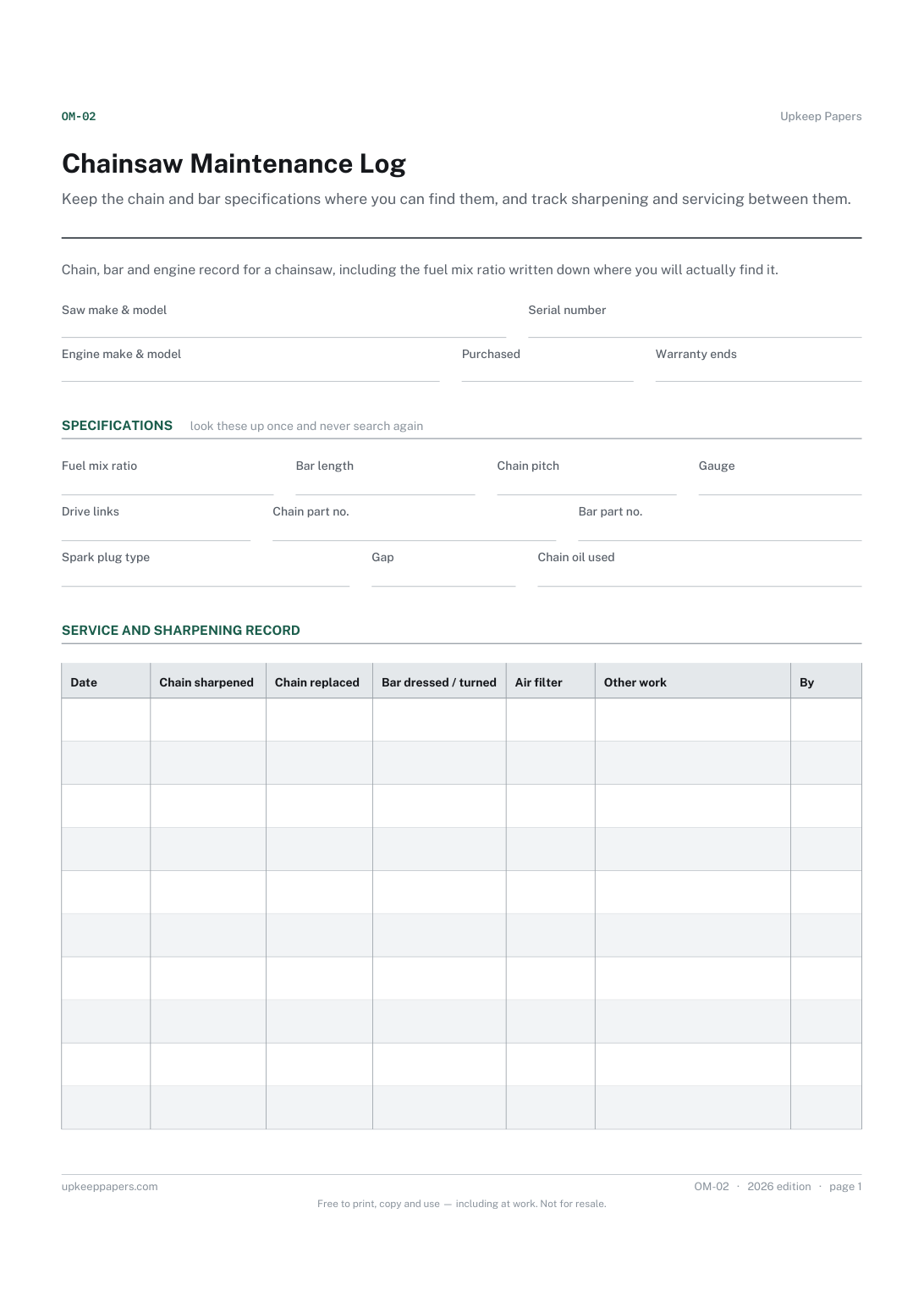
Keep the chain and bar specifications where you can find them, and track sharpening and servicing between them.

Every sheet, binder, game and puzzle on Upkeep Papers is free to download, with no email and no account. Making them is not free: each one takes days of research, design and checking, and the site costs money to run. If something here saved you time, you can buy us a coffee. It is entirely optional: nothing is locked, and nothing changes if you don’t.
Buy us a coffee Opens PayPal in a new tab. Any amount, and nothing changes if you would rather not.