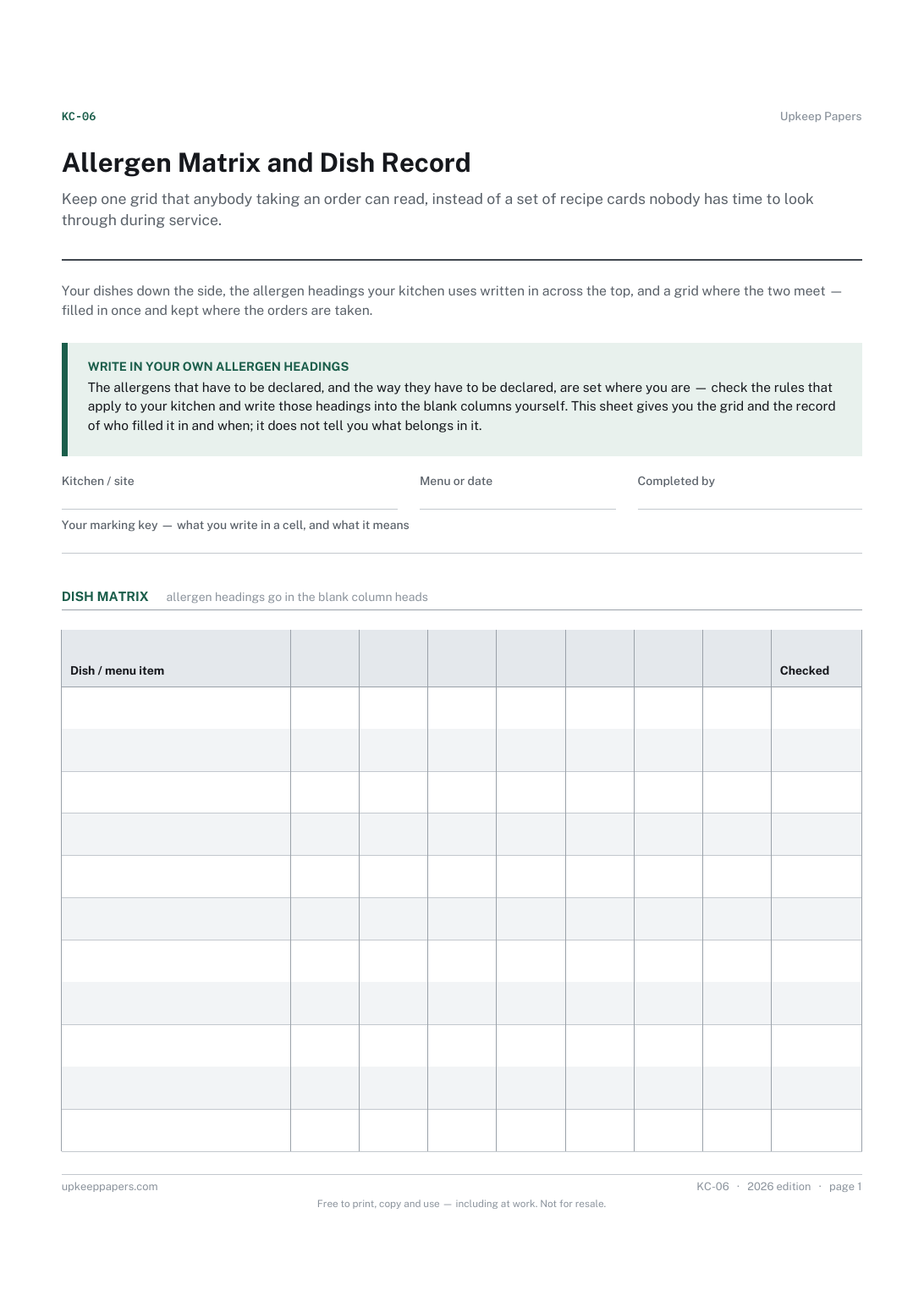
Allergen Matrix and Dish Record
Keep one grid that anybody taking an order can read, instead of a set of recipe cards nobody has time to look through during service.
KC-06 1 page
Everything here is free. Making it takes time and money. Everything here is free.
 Buy us a coffee
Kitchen and catering · KC-10
A free printable catering event order — one event with client, date and covers, the menu agreed, dietary requirements, timings, staff, equipment hired and the deposit and balance.
2 pages. Choose your paper size — both versions are laid out identically, so neither one gets shrunk to fit.
Print it and write on it
Fill it in type and save
The fillable versions have real form fields — open them in any PDF reader, type into them and save. Printing help.
Hold everything agreed for one event on one document, so the kitchen, the staff and the invoice are all working from the same page.
Caterers, small event kitchens, pubs and village halls taking bookings, and anyone cooking for a party they are being paid for.
2 pages, in this order:
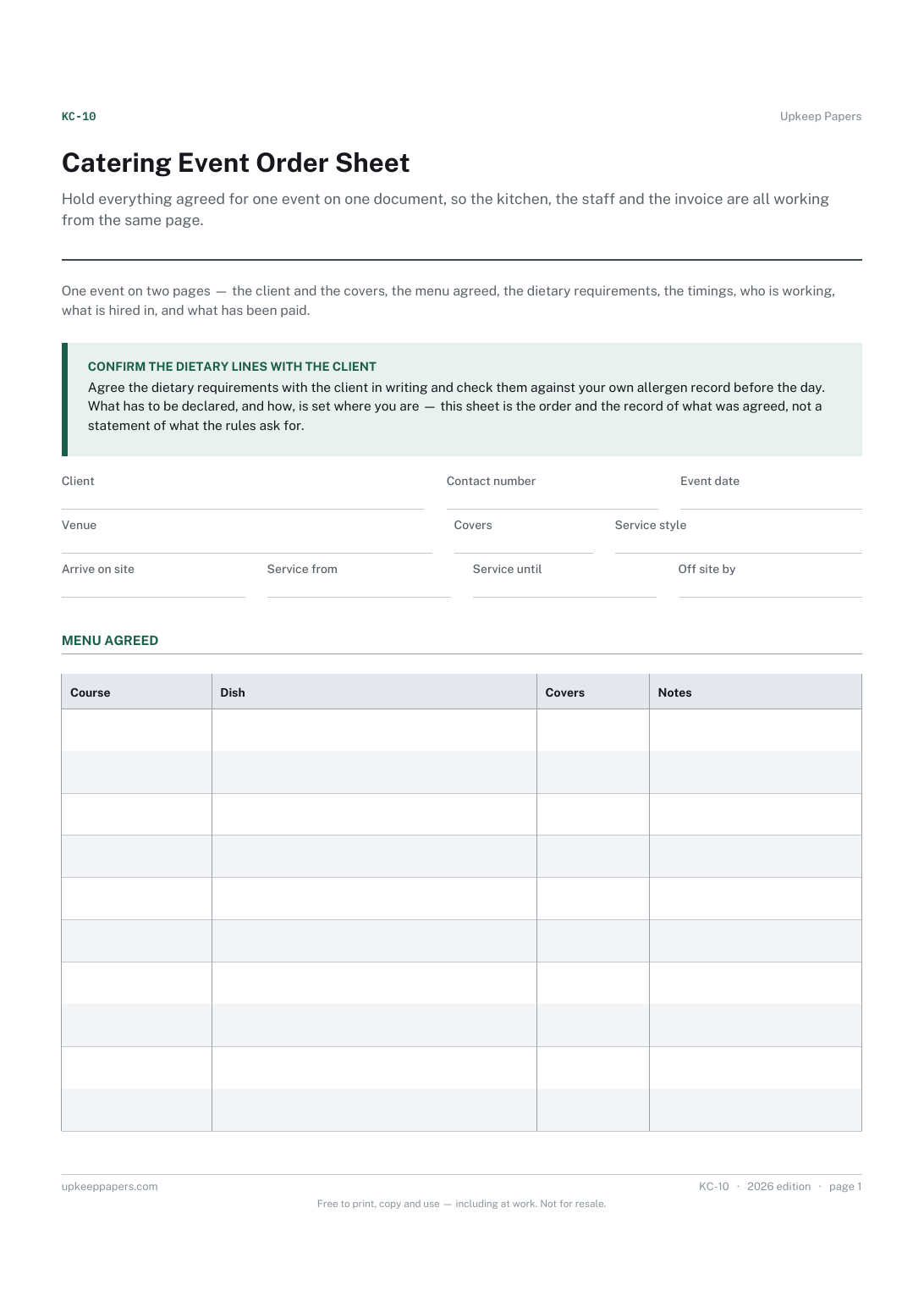
Printed under the title: One event on two pages — the client and the covers, the menu agreed, the dietary requirements, the timings, who is working, what is hired in, and what has been paid.
Confirm the dietary lines with the client. Agree the dietary requirements with the client in writing and check them against your own allergen record before the day. What has to be declared, and how, is set where you are — this sheet is the order and the record of what was agreed, not a statement of what the rules ask for.
Write-on lines: Client · Contact number · Event date · Venue · Covers · Service style · Arrive on site · Service from · Service until · Off site by
Table, 10 rows: Course · Dish · Covers · Notes
Table, 4 rows: Guest or table · Requirement · Dish served instead · Confirmed
Table, 4 rows: Role · Name · Arrives · Job on the day
Table, 3 rows: Item · Quantity · From / hired from · Returned
Write-on lines: Quoted total · Deposit received · Date received · Balance due · Date paid
Signature strip: Agreed by (kitchen) · Agreed by (client) · Date
Because it is the part that changes after the menu is agreed, often days before the event. Keeping it on its own lines means a late addition does not get written in the margin of the menu and missed.
Because an event has two halves: what was agreed with the client, and what the kitchen has to put on the ground. Splitting them means the first page can go to the client and the second stays in the kitchen.
Keep one grid that anybody taking an order can read, instead of a set of recipe cards nobody has time to look through during service.
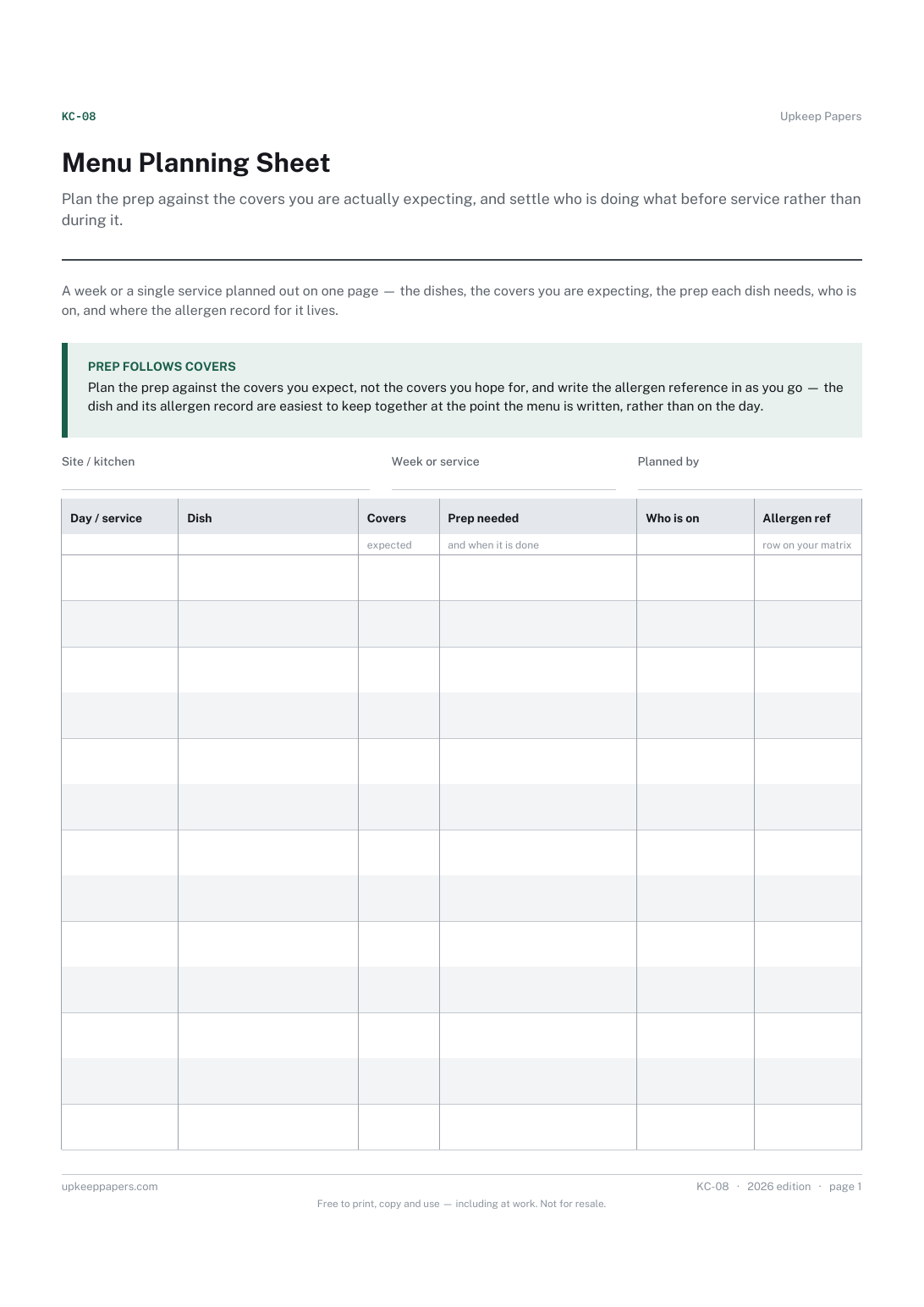
Plan the prep against the covers you are actually expecting, and settle who is doing what before service rather than during it.
Work out what a dish actually costs to make as you make it, including the trimmings, so a price is set from a figure rather than a feeling.
Get the day out of one person's head and onto a page everybody can read, so the event does not stall when the organiser is dealing with something else.
The same subject, with a version you can fill in on screen.
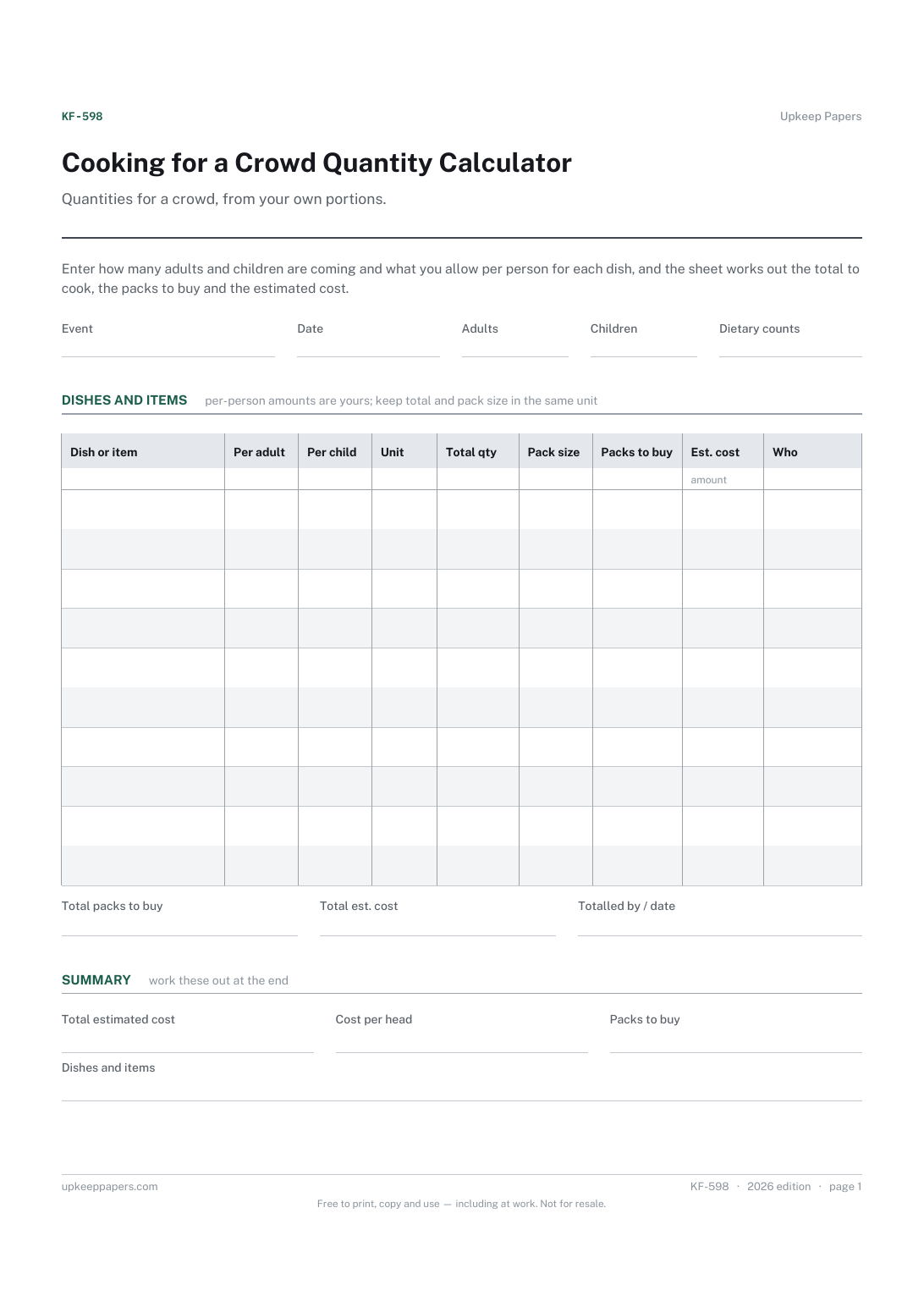
Total quantity of each dish or item for the number of guests.

Every sheet, binder, game and puzzle on Upkeep Papers is free to download, with no email and no account. Making them is not free: each one takes days of research, design and checking, and the site costs money to run. If something here saved you time, you can buy us a coffee. It is entirely optional: nothing is locked, and nothing changes if you don’t.
Buy us a coffee Opens PayPal in a new tab. Any amount, and nothing changes if you would rather not.