Pantry Stock and Reorder Sheet
See at a glance what has fallen below the level you want to keep, so staples get reordered before a recipe stops and duplicates stop accumulating behind them.
HP-01 1 page
Everything here is free. Making it takes time and money. Everything here is free.
 Buy us a coffee
Food preservation and pantry · HP-10
A free printable bulk buying comparison — what you paid, the quantity in the pack, where it was bought and the cost per unit worked out on paper, one line per pack size.
One page. Choose your paper size — both versions are laid out identically, so neither one gets shrunk to fit.
Print it and write on it
Fill it in type and save
The fillable versions have real form fields — open them in any PDF reader, type into them and save. Printing help.
See whether the larger pack is genuinely cheaper, by putting the shelf prices side by side in the same unit instead of trusting the sticker.
Anyone stocking a pantry in quantity, households buying from a cash and carry, and small kitchens comparing suppliers.
One page, top to bottom:
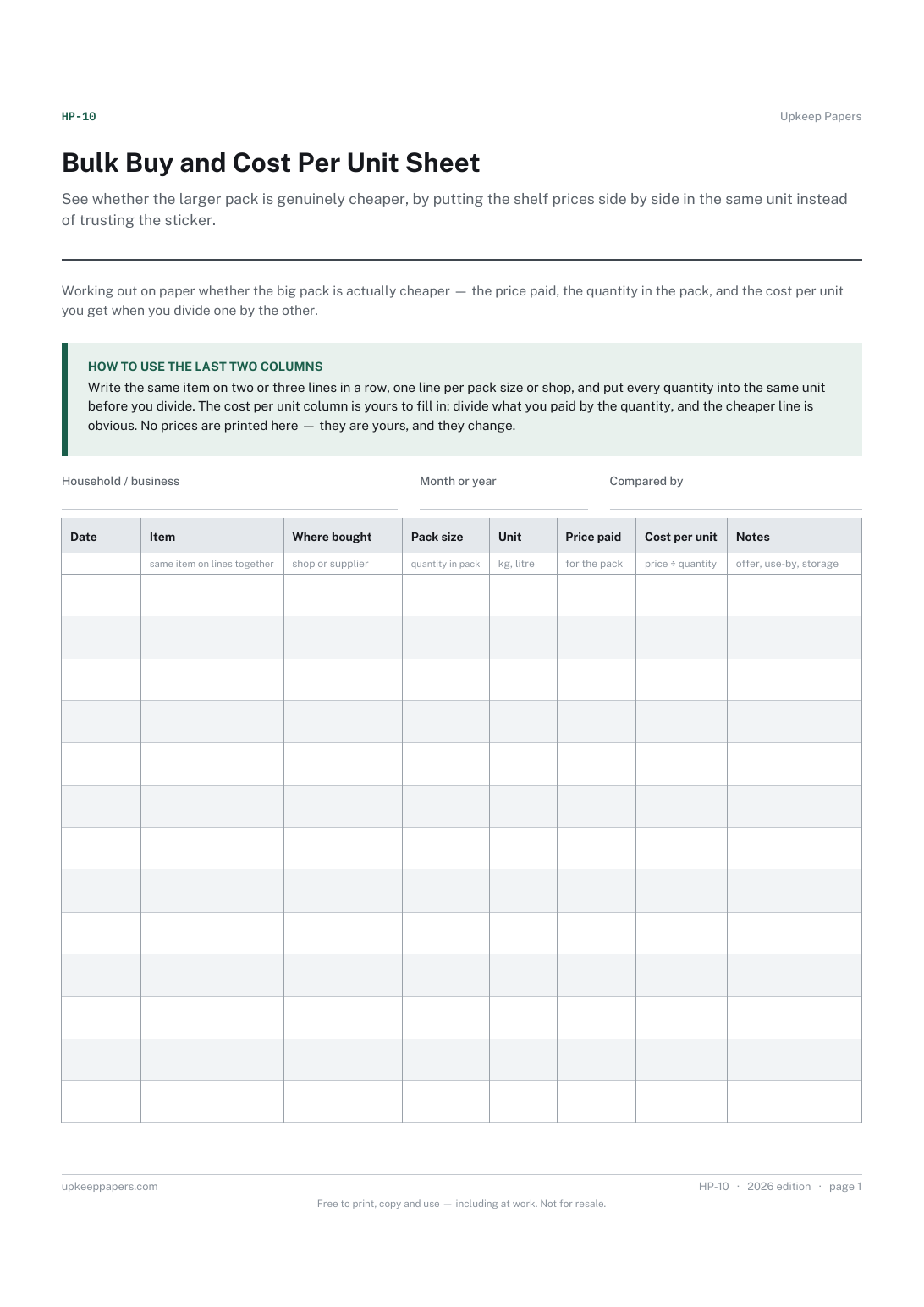
Printed under the title: Working out on paper whether the big pack is actually cheaper — the price paid, the quantity in the pack, and the cost per unit you get when you divide one by the other.
How to use the last two columns. Write the same item on two or three lines in a row, one line per pack size or shop, and put every quantity into the same unit before you divide. The cost per unit column is yours to fill in: divide what you paid by the quantity, and the cheaper line is obvious. No prices are printed here — they are yours, and they change.
Write-on lines: Household / business · Month or year · Compared by
Table, 13 rows: Date · Item · Where bought · Pack size · Unit · Price paid · Cost per unit · Notes
Because they are yours, they differ by shop and country, and they change. The sheet gives you the columns and the arithmetic; the numbers have to come off the shelf edge in front of you.
Not if it goes off first, or if it will not fit anywhere. That is what the notes column is for — a lower cost per unit on something you throw half of away is not a saving.
See at a glance what has fallen below the level you want to keep, so staples get reordered before a recipe stops and duplicates stop accumulating behind them.
Shop from a list rather than a guess, and stop finding the same jar three times.
Work out what a dish actually costs to make as you make it, including the trimmings, so a price is set from a figure rather than a feeling.
Index a freezer or a store cupboard so that stock rotates properly and things are found before they are forgotten.
The same subject, with a version you can fill in on screen.
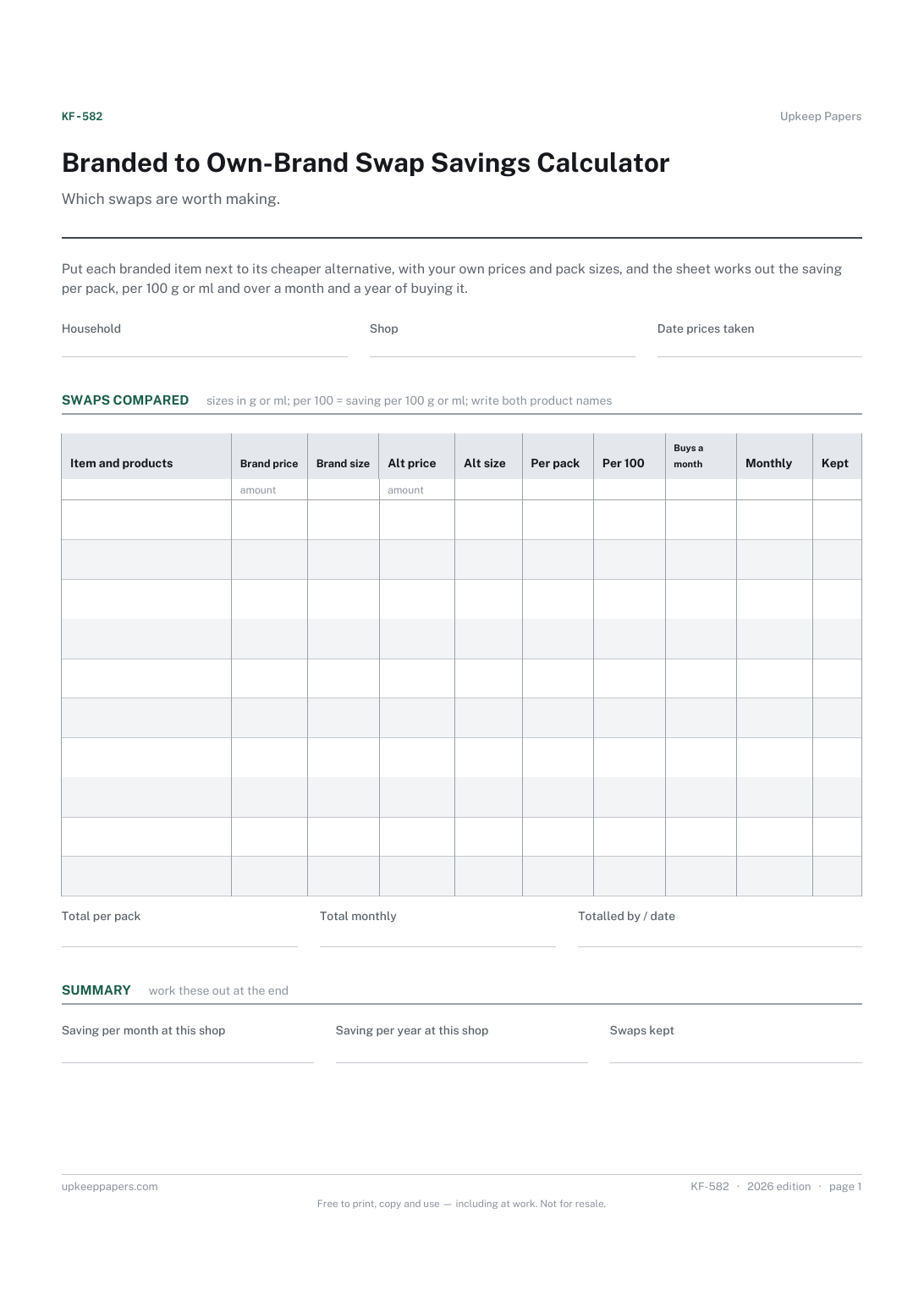
The branded and alternative price of each item at one shop.
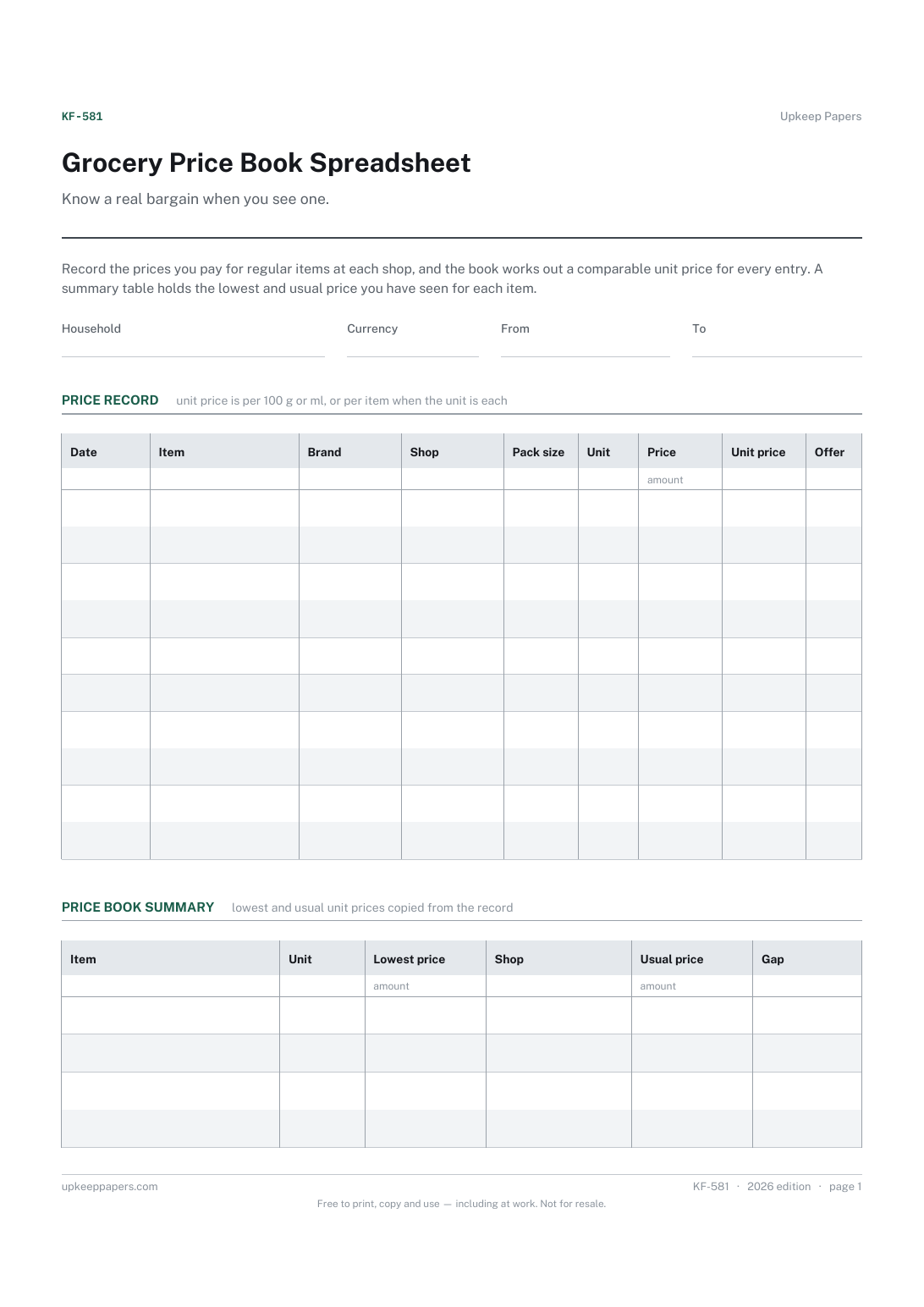
What you paid for each regular item, where and when.

Every sheet, binder, game and puzzle on Upkeep Papers is free to download, with no email and no account. Making them is not free: each one takes days of research, design and checking, and the site costs money to run. If something here saved you time, you can buy us a coffee. It is entirely optional: nothing is locked, and nothing changes if you don’t.
Buy us a coffee Opens PayPal in a new tab. Any amount, and nothing changes if you would rather not.