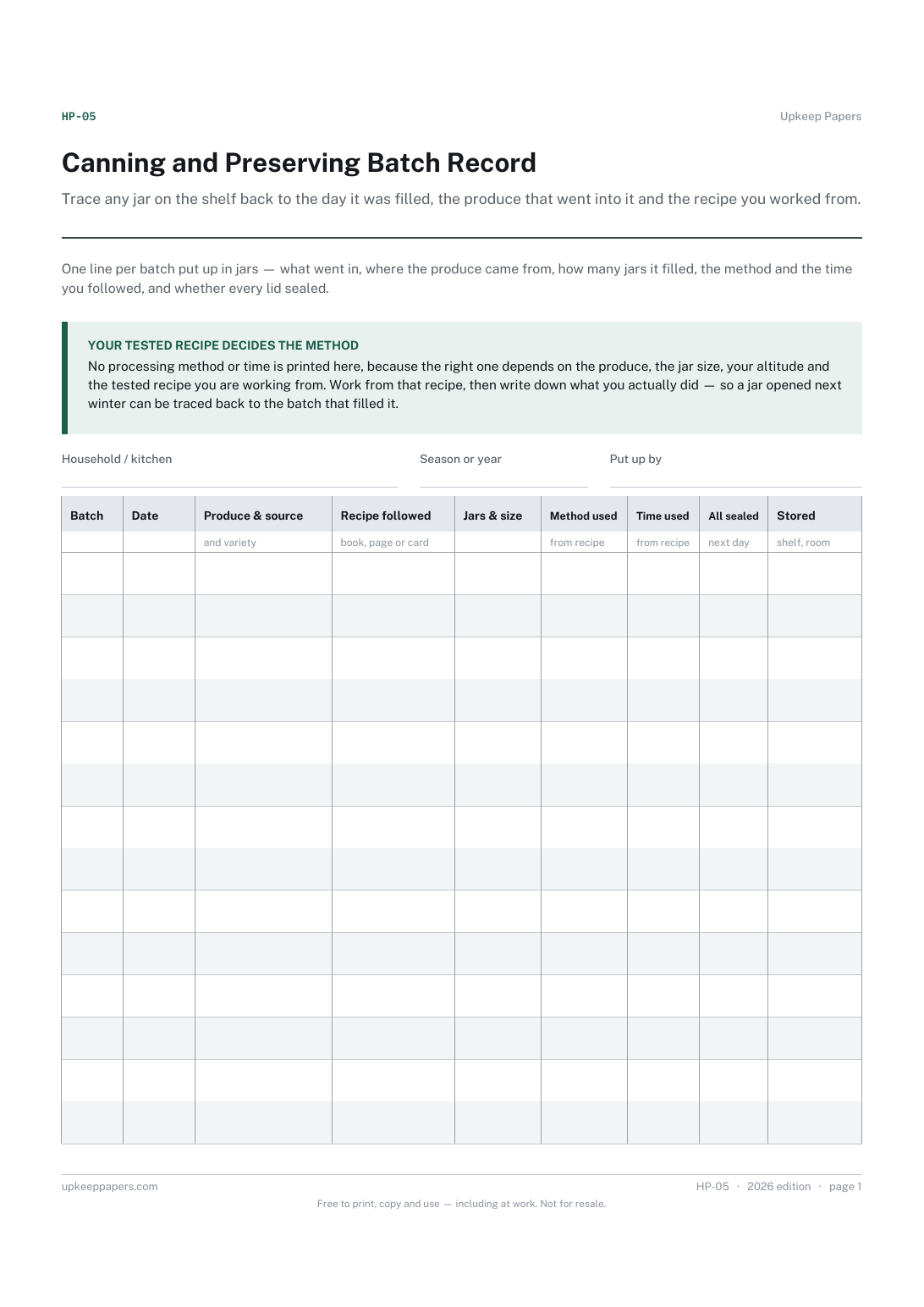
Canning and Preserving Batch Record
Trace any jar on the shelf back to the day it was filled, the produce that went into it and the recipe you worked from.
HP-05 1 page
Everything here is free. Making it takes time and money. Everything here is free.
 Buy us a coffee
Food preservation and pantry · HP-07
A free printable fermentation record — one jar or crock from start to cold storage, with the brine or culture as you made it and a dated line for each day you check it.
One page. Choose your paper size — both versions are laid out identically, so neither one gets shrunk to fit.
Print it and write on it
Fill it in type and save
The fillable versions have real form fields — open them in any PDF reader, type into them and save. Printing help.
Learn what your own kitchen does to a ferment, by keeping the day-by-day observations that tell you why one batch worked and the next one did not.
Anyone fermenting vegetables, kraut, kimchi, pickles, kefir or a sourdough starter at home, and small producers keeping a record per vessel.
One page, top to bottom:
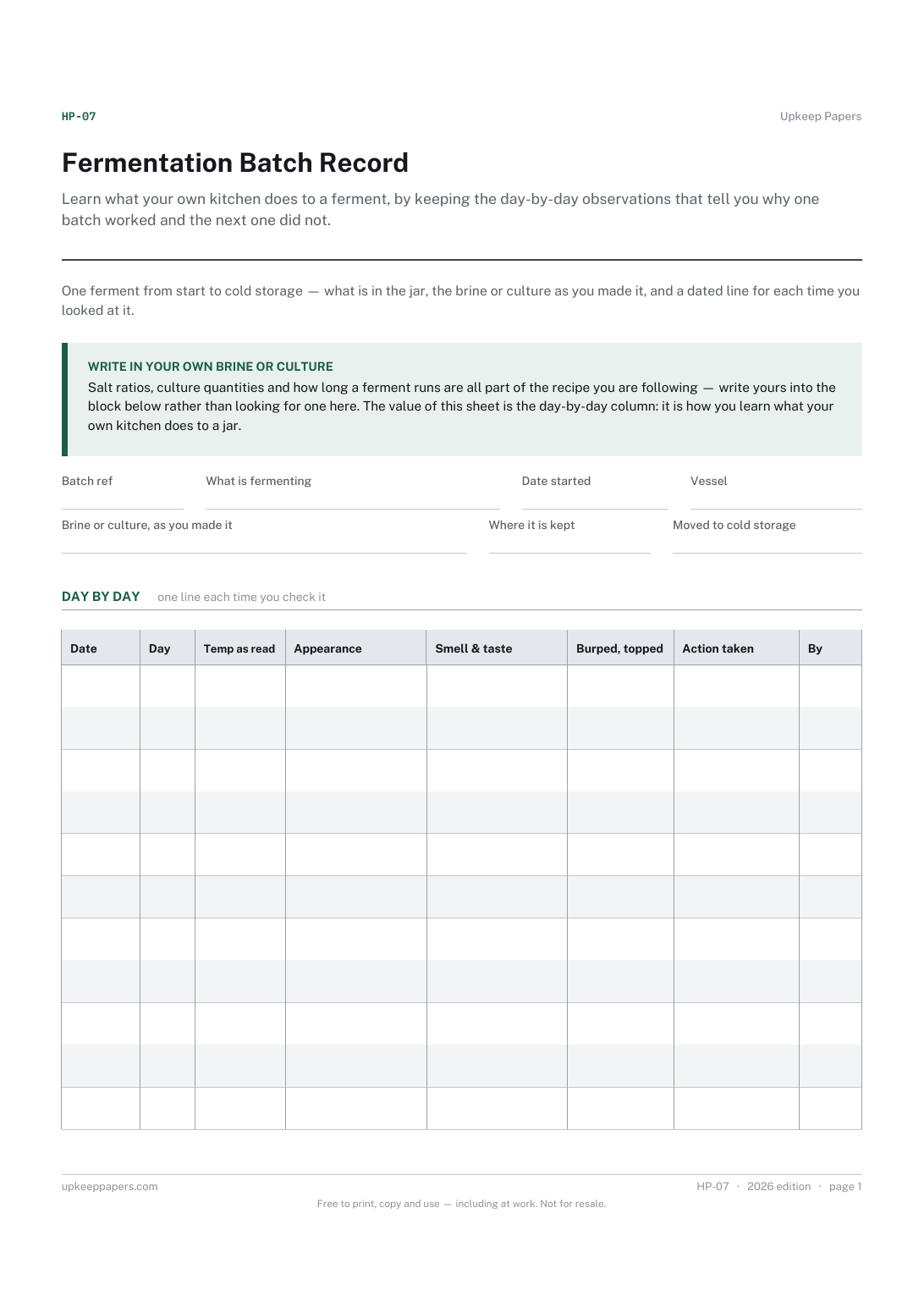
Printed under the title: One ferment from start to cold storage — what is in the jar, the brine or culture as you made it, and a dated line for each time you looked at it.
Write in your own brine or culture. Salt ratios, culture quantities and how long a ferment runs are all part of the recipe you are following — write yours into the block below rather than looking for one here. The value of this sheet is the day-by-day column: it is how you learn what your own kitchen does to a jar.
Write-on lines: Batch ref · What is fermenting · Date started · Vessel · Brine or culture, as you made it · Where it is kept · Moved to cold storage
Table, 11 rows: Date · Day · Temp as read · Appearance · Smell & taste · Burped, topped · Action taken · By
Because it belongs to the recipe or tradition you are working from, and it varies with the vegetable, the temperature and how long you intend to ferment. There is a blank for yours instead, which also means the sheet still works when you change it.
One per ferment. The day-by-day column is the point of it, and a single jar can easily fill a page of observations before it goes into the cold.
Trace any jar on the shelf back to the day it was filled, the produce that went into it and the recipe you worked from.
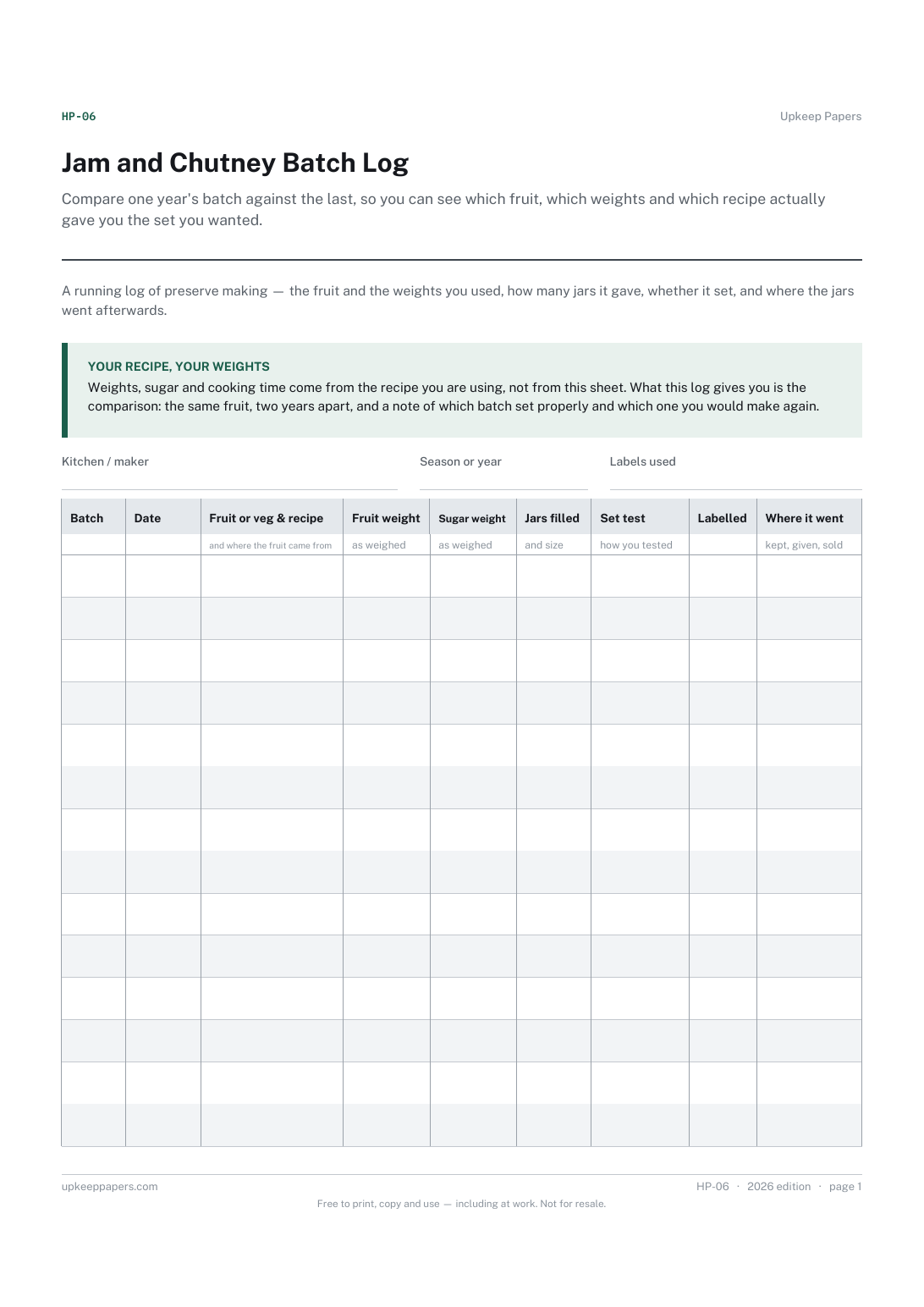
Compare one year's batch against the last, so you can see which fruit, which weights and which recipe actually gave you the set you wanted.
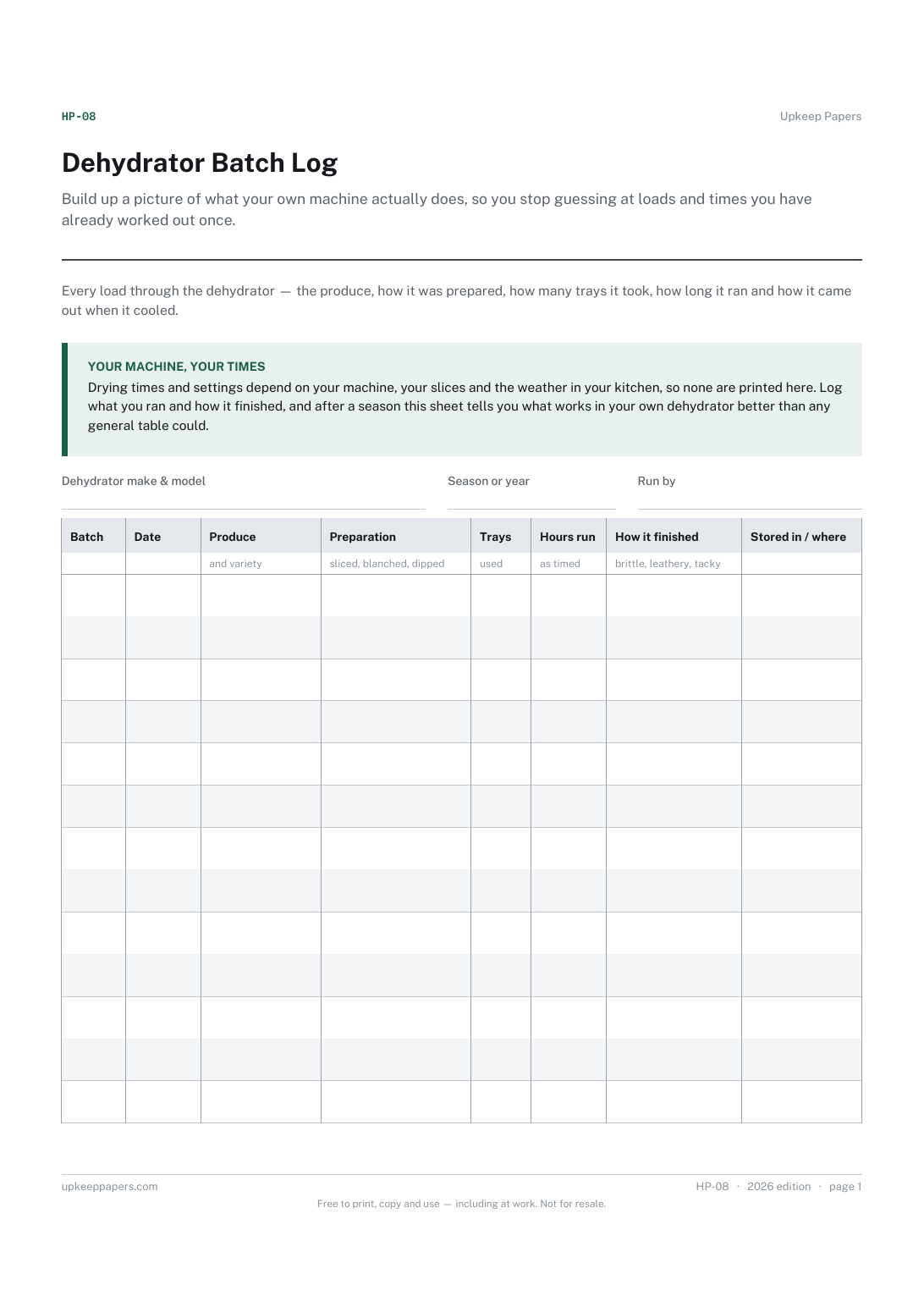
Build up a picture of what your own machine actually does, so you stop guessing at loads and times you have already worked out once.
Index a freezer or a store cupboard so that stock rotates properly and things are found before they are forgotten.

Every sheet, binder, game and puzzle on Upkeep Papers is free to download, with no email and no account. Making them is not free: each one takes days of research, design and checking, and the site costs money to run. If something here saved you time, you can buy us a coffee. It is entirely optional: nothing is locked, and nothing changes if you don’t.
Buy us a coffee Opens PayPal in a new tab. Any amount, and nothing changes if you would rather not.