3D Print Log
Record the settings that produced each print, so a good result can be repeated and a failed one diagnosed instead of guessed at.
CM-04 1 page
Everything here is free. Making it takes time and money. Everything here is free.
 Buy us a coffee
Craft and making · CM-14
A free printable miniature painting log — build, basing and sealing stages ticked off, then each part of the model with the paint, brand, technique and coats.
One page. Choose your paper size — both versions are laid out identically, so neither one gets shrunk to fit.
Print it and write on it
Fill it in type and save
The fillable versions have real form fields — open them in any PDF reader, type into them and save. Printing help.
Repeat a paint scheme across a unit or a second model months later, without guessing which brown it was or how the metal was shaded.
Miniature painters, figure modellers and diorama builders, whether the model is a wargaming unit, a display figure or a scene on a base.
One page, top to bottom:
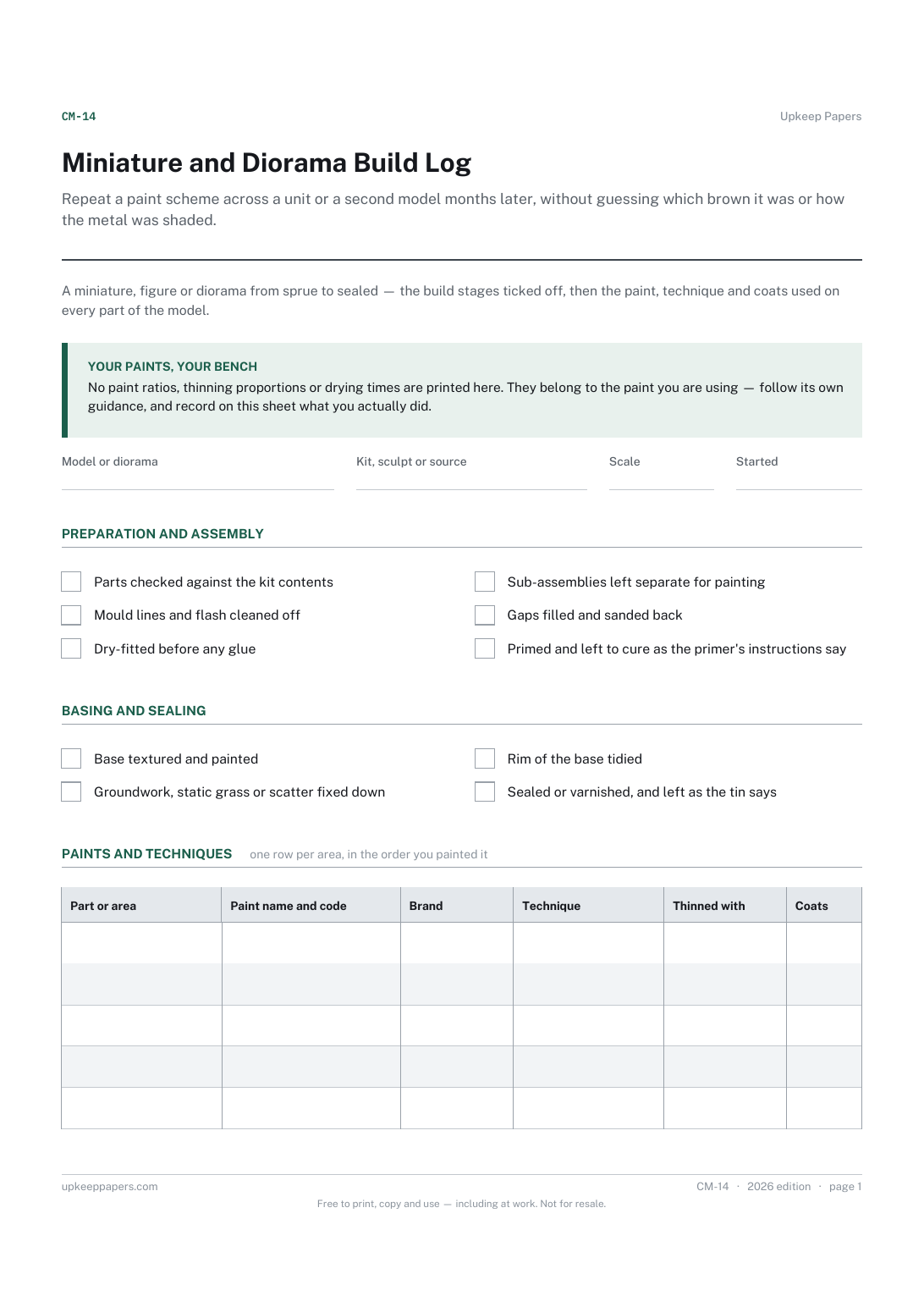
Printed under the title: A miniature, figure or diorama from sprue to sealed — the build stages ticked off, then the paint, technique and coats used on every part of the model.
Your paints, your bench. No paint ratios, thinning proportions or drying times are printed here. They belong to the paint you are using — follow its own guidance, and record on this sheet what you actually did.
Write-on lines: Model or diorama · Kit, sculpt or source · Scale · Started
Table, 5 rows: Part or area · Paint name and code · Brand · Technique · Thinned with · Coats
Because they belong to the paint, the primer and the varnish you are using, and to the air in the room you paint in. Follow the manufacturer's own guidance and record here what you actually did, which is the part no bottle can tell you.
That sheet follows a kit build as a project — parts, time and stages. This one is built around the paint: every area of the model with the colour, technique and coats, so a scheme can be matched again across a whole unit.
Record the settings that produced each print, so a good result can be repeated and a failed one diagnosed instead of guessed at.
List sets by number, which is the only thing anyone can actually search on, and record whether the box and instructions are still with them.
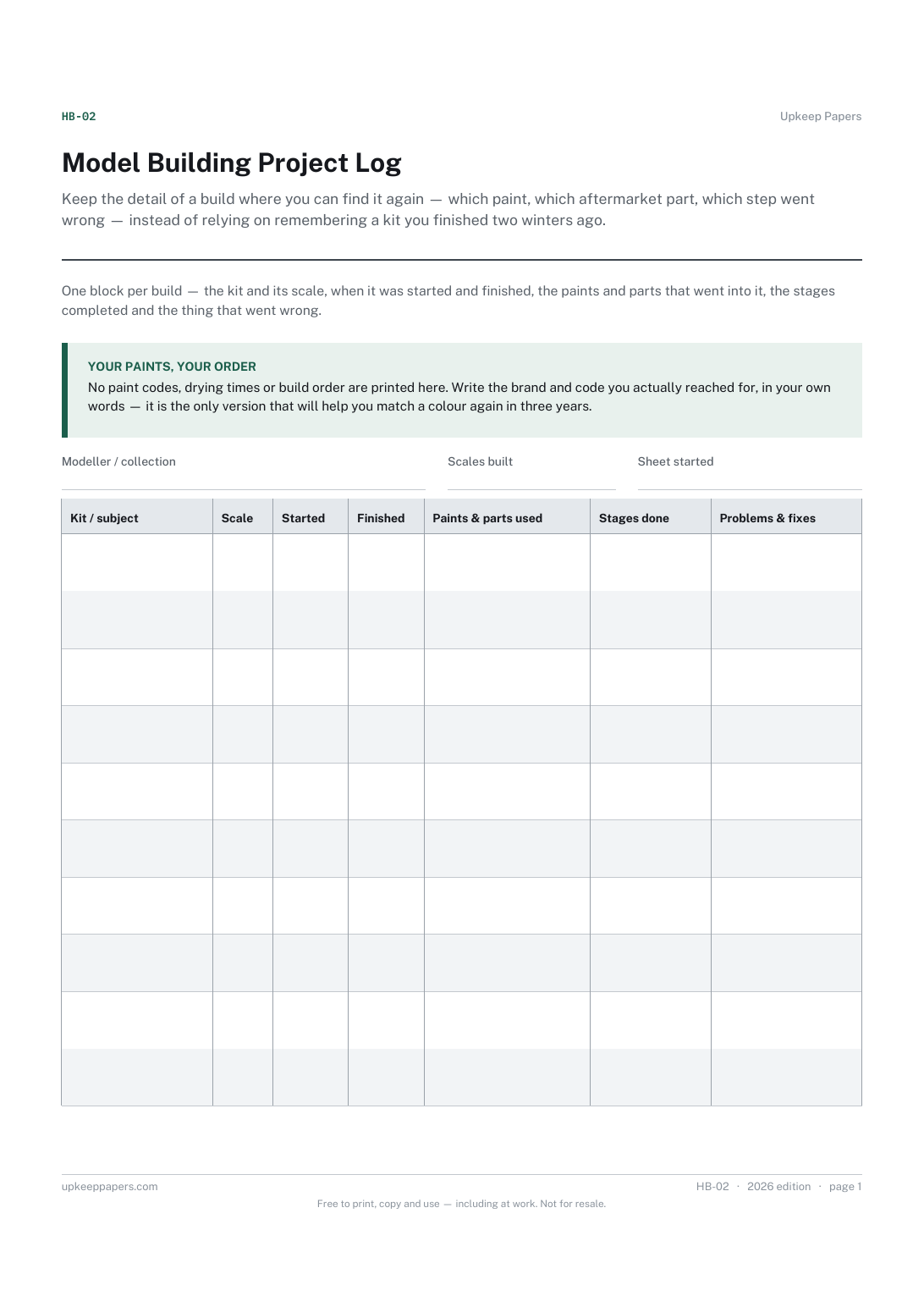
Keep the detail of a build where you can find it again — which paint, which aftermarket part, which step went wrong — instead of relying on remembering a kit you finished two winters ago.
Record the things a finished object cannot tell you later: which dye lot, which hook you really used, and how much was left over.

Every sheet, binder, game and puzzle on Upkeep Papers is free to download, with no email and no account. Making them is not free: each one takes days of research, design and checking, and the site costs money to run. If something here saved you time, you can buy us a coffee. It is entirely optional: nothing is locked, and nothing changes if you don’t.
Buy us a coffee Opens PayPal in a new tab. Any amount, and nothing changes if you would rather not.