Collection Inventory and Valuation Record
Itemise a collection properly, so that identification, acquisition and any valuation exist somewhere other than in your head.
CV-01 1 page
Everything here is free. Making it takes time and money. Everything here is free.
 Buy us a coffee
Collecting and valuables · CV-06
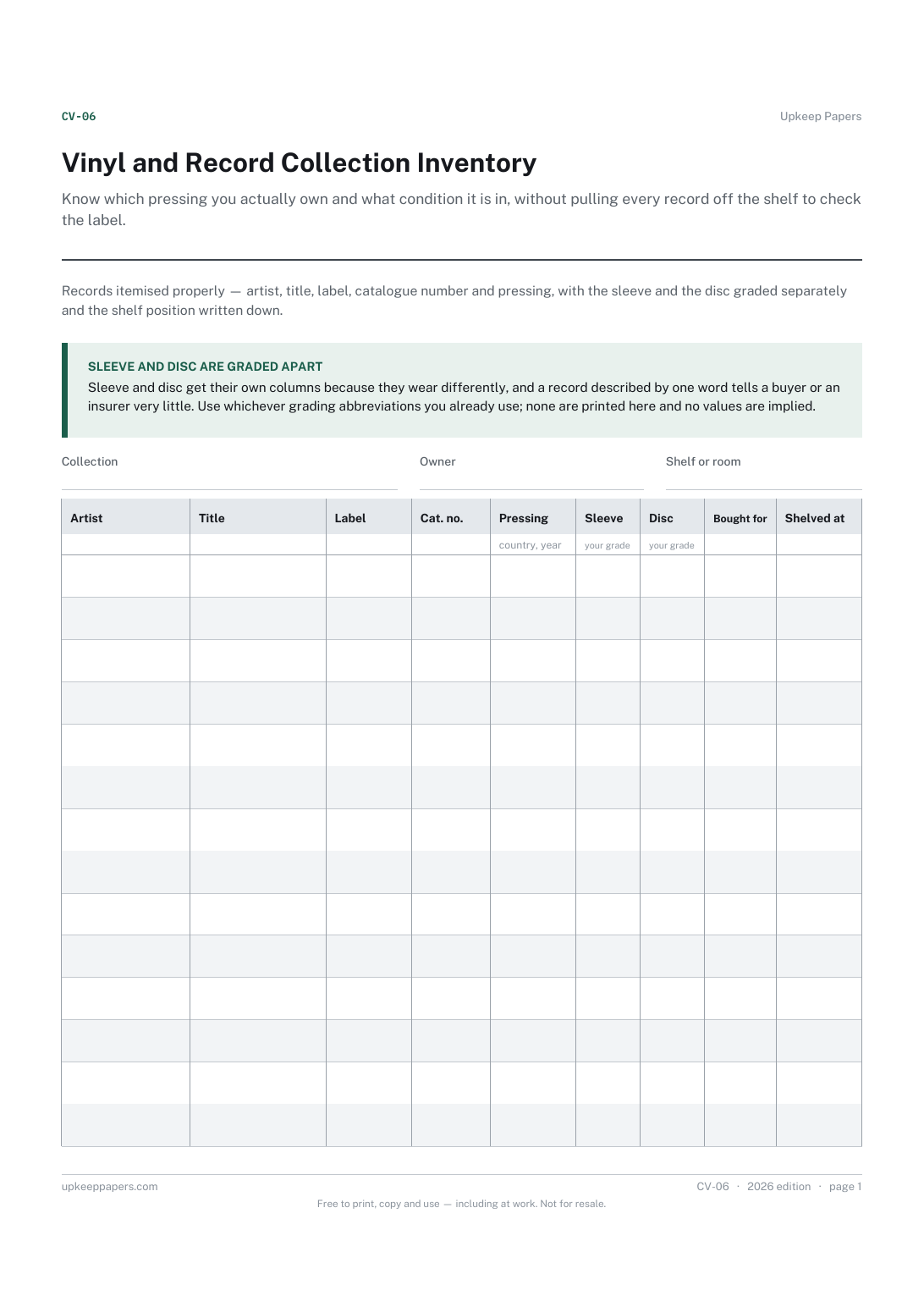
A free printable vinyl inventory — artist, title, label, catalogue number and pressing, with sleeve and disc graded separately, what you paid and the shelf position.
One page. Choose your paper size — both versions are laid out identically, so neither one gets shrunk to fit.
Print it and write on it
Fill it in type and save
The fillable versions have real form fields — open them in any PDF reader, type into them and save. Printing help.
Know which pressing you actually own and what condition it is in, without pulling every record off the shelf to check the label.
Record collectors, DJs and anyone with more vinyl than they can hold in their head, including executors listing a collection.
One page, top to bottom:
Printed under the title: Records itemised properly — artist, title, label, catalogue number and pressing, with the sleeve and the disc graded separately and the shelf position written down.
Sleeve and disc are graded apart. Sleeve and disc get their own columns because they wear differently, and a record described by one word tells a buyer or an insurer very little. Use whichever grading abbreviations you already use; none are printed here and no values are implied.
Write-on lines: Collection · Owner · Shelf or room
Table, 14 rows: Artist · Title · Label · Cat. no. · Pressing · Sleeve · Disc · Bought for · Shelved at
Because they wear separately: a clean disc can sit in a split sleeve and a mint sleeve can hold a scuffed record. One combined word hides exactly the thing a buyer, an insurer or a future you would want to know.
Grading conventions differ between sellers and countries, and printing one set would push you off whatever you already use. The columns are blank so your own shorthand goes in.
Itemise a collection properly, so that identification, acquisition and any valuation exist somewhere other than in your head.
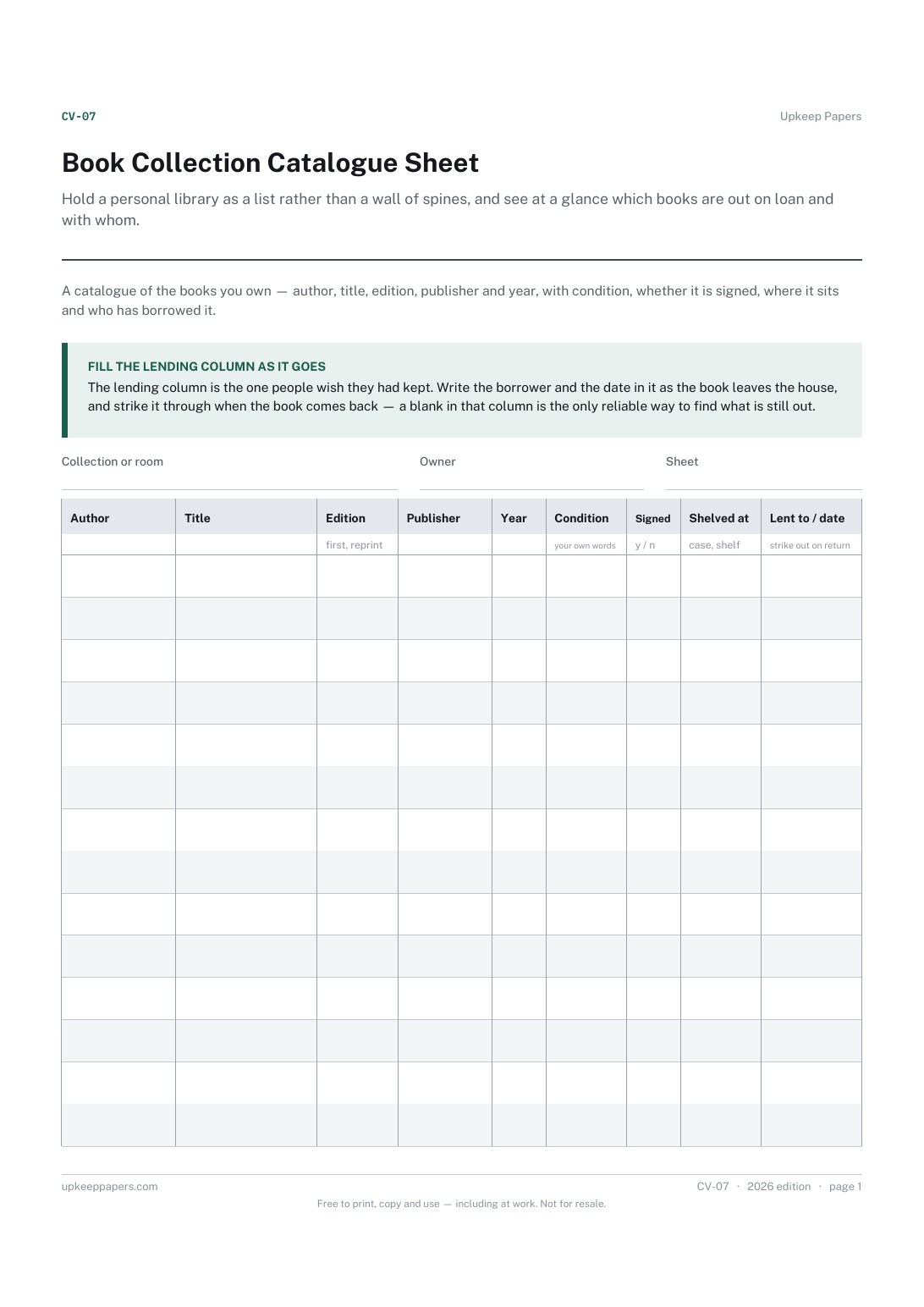
Hold a personal library as a list rather than a wall of spines, and see at a glance which books are out on loan and with whom.
List what you own before you need to, so a claim or a police report starts from a document rather than from trying to remember a burgled room.
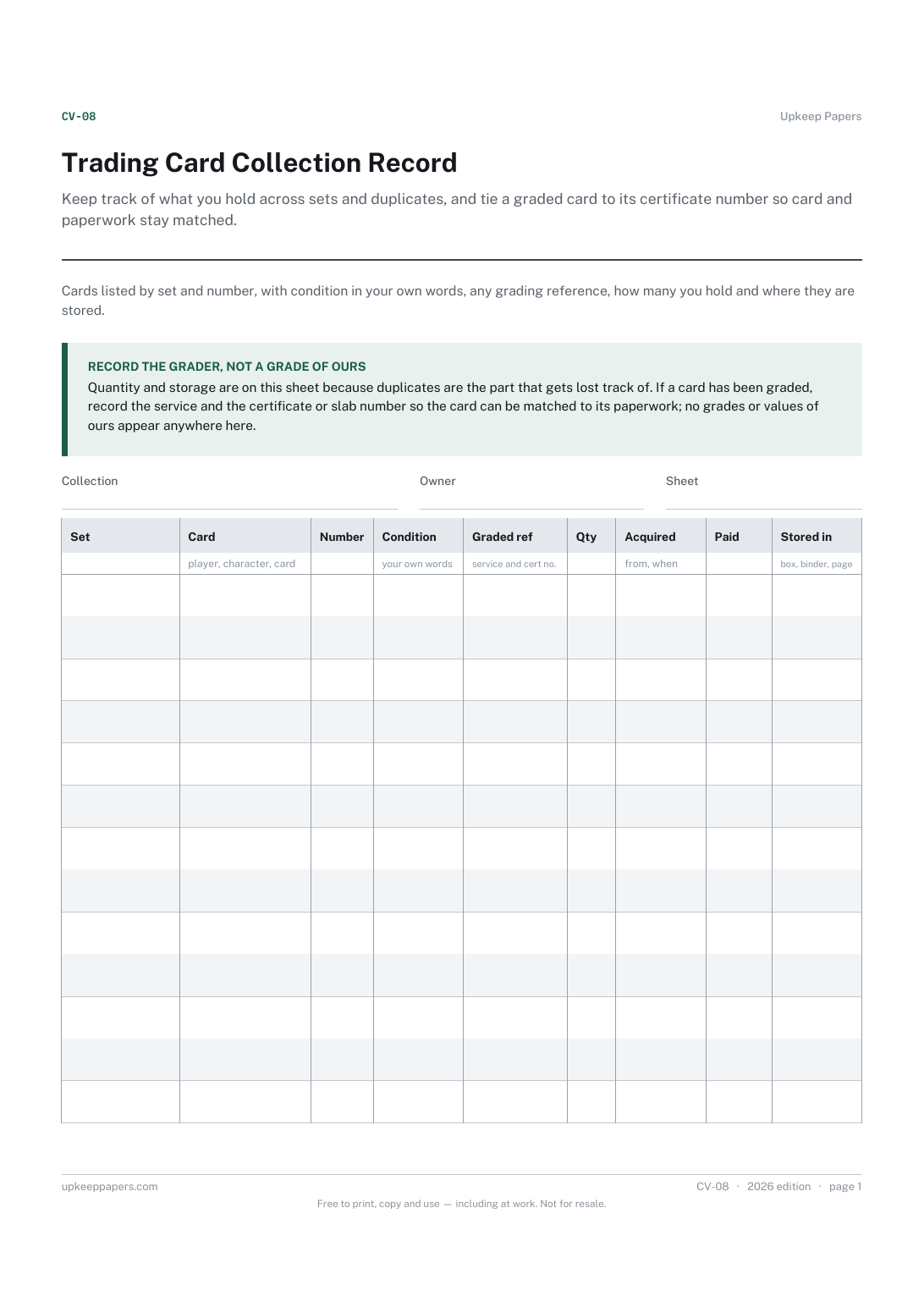
Keep track of what you hold across sets and duplicates, and tie a graded card to its certificate number so card and paperwork stay matched.

Every sheet, binder, game and puzzle on Upkeep Papers is free to download, with no email and no account. Making them is not free: each one takes days of research, design and checking, and the site costs money to run. If something here saved you time, you can buy us a coffee. It is entirely optional: nothing is locked, and nothing changes if you don’t.
Buy us a coffee Opens PayPal in a new tab. Any amount, and nothing changes if you would rather not.