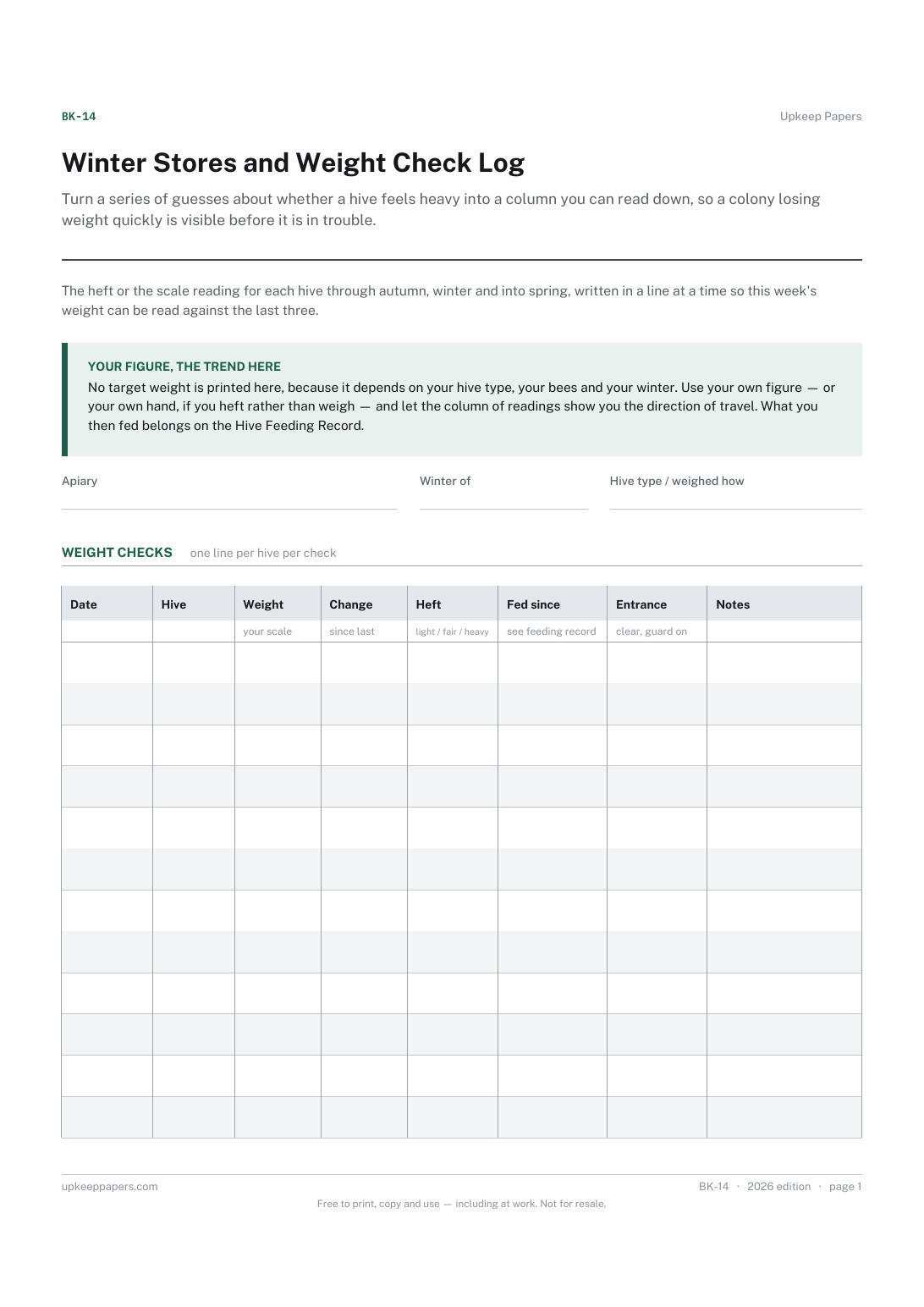
Winter Stores and Weight Check Log
Turn a series of guesses about whether a hive feels heavy into a column you can read down, so a colony losing weight quickly is visible before it is in trouble.
BK-14 1 page
Everything here is free. Making it takes time and money. Everything here is free.
 Buy us a coffee
Beekeeping · BK-19
A free printable winter colony loss record: colonies counted in autumn and spring, a line per colony lost, and the queen, varroa and feeding details surveys ask for.
One page. Choose your paper size — both versions are laid out identically, so neither one gets shrunk to fit.
Print it and write on it
Fill it in type and save
The fillable versions have real form fields — open them in any PDF reader, type into them and save. Printing help.
Count the winter's losses honestly and keep what you saw beside each one. Next autumn's plan then rests on the hives that died, not on a vague memory of a bad winter.
Beekeepers with any number of colonies who want a true count of winter losses, and anyone who answers a national or association loss survey.
One page, top to bottom:
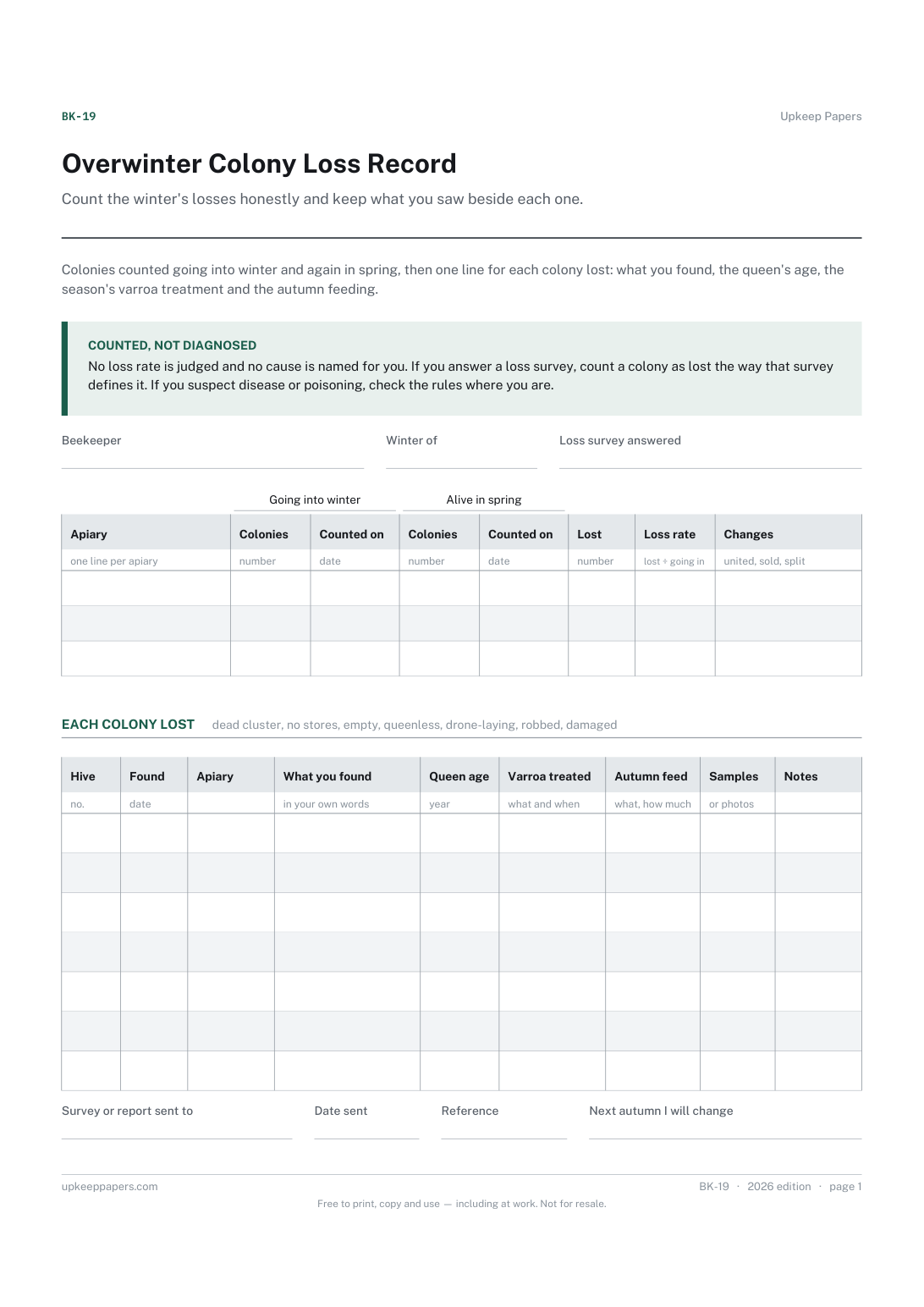
Printed under the title: Colonies counted going into winter and again in spring, then one line for each colony lost: what you found, the queen's age, the season's varroa treatment and the autumn feeding.
Counted, not diagnosed. No loss rate is judged and no cause is named for you. If you answer a loss survey, count a colony as lost the way that survey defines it. If you suspect disease or poisoning, check the rules where you are.
Write-on lines: Beekeeper · Winter of · Loss survey answered
Also printed: Going into winter · Alive in spring
Table, 3 rows: Apiary · Colonies · Counted on · Colonies · Counted on · Lost · Loss rate · Changes
Table, 7 rows: Hive · Found · Apiary · What you found · Queen age · Varroa treated · Autumn feed · Samples · Notes
Write-on lines: Survey or report sent to · Date sent · Reference · Next autumn I will change
Because loss rates vary with the year, the country and the way losses are counted, and a printed figure would be judging your bees for you. Work out your own rate and compare it year on year, or with a survey's published results if you answer one.
That depends on the definition you use. Loss surveys set their own, and some count colonies with queen problems that could not be put right as lost. Use the definition of the survey you answer, and describe the colony in your own words either way.
Because these are among the management details that loss surveys, such as the international COLOSS questionnaire, look at alongside the losses. Having them beside each lost colony also shows up patterns in your own apiary.
Turn a series of guesses about whether a hive feels heavy into a column you can read down, so a colony losing weight quickly is visible before it is in trouble.
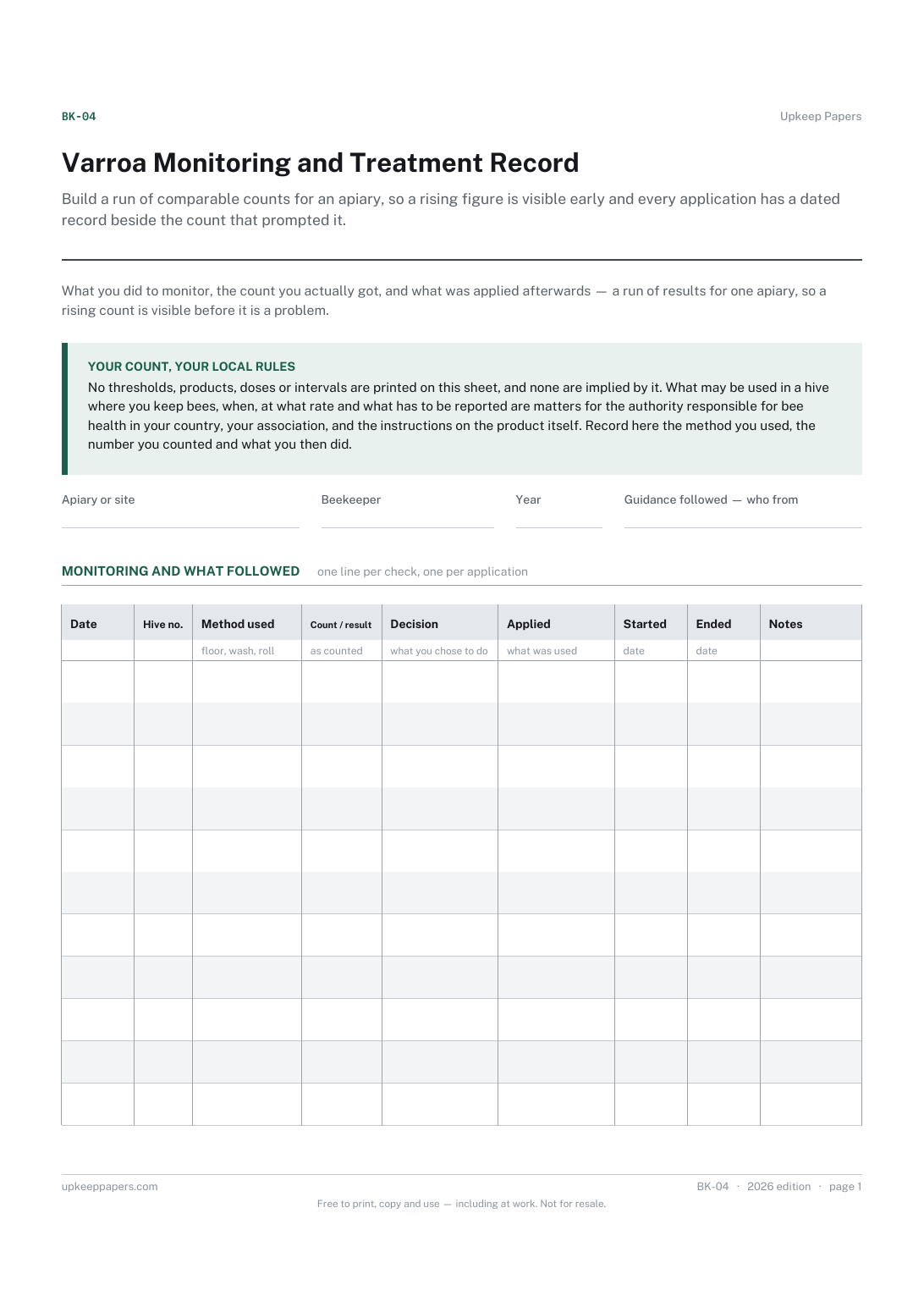
Build a run of comparable counts for an apiary, so a rising figure is visible early and every application has a dated record beside the count that prompted it.
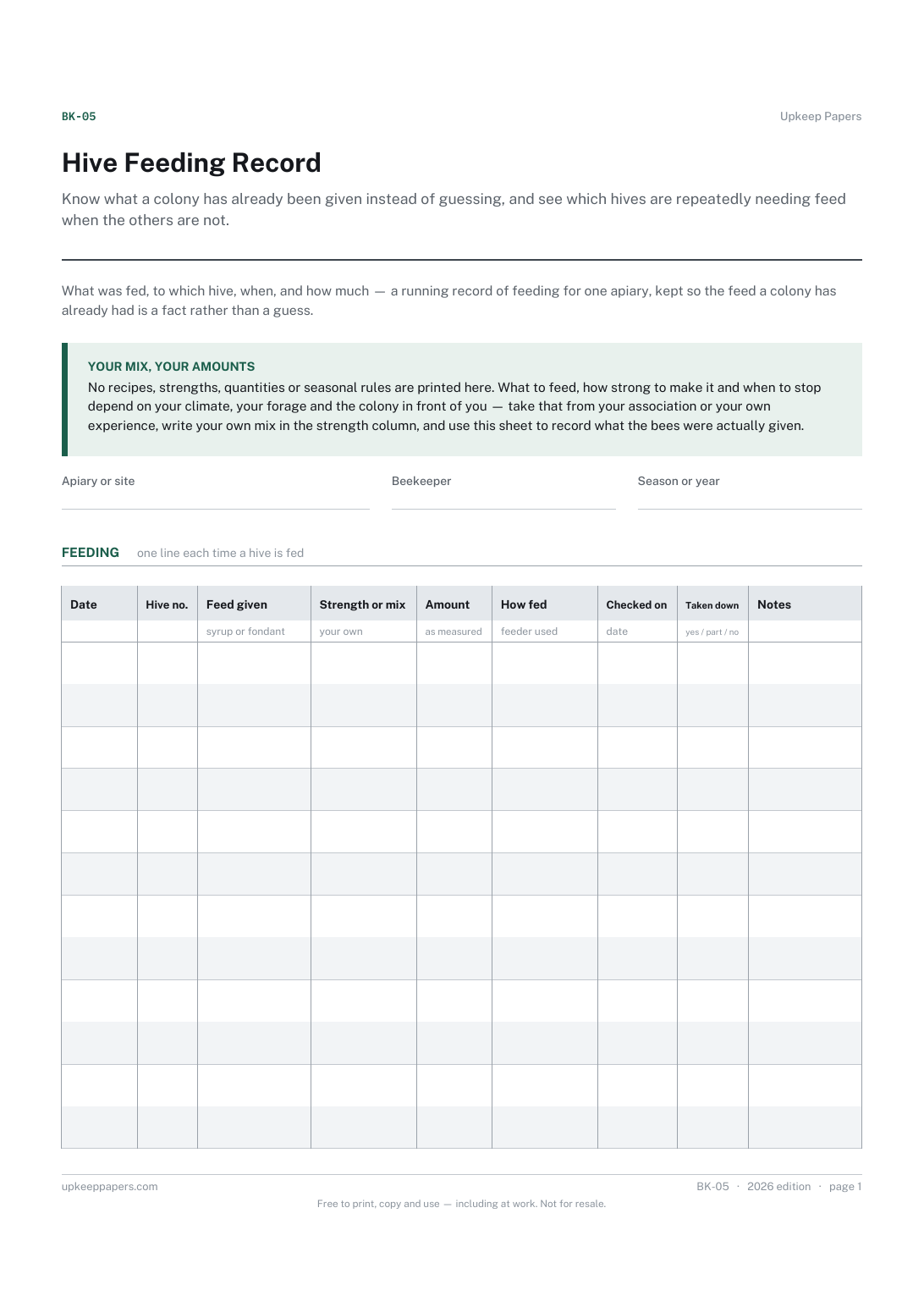
Know what a colony has already been given instead of guessing, and see which hives are repeatedly needing feed when the others are not.
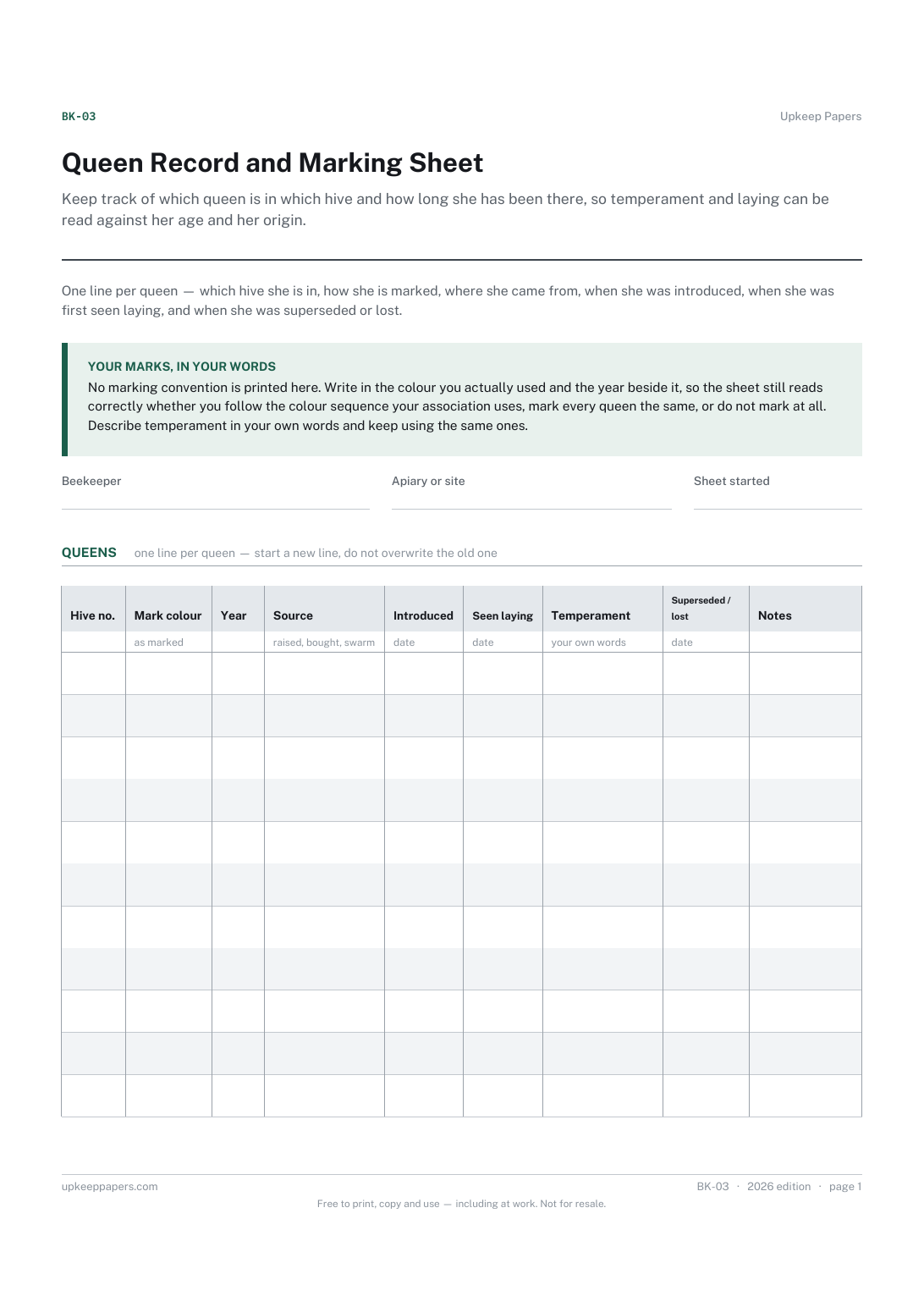
Keep track of which queen is in which hive and how long she has been there, so temperament and laying can be read against her age and her origin.
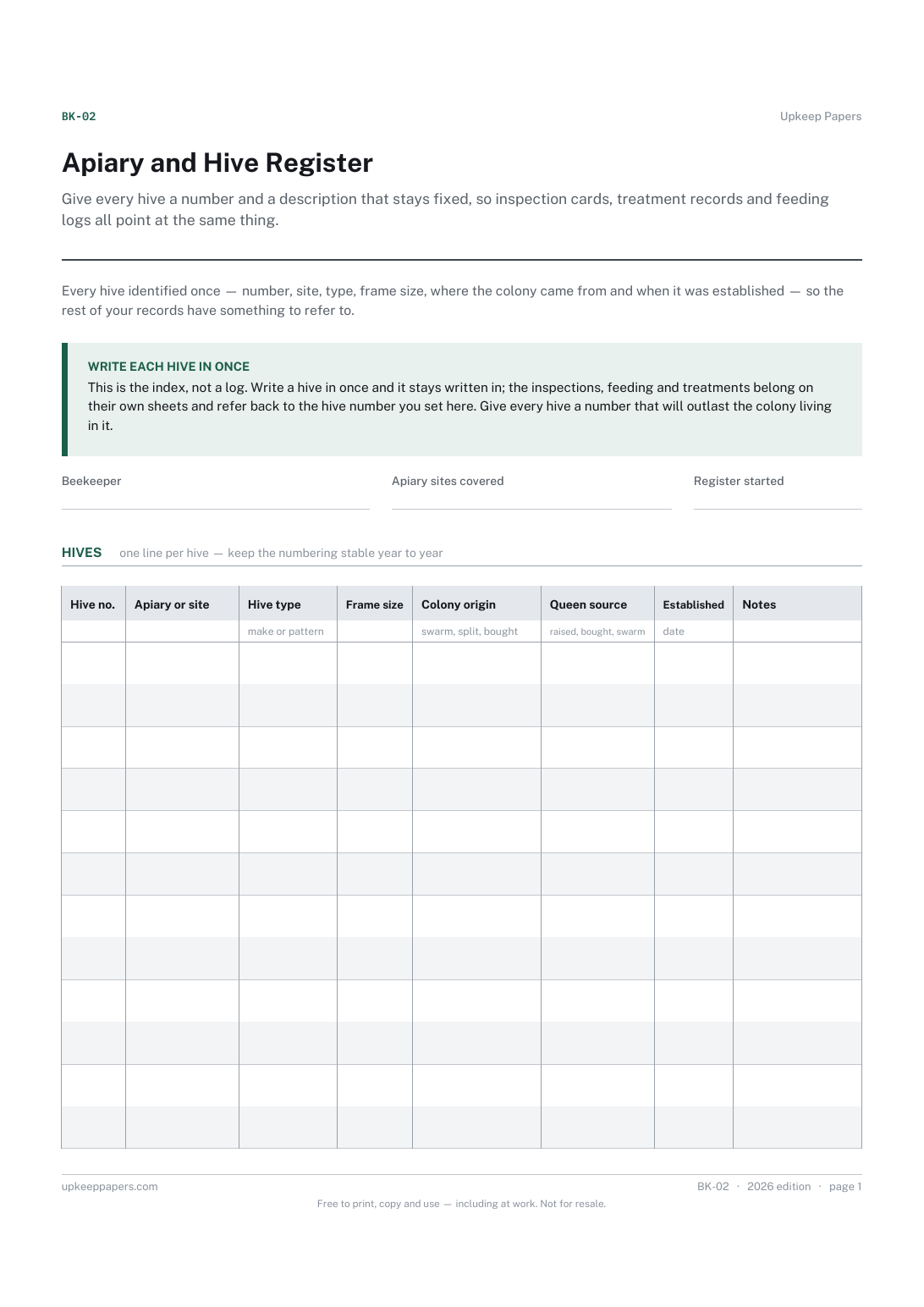
Give every hive a number and a description that stays fixed, so inspection cards, treatment records and feeding logs all point at the same thing.

Every sheet, binder, game and puzzle on Upkeep Papers is free to download, with no email and no account. Making them is not free: each one takes days of research, design and checking, and the site costs money to run. If something here saved you time, you can buy us a coffee. It is entirely optional: nothing is locked, and nothing changes if you don’t.
Buy us a coffee Opens PayPal in a new tab. Any amount, and nothing changes if you would rather not.