Vehicle Service Record
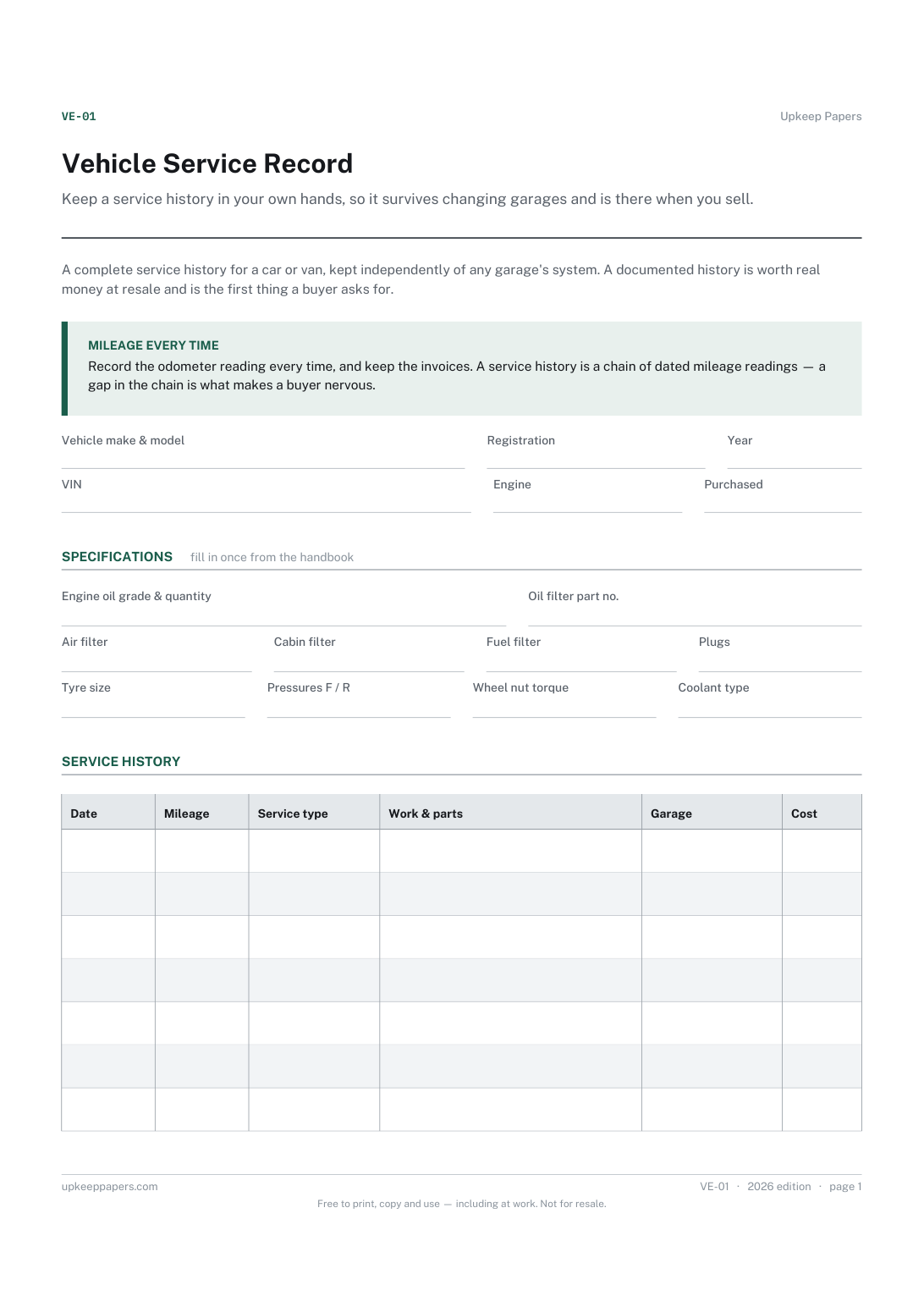
Keep a service history in your own hands, so it survives changing garages and is there when you sell.
VE-01 1 page
Everything here is free. Making it takes time and money. Everything here is free.
 Buy us a coffee
 Free tool · 2 minutes
Build a servicing framework for your vehicle — the checks, in the right groups, with your own intervals filled in.
Everything happens in your browser. Nothing you type is uploaded, there is no account, and the PDF is built on your own device. We count how often this tool is opened and used — a number, with nothing attached to it. What that means.
The intervals are blank on purpose. They differ by engine, model year, market and oil specification. Copy them from your handbook into the interval column once, and the schedule becomes yours rather than somebody else’s.
Most online service schedules are somebody else’s car’s figures with your make written at the top. This one gets the structure right and leaves the numbers to your handbook, which is the only source that is actually right for your engine.
Both exist on purpose. If you would rather not type anything, the blank printable versions below are free, need no browser and never change. The tool is for when the personalised version is worth three minutes.
Because they differ by engine, model year, market and oil specification, and a wrong figure would cost somebody an engine or a warranty. Your handbook has them. The schedule gives you a column to write them in so they sit beside the work record.
Yes. Choosing electric drops the oil, filter and exhaust items and keeps brakes, tyres, coolant, cabin filter and the checks that still apply. An EV needs less servicing, not none.
The blank sheets that go with this tool. All free, in A4 and US Letter, with fillable versions.
Keep a service history in your own hands, so it survives changing garages and is there when you sell.
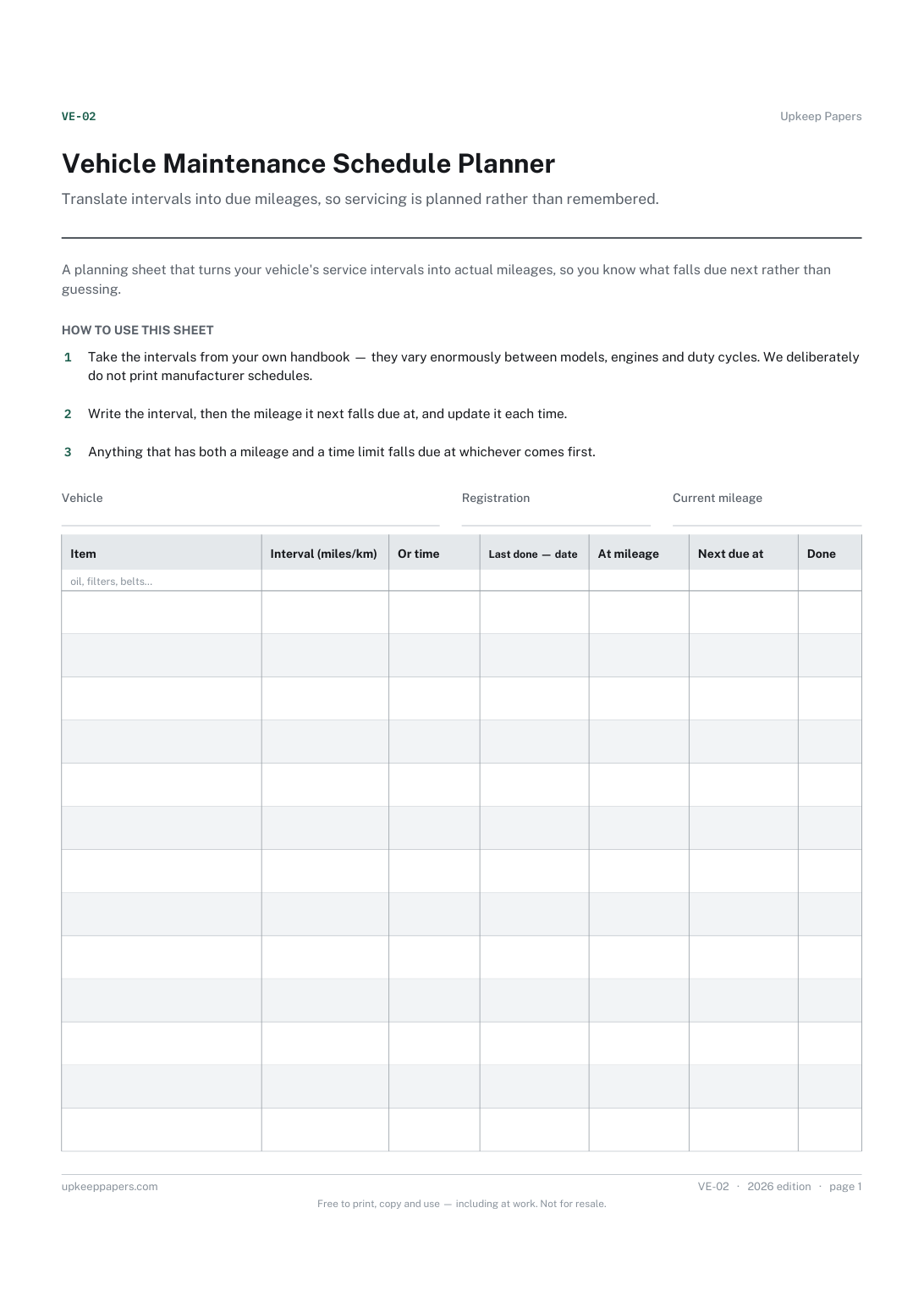
Translate intervals into due mileages, so servicing is planned rather than remembered.
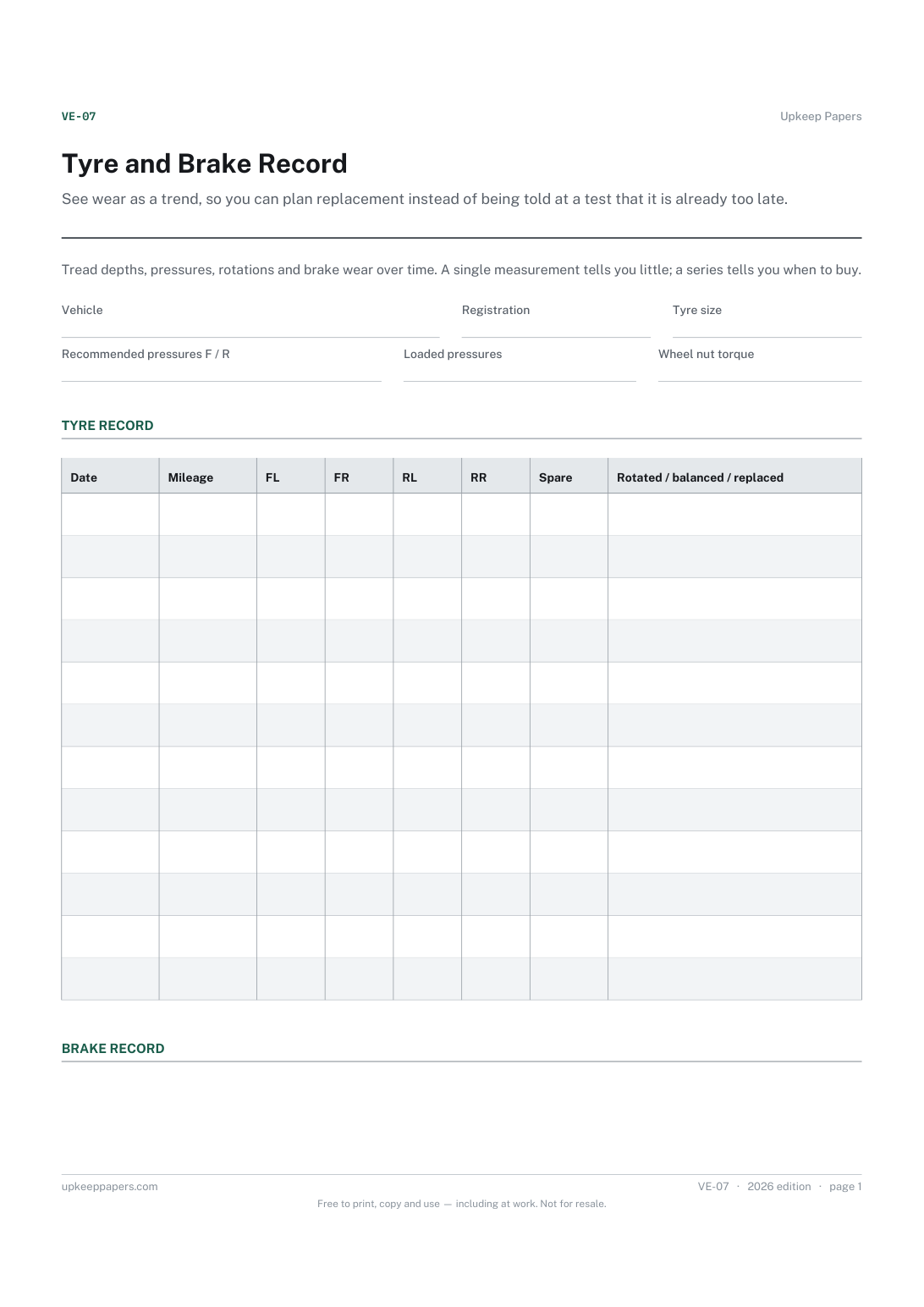
See wear as a trend, so you can plan replacement instead of being told at a test that it is already too late.
See what a vehicle actually costs to run and spot a change in fuel consumption early, which is often the first sign that something mechanical is wrong.
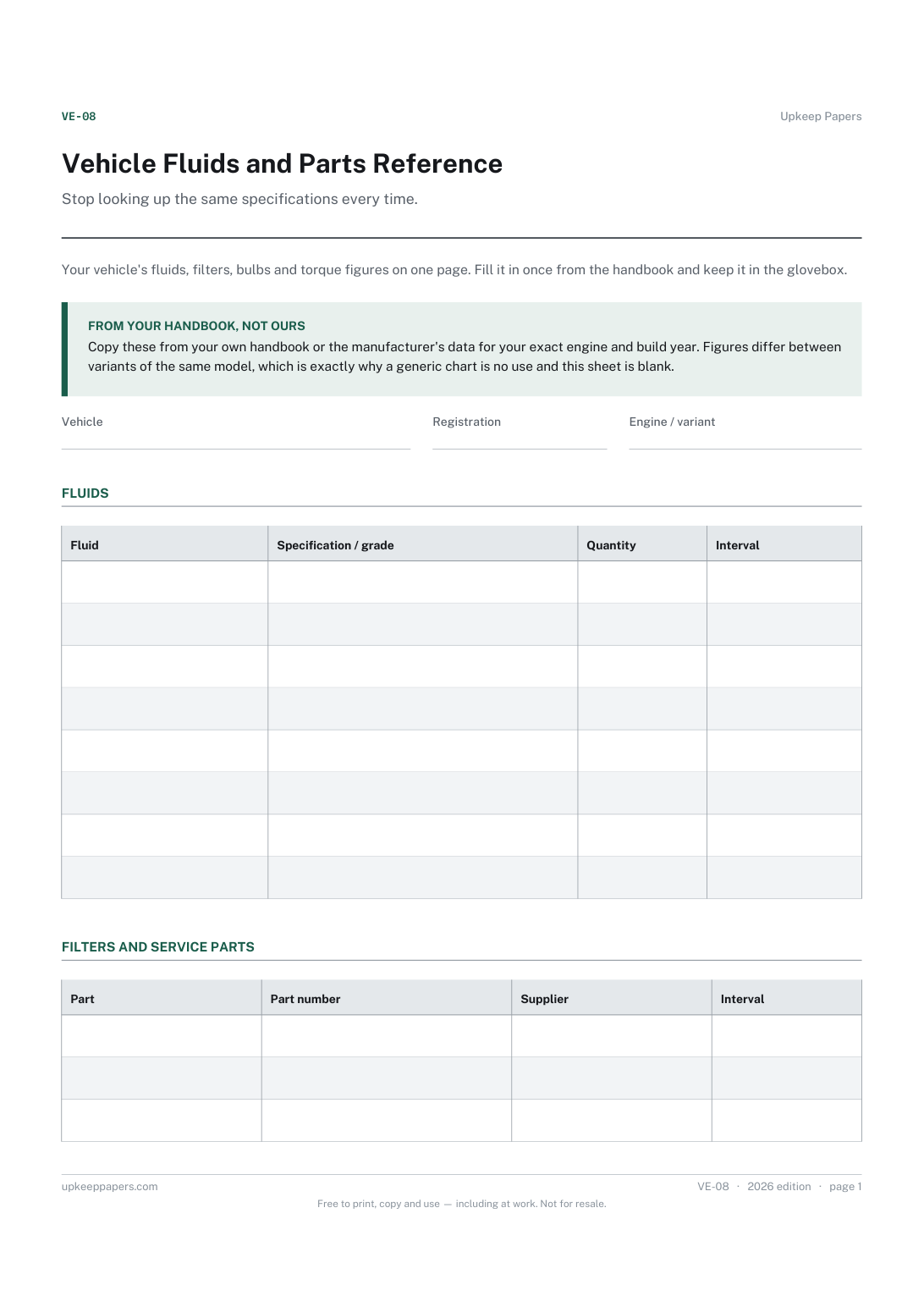
Stop looking up the same specifications every time. Fill it in once from the handbook and keep it with the vehicle.

Every sheet, binder, game and puzzle on Upkeep Papers is free to download, with no email and no account. Making them is not free: each one takes days of research, design and checking, and the site costs money to run. If something here saved you time, you can buy us a coffee. It is entirely optional: nothing is locked, and nothing changes if you don’t.
Buy us a coffee Opens PayPal in a new tab. Any amount, and nothing changes if you would rather not.